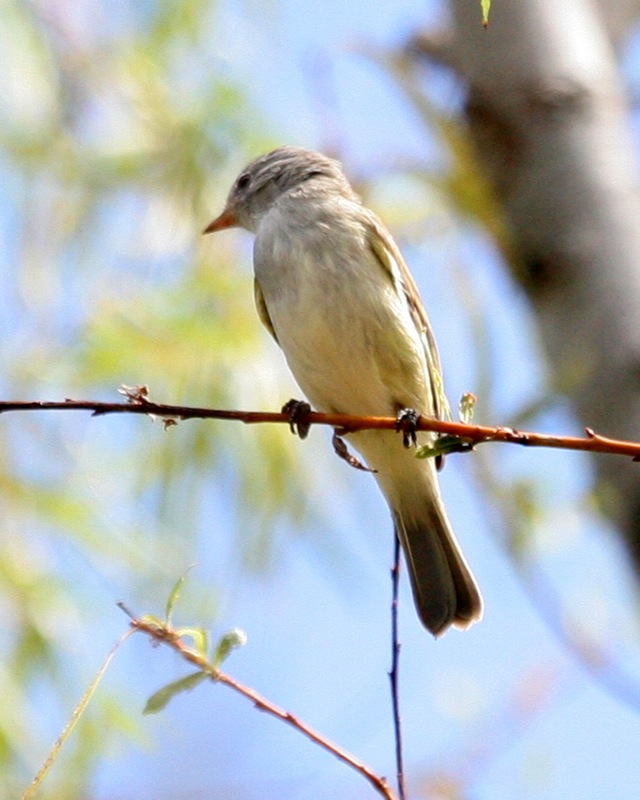
Lesser Wagtail-Tyrant
Stigmatura napensis
Order: Passeriformes / Family: Tyrannidae

Wikimedia Commons
About the Lesser Wagtail-Tyrant
The Lesser Wagtail-Tyrant (Stigmatura napensis) is a small passerine bird belonging to the Tyrannidae family, which is renowned for its broad diversity in the Neotropics. This species inhabits the tropical and subtropical regions of South America, particularly thriving in riverine environments and lowland forests. The bird's presence is predominantly marked in the Amazon Basin, where it contributes significantly to the ecosystem by controlling insect populations. The Lesser Wagtail-Tyrant often inhabits areas close to water bodies, taking advantage of the rich insect life around them.
During the breeding season, which generally occurs during the wet months, the Lesser Wagtail-Tyrant becomes more vocal and active. Their territories are often centered around areas with dense shrubbery or secondary growth, which provide both shelter and abundant food sources. This species plays a key ecological role by participating in seed dispersal and pest control, thus maintaining the health and balance of its environment.
The Lesser Wagtail-Tyrant is an integral part of local ecosystems, serving as both a consumer and a prey species. Its diet consists mainly of small insects and arthropods, which it captures through agile flights and precise movements. Additionally, the bird's presence in various forest types, from primary rainforest to disturbed habitats, highlights its adaptability and resilience. Despite facing habitat loss due to deforestation, the Lesser Wagtail-Tyrant remains relatively common, supported by its ability to exploit a range of habitats across its range.
The Lesser Wagtail-Tyrant belongs to the family Tyrannidae, within the order Passeriformes. These birds typically live 5-7 years, with some living up to 10 years..
How to Identify a Lesser Wagtail-Tyrant
The Lesser Wagtail-Tyrant can be identified by its small size and slender body, measuring approximately 13 cm in length. Adults exhibit a distinctive grayish-brown plumage on the upperparts, contrasted by pale underparts that may appear slightly yellowish. A key identifying feature is the bird's long, wagging tail, which is often tipped with white, providing a stark contrast to the darker central tail feathers. This tail-wagging behavior, from which it derives its name, is a frequent and conspicuous trait. Juveniles resemble adults but may exhibit duller coloration and less distinct tail markings.
Male and female Lesser Wagtail-Tyrants are similar in appearance, with no significant sexual dimorphism in plumage. However, males may exhibit slightly more prominent tail markings during the breeding season. In flight, the bird's agile movements and tail-wagging behavior are distinct, making it recognizable even at a distance.
Confusion may arise with other small Tyrannidae species, but the Lesser Wagtail-Tyrant's unique tail movements and habitat preferences usually help distinguish it. When perched, the bird often adopts a horizontal posture, accentuating its long tail and sleek profile.
Having trouble telling birds apart? Upload a photo to our bird identification tool for an instant species match.
Lesser Wagtail-Tyrant Habitat and Range
Preferred Habitat
The Lesser Wagtail-Tyrant inhabits a variety of lowland habitats, primarily favoring riverine forests and scrubby areas near water bodies. These habitats provide ample food sources and nesting sites. The species is commonly found at elevations ranging from sea level to about 500 meters, though it may occasionally venture higher in suitable locations. It shows a preference for open areas within forested regions, particularly those with dense undergrowth or secondary growth.
In addition to its primary habitats, the Lesser Wagtail-Tyrant can sometimes be observed in more disturbed environments, such as agricultural lands and areas undergoing reforestation. This adaptability allows the bird to maintain stable populations despite some habitat alterations. Unlike many other passerines, it does not typically venture into urban areas, preferring more natural settings.
Geographic Range
The Lesser Wagtail-Tyrant primarily resides in South America, with its range extending across the Amazon Basin. It is commonly found in countries such as Brazil, Peru, Ecuador, and Colombia, where suitable habitats are plentiful. The species does not undergo long-distance migrations, instead exhibiting local movements in response to seasonal changes in food availability and habitat conditions.
During the breeding season, the Lesser Wagtail-Tyrant establishes territories in regions with abundant insect life and suitable nesting sites. These areas often overlap with its general range, but birds may move to slightly different locations outside the breeding season to exploit different resources. Population density hotspots typically occur in areas with a mosaic of forest types, offering a variety of foraging opportunities.
While the bird's core range is centered in the Amazon, it may occasionally be found in the Andean foothills and other adjacent lowland regions where conditions are favorable.
Want to know which birds visit your area? Browse our backyard birds by location guides for region-specific species lists.
What Does the Lesser Wagtail-Tyrant Eat?
The diet of the Lesser Wagtail-Tyrant consists primarily of small insects and arthropods, which it captures through quick, precise flights and agile movements. Its foraging technique involves sallying from a perch to snatch prey mid-air or gleaning insects from foliage and bark. The bird's slender bill is well-suited for picking off small prey items, typically measuring less than 1 cm in length.
Seasonal changes can influence the bird's diet composition. During the wet season, when insect abundance peaks, the Lesser Wagtail-Tyrant has access to a broader variety of prey. In contrast, the dry season may see the bird relying more on smaller insects and supplementing its diet with other arthropods such as spiders.
The Lesser Wagtail-Tyrant often forages alone or in pairs, avoiding competition by exploiting specific foraging niches within its habitat. Its feeding activity is typically highest in the early morning and late afternoon, coinciding with peak insect activity.
Lesser Wagtail-Tyrant Behavior and Social Structure
The Lesser Wagtail-Tyrant exhibits a solitary or loosely paired social structure, with individuals often maintaining territories during the breeding season. These territories are defended through vocalizations and displays, ensuring exclusive access to food and nesting resources. Courtship displays involve tail wagging and vocal duets, reinforcing pair bonds and coordinating breeding activities.
While generally territorial, the bird may join mixed-species flocks outside the breeding season, benefiting from collective vigilance against predators. In the presence of potential threats, the Lesser Wagtail-Tyrant employs alarm calls and evasive maneuvers to avoid predation. Its response to predators often includes rapid flights and seeking cover in dense vegetation.
Daily activity patterns of the Lesser Wagtail-Tyrant involve periods of active foraging interspersed with rest and preening sessions. The bird is most active during cooler parts of the day, minimizing energy expenditure and predation risks during the hot midday hours.
Lesser Wagtail-Tyrant Nesting and Reproduction
The Lesser Wagtail-Tyrant constructs cup-shaped nests, typically located in shrubs or low trees close to water sources. Nesting materials include grasses, plant fibers, and spider silk, providing a sturdy yet lightweight structure. These nests are often well-concealed within dense foliage, offering protection from predators and environmental elements.
A typical clutch consists of 2-3 eggs, with the female primarily responsible for incubation. The incubation period lasts approximately 14-16 days, during which the male may assist by bringing food to the female. Once hatched, chicks remain in the nest for about 12-14 days before fledging.
Both parents participate in feeding the young, delivering small insects and other prey items. The Lesser Wagtail-Tyrant typically raises one brood per year, though favorable conditions may occasionally allow for a second brood. Parental care extends beyond fledging, with adults continuing to feed and protect fledglings until they become independent.
Lesser Wagtail-Tyrant Sounds and Vocalizations
The primary song of the Lesser Wagtail-Tyrant is a series of high-pitched, buzzy notes delivered in rapid succession, creating a rhythmic and somewhat mechanical sound. This song serves as both a territorial signal and a mate attraction call, often heard during the early morning hours. Call notes are short, sharp chips, used for communication between mates and as alarm calls when predators are near.
During the dawn chorus, the Lesser Wagtail-Tyrant's song stands out due to its distinctive quality, often likened to the sound of a mechanical device. These vocalizations play a crucial role in maintaining pair bonds and coordinating breeding activities. Compared to other bird songs, the Lesser Wagtail-Tyrant's vocalizations are less melodious but highly functional within its ecological context.
Interesting Facts About the Lesser Wagtail-Tyrant
- 1The Lesser Wagtail-Tyrant's tail-wagging behavior is not just for show; it helps flush out insects hiding in foliage.
- 2Despite its small size, the Lesser Wagtail-Tyrant can cover vast areas in search of food, showcasing impressive endurance.
- 3This species often participates in mixed-species flocks, benefiting from collective vigilance against predators.
- 4The Lesser Wagtail-Tyrant's nest is intricately constructed, using spider silk to bind materials and ensure stability.
- 5While the bird's song is not melodious, it serves a critical role in establishing territory and attracting mates.
- 6The Lesser Wagtail-Tyrant can be found in disturbed habitats, highlighting its adaptability to changing environments.
- 7Its presence in the Amazon Basin underscores the diverse avian life supported by this rich ecosystem.
Lesser Wagtail-Tyrant Conservation Status
The IUCN currently lists the Lesser Wagtail-Tyrant as a species of Least Concern, with a stable population trend. Despite facing threats from habitat loss due to deforestation and land conversion, the bird's adaptability to various habitats has allowed it to maintain stable numbers. Conservation efforts focused on preserving riverine and lowland forest habitats are vital for the continued well-being of the species. Historically, the population of the Lesser Wagtail-Tyrant has fluctuated in response to environmental changes and habitat availability. However, its ability to exploit disturbed habitats has provided a buffer against major population declines. Ongoing monitoring and habitat preservation efforts remain crucial to ensure the long-term survival of this adaptable bird.
Other Tyrannidae Species


Birds Similar to the Lesser Wagtail-Tyrant
These species are often confused with the Lesser Wagtail-Tyrant due to similar appearance or overlapping range.