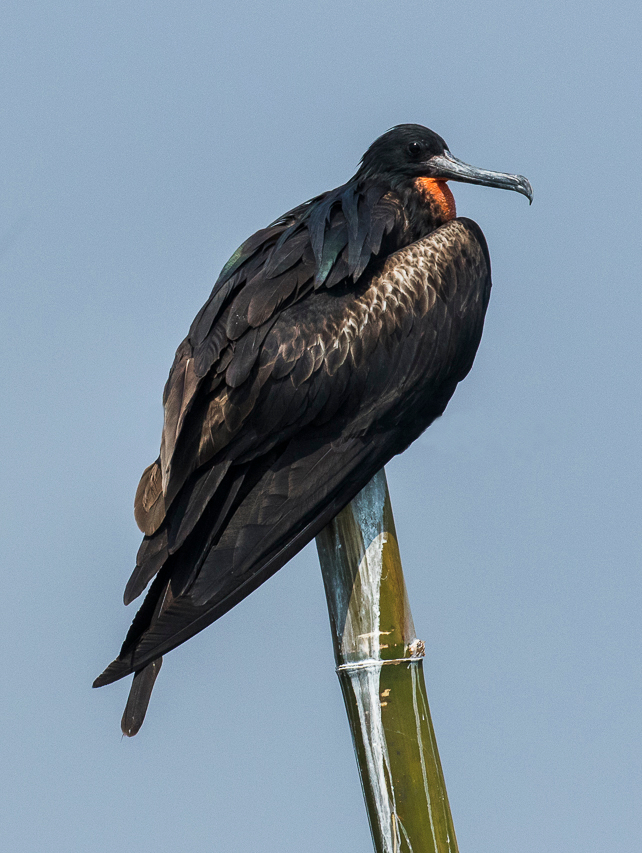
Limnofregata azygosternon
Limnofregata azygosternon
Order: Suliformes / Family: Fregatidae

Wikimedia Commons
About the Limnofregata azygosternon
The Limnofregata azygosternon, commonly referred to as a species of freshwater frigatebird, represents a fascinating divergence from its typically oceanic relatives. This bird, now extinct, belonged to the family Fregatidae, which primarily comprises seabirds known for their impressive aerial skills and reliance on marine environments. However, the Limnofregata azygosternon made its home in freshwater ecosystems, a rare trait among frigatebirds. Fossil evidence suggests that this species once thrived during the Eocene epoch, approximately 56 to 34 million years ago. The bird's anatomical adaptations indicate a lifestyle distinct from its oceanic kin, with a morphology suited for life over lakes and rivers.
Significant fossil finds have occurred in regions known today as Wyoming and Utah, within the Green River Formation, a location renowned for its well-preserved Eocene fossils. These areas, during the time of the Limnofregata azygosternon, would have been characterized by vast lake systems and lush subtropical environments. The bird likely played a crucial role in these freshwater ecosystems, perhaps preying on fish and aquatic invertebrates, thus contributing to the ecological balance.
The Limnofregata azygosternon's adaptation to freshwater habitats suggests an ecological niche that provided opportunities to exploit resources unavailable to its marine counterparts. Such specialization underscores the dynamic evolutionary pathways birds can take, particularly in response to environmental pressures and available resources. As the Eocene epoch progressed, global climatic changes and shifting landscapes likely contributed to the extinction of this distinctive bird. Nonetheless, its existence provides valuable insights into the diversity of avian life and the evolutionary potential within the Fregatidae family.
The Limnofregata azygosternon belongs to the family Fregatidae, within the order Suliformes. These birds typically live Unknown.
How to Identify a Limnofregata azygosternon
The Limnofregata azygosternon boasted characteristics that both aligned with and diverged from its modern relatives. Although no live specimens exist today, fossil records provide a glimpse into its physical traits. The bird likely had a wingspan that allowed for efficient gliding over water bodies, similar to the large wings of contemporary frigatebirds. Its beak, presumably hooked, would have been adept at capturing prey from just below the water's surface.
The plumage details remain speculative; however, it is reasonable to assume that the Limnofregata azygosternon featured coloration and patterns that aided in camouflage within its freshwater habitat. Unlike the stark black and white plumage seen in today's frigatebirds, this extinct species might have exhibited more muted tones to blend with its surroundings. Juvenile and adult plumage distinctions are unknown, but similar species often have differences between these stages.
Sexual dimorphism, common in many bird species, could have been present in the Limnofregata azygosternon, with potential differences in size or plumage between males and females. Flight patterns might resemble those of modern frigatebirds, characterized by graceful, soaring movements. Fossils suggest a streamlined body suited for aerial foraging and efficient gliding, with long, pointed wings and a deeply forked tail for agile maneuvers.
Having trouble telling birds apart? Upload a photo to our bird identification tool for an instant species match.
Limnofregata azygosternon Habitat and Range
Preferred Habitat
The Limnofregata azygosternon is notable for its adaptation to freshwater environments, a rarity among frigatebirds. During its existence, this bird inhabited vast lake systems prevalent in regions now part of North America's western interior, particularly around the Green River Formation. This area, during the Eocene, featured subtropical climates with expansive wetlands, abundant vegetation, and diverse aquatic life.
These freshwater habitats provided ample foraging opportunities, with an array of fish and invertebrates to sustain the Limnofregata azygosternon. Unlike its marine relatives, which are generally restricted to coastal environments, this species thrived inland. Seasonal shifts may have influenced habitat preferences, with potential movements between different freshwater systems as water levels and food availability changed.
The Limnofregata azygosternon's ability to exploit freshwater environments underscores an evolutionary flexibility within the frigatebird lineage. It serves as a reminder of the diverse ecological niches birds can occupy, adapting to varied conditions across the planet. The lack of urban development during its time means interactions with human-altered landscapes were nonexistent, allowing the bird to thrive in pristine natural settings.
Geographic Range
The range of Limnofregata azygosternon was confined to the Eocene epoch of North America, specifically within what are now the states of Wyoming and Utah. Fossil evidence primarily comes from the Green River Formation, a site renowned for its preservation of an entire ecosystem from approximately 50 million years ago.
During the Eocene, this region was characterized by large lake systems and subtropical climates, providing an ideal habitat for the Limnofregata azygosternon. The bird likely remained within these freshwater systems, as evidenced by the concentration of fossil finds in this area. Given the environmental conditions, it is plausible that the bird's range included other freshwater habitats within the region, allowing it to exploit a variety of food sources.
Unlike its marine relatives, the Limnofregata azygosternon did not migrate vast distances across oceans. Instead, its movements would have been more localized, likely dictated by changes in water levels, food availability, and climatic conditions. The specialization to freshwater environments suggests a relatively sedentary lifestyle compared to the migratory patterns observed in modern frigatebirds.
Want to know which birds visit your area? Browse our backyard birds by location guides for region-specific species lists.
What Does the Limnofregata azygosternon Eat?
The diet of Limnofregata azygosternon, inferred from its habitat and anatomical adaptations, likely consisted of fish and aquatic invertebrates. As a freshwater-adapted frigatebird, it would have exploited the rich biodiversity of Eocene lake systems. Its hooked beak and agile flight would have facilitated the capture of small to medium-sized fish, with potential prey sizes ranging from a few centimeters to larger specimens depending on availability.
Seasonal changes in water levels and prey availability may have prompted shifts in diet composition, with the bird potentially targeting different species during various times of the year. Foraging techniques likely involved swooping over water surfaces to snatch prey, similar to modern-day frigatebirds, but adapted to the calmer waters of lakes and rivers rather than ocean waves.
The Limnofregata azygosternon's ability to thrive in freshwater ecosystems highlights its dietary flexibility, contrasting with the marine diet of its contemporary relatives. This specialization would have allowed it to occupy a unique niche, reducing competition with other piscivorous birds of the time.
Limnofregata azygosternon Behavior and Social Structure
The behavior of Limnofregata azygosternon can be pieced together through fossil evidence and comparisons with modern frigatebirds. Socially, it might have been a colonial breeder, nesting in groups to take advantage of the safety in numbers. Territorial behavior could have been present during breeding seasons, with individuals or pairs defending nest sites from intruders.
Courtship displays, if similar to those of present-day frigatebirds, might have involved elaborate aerial maneuvers or visual displays to attract mates. Group dynamics outside of breeding could have included loose flocking patterns, aiding in locating and capturing prey. The bird's daily activities likely revolved around foraging during daylight hours, capitalizing on the abundance of prey in its freshwater environment.
Responses to predators would have been crucial for survival, with vigilance and cooperative behaviors helping to thwart potential threats. The Limnofregata azygosternon's existence within freshwater ecosystems suggests adaptations not only in diet but also in social structure and behavioral ecology, ensuring its success in a unique niche.
Limnofregata azygosternon Nesting and Reproduction
Nesting behavior of Limnofregata azygosternon would have been adapted to its freshwater environment, possibly involving the construction of nests in trees or on cliffs near water bodies. Nest materials likely included twigs, grasses, and leaves, fashioned into sturdy platforms to support the weight of eggs and incubating adults.
Clutch size might have mirrored that of contemporary frigatebirds, with one to two eggs per breeding attempt. The incubation period, shared between parents, could have lasted several weeks, with both males and females participating in the care of eggs and subsequent chicks.
Fledging timelines likely extended over several months, allowing young birds to develop the flight skills necessary for survival. The number of broods per year would have depended on environmental conditions and food availability, with the possibility of more than one successful brood in favorable years. Such nesting strategies would have ensured the propagation of the species within its specialized habitat.
Limnofregata azygosternon Sounds and Vocalizations
While no recordings of Limnofregata azygosternon's vocalizations exist, educated guesses based on related species suggest a range of calls used for communication. The primary call might have consisted of low-pitched, repetitive sounds used for mate attraction or coordination within flocks.
Alarm calls, if present, would have served as a warning system against predators, potentially resembling the harsh, sharp notes of modern frigatebirds. During the dawn chorus, the bird might have contributed with distinctive calls to establish territory and strengthen social bonds.
Comparing these sounds to familiar modern avian calls, they might have been reminiscent of a combination of harsh gull-like calls and softer, rhythmic tones, serving various ecological and social functions within their environment.
Interesting Facts About the Limnofregata azygosternon
- 1Limnofregata azygosternon is one of the few known frigatebirds adapted to freshwater habitats, diverging from its marine relatives.
- 2Fossils of Limnofregata azygosternon are primarily found in the Green River Formation, dating back to the Eocene epoch, around 50 million years ago.
- 3The bird's adaptation to freshwater environments demonstrates the evolutionary flexibility of the Fregatidae family.
- 4Limnofregata azygosternon's morphology suggests it was an adept aerial hunter, similar to modern frigatebirds, but specialized for lakes and rivers.
- 5The specialization to freshwater habitats likely reduced competition with other piscivorous birds of its time.
- 6Its extinction highlights the impact of global climatic shifts and habitat changes on species survival during the Eocene.
- 7Limnofregata azygosternon serves as a reminder of the diverse ecological niches birds can occupy, adapting to various conditions across the planet.
Limnofregata azygosternon Conservation Status
As an extinct species, Limnofregata azygosternon presents no current conservation concerns. However, understanding its historical population dynamics provides insight into environmental changes during the Eocene epoch. The bird's extinction likely resulted from significant climatic shifts and habitat alterations that disrupted its freshwater ecosystem. Modern conservation efforts can draw parallels from its story, emphasizing the importance of preserving diverse habitats to support various species. Studying extinct species like the Limnofregata azygosternon helps highlight the potential impacts of environmental changes on specialized organisms. Although no direct conservation measures apply to this bird today, its existence underscores the importance of maintaining biodiversity and the delicate balance within ecosystems, lessons that remain relevant in today's conservation strategies.