
Long-winged Harrier
Circus buffoni
Order: Accipitriformes / Family: Accipitridae
Wikimedia Commons
About the Long-winged Harrier
The Long-winged Harrier (Circus buffoni) is a striking raptor native to the open landscapes of South America. As a member of the Accipitridae family, this bird is notable for its impressive hunting skills and adaptability to various habitats. Its presence is most commonly observed in countries such as Brazil, Argentina, and Uruguay, where it inhabits grasslands, marshes, and agricultural areas. This adaptability allows the Long-winged Harrier to thrive in both natural and modified environments.
The ecological role of the Long-winged Harrier is significant as it helps control populations of small mammals and insects, thus maintaining the balance of its ecosystem. During the breeding season, which varies depending on its geographic location, the harrier becomes even more active, showcasing its agile flight while foraging. Unlike some other raptors, the Long-winged Harrier does not rely solely on its vision to hunt; it also uses its sense of hearing to detect prey in dense vegetation.
Seasonal behaviors of the Long-winged Harrier are linked to its migratory patterns. In the southernmost parts of its range, the harrier migrates northward during the austral winter, reflecting its adaptability and resilience. Throughout the year, it is known for its solitary nature except during breeding times when it forms pairs. As an indicator of healthy wetland and grassland ecosystems, its presence in an area is often a sign of biodiversity and ecological well-being.
The harrier's significance extends beyond its ecological role; it also serves as a species of interest for birdwatchers and researchers. Its distinctive flight, marked by long, narrow wings and a buoyant, graceful movement, makes it a favorite among birding enthusiasts in South America. Conservation efforts aimed at preserving its habitats are crucial for ensuring the continued survival of the Long-winged Harrier, especially as agricultural expansion and habitat degradation pose ongoing threats.
The Long-winged Harrier belongs to the family Accipitridae, within the order Accipitriformes. These birds typically live average 10-12 years, with a maximum recorded of 15 years..
How to Identify a Long-winged Harrier
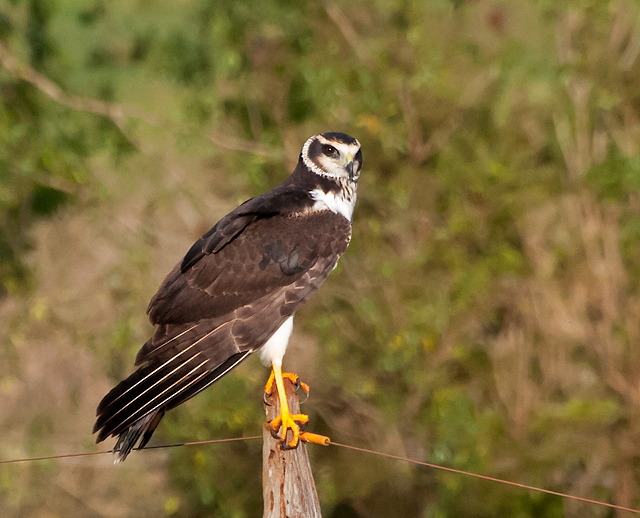
Adult Long-winged Harriers are easily identifiable by their sleek build and long, narrow wings. Their plumage is predominantly gray with striking black and white markings, particularly noticeable on the underwings and tail. The males tend to have more pronounced gray tones, whereas females and juveniles exhibit more brownish coloration, often leading to confusion with other harrier species.
Juveniles differ from adults by their more uniform brown plumage and less defined markings, which provide them with better camouflage in their grassland habitats. Identifying them requires careful attention to their flight pattern and body shape. Unlike some raptors, the Long-winged Harrier's flight is characterized by a unique combination of gliding and flapping, allowing it to adeptly maneuver over open fields.
When comparing the Long-winged Harrier to similar species, such as the Cinereous Harrier, the key differentiator is the length and shape of the wings. The Long-winged Harrier's wings are noticeably longer and more pointed. In flight, the harrier holds its wings in a shallow V shape, and when perched, it maintains a distinctive upright posture. These features, along with its vocalizations, aid birders in distinguishing it from other raptors.
Having trouble telling birds apart? Upload a photo to our bird identification tool for an instant species match.
Long-winged Harrier Habitat and Range
Preferred Habitat
The Long-winged Harrier primarily inhabits open grasslands, marshes, and agricultural fields across South America. These habitats provide ample hunting grounds and nesting sites. In countries like Argentina and Brazil, it occupies expansive Pampas and Cerrado regions, which are characterized by wide-open spaces and a mix of wetlands and dry areas.
This raptor shows a preference for lower elevations, typically below 1,000 meters. However, it can occasionally be found in higher altitudes when suitable conditions are present. Seasonal habitat shifts occur, particularly in the southern parts of its range, where it might move to more temperate regions during colder months.
While the Long-winged Harrier can sometimes be seen near urban areas, it predominantly stays in rural settings where its preferred habitats remain intact. Its ability to adapt to different environments is crucial for its survival, especially as human activities continue to alter landscapes.
Geographic Range
The Long-winged Harrier's range extends across much of South America. It breeds mainly in the southern parts of the continent, including Argentina, Uruguay, and southern Brazil. During the austral winter, it migrates northward to regions such as central Brazil, Paraguay, and Bolivia, showcasing its adaptability to varying climates.
In Argentina, the harrier is particularly common in the Pampas region, where its population density is highest. This area provides an ideal mix of grasslands and wetlands, supporting its dietary and nesting needs. In Uruguay, its presence is noted throughout the country, with a preference for open agricultural landscapes.
Migration corridors for the Long-winged Harrier are well-documented, with individuals traveling hundreds of kilometers to wintering grounds. These corridors highlight the importance of international conservation efforts to ensure safe passage and preserve critical habitats along migratory routes.
Want to know which birds visit your area? Browse our backyard birds by location guides for region-specific species lists.
What Does the Long-winged Harrier Eat?
The Long-winged Harrier primarily feeds on small mammals, such as rodents, which form the bulk of its diet. It also consumes birds, insects, and reptiles, depending on availability and seasonal changes. During the breeding season, its dietary intake may shift slightly, with a greater emphasis on protein-rich prey to support chick development.
Foraging techniques of the Long-winged Harrier involve low flight over open fields, where it uses its keen eyesight and hearing to spot and catch prey. It may hover briefly before making a swift descent to capture its target. The harrier's ability to adapt its hunting strategy to different environments is one of its key survival traits.
Prey size varies, with the harrier taking animals up to the size of a small rabbit. Feeding typically occurs at dawn and dusk, aligning with the activity patterns of its prey. This schedule allows the Long-winged Harrier to maximize its hunting efficiency while conserving energy.
Long-winged Harrier Behavior and Social Structure
The Long-winged Harrier exhibits a solitary lifestyle for much of the year, with social interactions primarily occurring during the breeding season. Males perform aerial displays to attract females, showcasing their agility and strength. These courtship displays involve a series of acrobatic maneuvers, including dives and rolls, which play a crucial role in mate selection.
Territorial behavior is evident during breeding, with pairs establishing and defending nesting areas against intruders. The harrier is known for being highly vigilant and responsive to potential threats, often engaging in aggressive displays to deter predators or rival harriers.
While generally solitary, the Long-winged Harrier may form loose groups during migration, taking advantage of communal roosting sites for safety. Its daily activity patterns center around hunting and territory defense, with peaks in activity during early morning and late afternoon. This schedule aligns with the availability of its prey, ensuring optimal foraging success.
Long-winged Harrier Nesting and Reproduction
The Long-winged Harrier builds its nest on the ground, typically in dense vegetation within marshes or grasslands. The nest is constructed using sticks, grasses, and other plant materials, forming a sturdy platform to support the clutch. Nesting sites are carefully selected to provide concealment from predators and protection from harsh weather.
A typical clutch consists of 2 to 4 eggs, with incubation lasting around 30 to 35 days. Both parents share incubation duties, though the female often undertakes the majority while the male provides food. Once hatched, the chicks remain in the nest for approximately 40 to 50 days before fledging.
Parental roles extend beyond feeding, with both adults involved in defending the nest from potential threats. The Long-winged Harrier typically raises one brood per year, though in exceptionally favorable conditions, a second brood may occur.
Long-winged Harrier Sounds and Vocalizations
The vocalizations of the Long-winged Harrier are varied and serve multiple purposes. Its primary call is a sharp, repetitive "ke-ke-ke," used in communication between mates and during territorial disputes. This call is often compared to the alarm calls of other raptors but is distinct in its rhythm and urgency.
During courtship, the harrier emits softer, more melodious notes, which contrast with its usual alarm calls. These sounds play a role in strengthening pair bonds and coordinating breeding activities. In response to threats, the Long-winged Harrier produces a harsh, rapid series of notes that serve to warn others and deter potential predators.
The dawn chorus of the Long-winged Harrier is less pronounced than that of songbirds, but its calls contribute to the acoustic landscape of its habitat, especially during the breeding season when vocal activity peaks.
Interesting Facts About the Long-winged Harrier
- 1The Long-winged Harrier can cover over 1,000 kilometers during its migratory journeys, showcasing remarkable endurance.
- 2Unlike many raptors, the Long-winged Harrier uses both sight and sound to locate prey, making it an adept hunter.
- 3The species is named for its exceptionally long wings, which enhance its ability to glide effortlessly over large distances.
- 4Long-winged Harrier nests are often built in marshy areas, providing natural protection against terrestrial predators.
- 5The harrier's diet adapts to seasonal prey availability, illustrating its ecological versatility and resourcefulness.
- 6During courtship, male Long-winged Harriers perform intricate aerial displays to attract potential mates.
- 7Despite its wide range, the Long-winged Harrier remains relatively understudied, with many aspects of its ecology still being explored.
Long-winged Harrier Conservation Status
The Long-winged Harrier is currently listed as Least Concern by the IUCN, with a stable population trend overall. However, localized threats do exist, including habitat loss due to agricultural expansion and wetland drainage. Conservation efforts focus on habitat preservation and management, ensuring that key areas remain protected from development. Historically, the population of the Long-winged Harrier has fluctuated in response to changes in land use and environmental conditions. Efforts to raise awareness about the species and its ecological role have contributed to a better understanding of its conservation needs. Continued monitoring and research are essential to address potential threats and ensure that the Long-winged Harrier remains a thriving part of South America's avian biodiversity.


