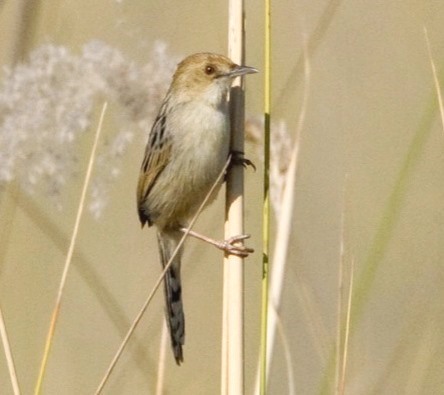
Luapula Cisticola
Cisticola luapula
Order: Passeriformes / Family: Cisticolidae

Wikimedia Commons
About the Luapula Cisticola
The Luapula Cisticola, scientifically known as Cisticola luapula, inhabits the wetland regions of central and southern Africa. This diminutive bird plays a vital role in its ecosystem, as it helps control insect populations and serves as prey for larger avian species. Predominantly found in swamps, reed beds, and marshy areas, the Luapula Cisticola thrives in regions with sufficient water and dense vegetation. Its presence is particularly notable in the floodplains of the Luapula River, from which its name is derived. The species is distributed across countries such as Zambia, Angola, the Democratic Republic of the Congo, and Tanzania. Seasonal changes influence its behaviors, with breeding activities typically peaking during the rainy season when insect abundance is high. Luapula Cisticolas are not highly migratory; however, they may exhibit local movements in response to water levels and food availability. Their ecological role extends beyond pest control; they also contribute to seed dispersion and pollination, albeit indirectly, by frequenting flowering plants during their foraging. These actions highlight the species' importance in maintaining the health and balance of wetland ecosystems.
The Luapula Cisticola belongs to the family Cisticolidae, within the order Passeriformes. These birds typically live average 3-5 years with a maximum recorded of 7 years..
How to Identify a Luapula Cisticola
The Luapula Cisticola is a small bird, measuring about 10 to 12 centimeters in length. Its plumage is primarily brown and white, which provides excellent camouflage among reeds and grasses. Adult Luapula Cisticolas exhibit a distinctive brown streaking on their backs, with a lighter, almost white underbelly. The head features subtle rufous tones, especially noticeable around the crown and nape. Males and females appear similar, though males may display slightly brighter plumage during the breeding season. Juveniles resemble adults but have a more uniform brown coloration with less distinct streaking. In terms of posture, these birds often perch with a slight upward tilt, scanning their surroundings for insects. In flight, they display a fluttery, undulating pattern, characteristic of many cisticolas. Differentiating the Luapula Cisticola from similar species can be challenging due to the subtlety of their markings. However, their unique song and preference for wetter habitats help distinguish them from relatives like the Zitting Cisticola.
Having trouble telling birds apart? Upload a photo to our bird identification tool for an instant species match.
Luapula Cisticola Habitat and Range
Preferred Habitat
The Luapula Cisticola primarily inhabits wetlands, including marshes, swamps, and reed beds. These environments provide the dense vegetation needed for nesting and foraging. The species typically occurs at low elevations, usually below 1,500 meters. While not typically found in urban areas, they may occasionally venture into rural agricultural lands adjacent to wetlands. Seasonal water availability can prompt shifts in habitat use, with birds relocating to areas with more consistent water sources during dry spells. In their preferred habitats, Luapula Cisticolas are well adapted to the fluctuating conditions associated with wetland ecosystems.
Geographic Range
The Luapula Cisticola's range extends across several African nations, predominantly in the central and southern regions. Its breeding and resident range includes Zambia, Angola, the Democratic Republic of the Congo, and northern Tanzania. Within these areas, they are typically found in specific locales such as the Luapula River floodplains. Population densities are higher in regions with extensive wetland systems, where conditions are conducive to their breeding and feeding requirements. The species does not undertake long-distance migrations, though localized movements in response to environmental conditions are common.
Want to know which birds visit your area? Browse our backyard birds by location guides for region-specific species lists.
What Does the Luapula Cisticola Eat?
The diet of the Luapula Cisticola consists mainly of insects, which they capture with remarkable agility. Their primary food sources include beetles, grasshoppers, and caterpillars. During the rainy season, when insect populations burgeon, these birds actively hunt throughout the day. Their foraging technique involves gleaning insects from foliage and occasionally making short aerial sallies to catch flying prey. The size of their prey generally matches their small stature, focusing on insects that are less than a centimeter in length. In addition to insects, they may consume seeds and small invertebrates, particularly when insect availability declines.
Luapula Cisticola Behavior and Social Structure
Luapula Cisticolas exhibit a fascinating array of behaviors, particularly during the breeding season. They are generally solitary or found in pairs, with males aggressively defending their territories through song and display flights. Territorial disputes can become quite intense, with chases and vocal duels common. Courtship involves males performing aerial displays, accompanied by complex vocalizations to attract females. Once paired, these birds remain monogamous for the season. Outside the breeding season, Luapula Cisticolas may join loose flocks, especially in areas with abundant food sources. Their response to predators includes remaining motionless and relying on their cryptic plumage to avoid detection.
Luapula Cisticola Nesting and Reproduction
The Luapula Cisticola constructs a dome-shaped nest woven from grasses and lined with softer plant material. Nests are typically situated low in dense vegetation, often less than a meter above ground. Clutch sizes range from two to four eggs, with females primarily responsible for incubation over a period of 11 to 14 days. Both parents participate in feeding the chicks, which fledge approximately 12 to 15 days after hatching. Luapula Cisticolas may raise multiple broods per season, particularly in years of high insect abundance. The location and construction of the nest provide protection from predators and environmental elements.
Luapula Cisticola Sounds and Vocalizations
The song of the Luapula Cisticola is a series of rapid, high-pitched notes that can be likened to the sound of a ticking clock. These notes have a rhythmic quality that varies slightly among individuals. In addition to their primary song, they produce a range of call notes, including soft chirps and buzzes used in communication between mates and signaling alarm. During the dawn chorus, males are particularly vocal, asserting their presence and territory. Their vocalizations are essential for mate attraction and maintaining social bonds within pairs.
Interesting Facts About the Luapula Cisticola
- 1The Luapula Cisticola is named after the Luapula River, highlighting its association with wetland habitats.
- 2Despite being a small bird, the Luapula Cisticola can produce a surprisingly loud and varied song.
- 3Luapula Cisticolas use their intricate songs to establish territories and attract mates during the breeding season.
- 4They are often mistaken for other cisticola species due to their subtle plumage differences.
- 5Insects make up the majority of their diet, with seasonal variations in prey preferences.
- 6Their nests are intricately woven structures, providing both camouflage and protection.
- 7Luapula Cisticolas are most active during the early morning and late afternoon, avoiding the midday heat.
Luapula Cisticola Conservation Status
The Luapula Cisticola is currently classified as Least Concern by the IUCN, with stable population trends across its range. Key threats include habitat destruction due to wetland drainage and agricultural expansion. Conservation efforts focus on preserving wetland habitats and promoting sustainable land use practices. Historically, the species has maintained a steady population, though localized declines have occurred in areas of significant habitat alteration. Continued monitoring and habitat protection remain critical to ensuring the species' long-term survival.
Other Cisticolidae Species


Birds Similar to the Luapula Cisticola
These species are often confused with the Luapula Cisticola due to similar appearance or overlapping range.