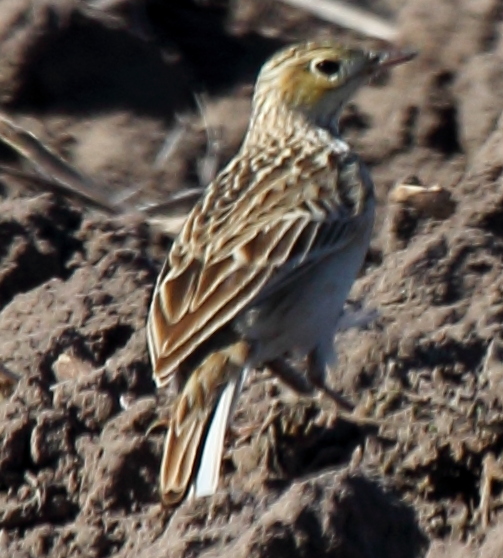
Madagascar Wagtail
Motacilla flaviventris
Order: Passeriformes / Family: Motacillidae

Wikimedia Commons
About the Madagascar Wagtail
The Madagascar Wagtail (Motacilla flaviventris) stands as a quintessential representative of the avifauna unique to the island of Madagascar. As its name suggests, this species is endemic to Madagascar, meaning it is found nowhere else in the world. It plays a significant role in the island's ecosystems, particularly in controlling insect populations. This bird is a member of the family Motacillidae, which is well known for its distinctive tail-wagging behavior. Madagascar Wagtails are adept at inhabiting diverse environments ranging from coastal regions to interior highlands, showcasing their ecological versatility. They can often be found near water bodies, such as rivers and lakes, where they actively forage. Their presence is a vital indicator of ecological health, as they thrive in habitats that support a rich insect fauna, their primary food source. During the rainy season, from November to April, these birds engage in breeding activities, which coincide with the peak abundance of insects. Nesting usually takes place in secluded spots, well-hidden from potential predators. The Madagascar Wagtail's adaptability allows it to inhabit both natural settings and human-modified landscapes. However, despite its adaptability, the species faces threats from habitat destruction and changes in land use. Conservation efforts are crucial to maintaining the delicate balance of Madagascar's ecosystems, where the Madagascar Wagtail plays an integral role. By promoting insect population control and serving as prey for larger predators, the wagtail maintains the dynamic equilibrium of its habitats. Observing this wagtail in its natural setting provides insight into the intricate interdependencies of Madagascar's biodiversity.
The Madagascar Wagtail belongs to the family Motacillidae, within the order Passeriformes. These birds typically live average lifespan is around 5-7 years, with some living up to 10 years..
How to Identify a Madagascar Wagtail
The Madagascar Wagtail is easily recognizable by its striking yellow belly, contrasting sharply with its gray upperparts and white facial markings. Adults typically exhibit a sleek body measuring about 18 centimeters in length. The head and back are a subtle gray, complementing the bright white on the throat and lower face. Juveniles resemble adults but display a more muted coloration with a paler yellow on the belly and less defined facial markings. Unlike many bird species, there is little sexual dimorphism; males and females closely resemble each other, though males may have slightly brighter plumage during the breeding season. In flight, the Madagascar Wagtail's silhouette is characterized by its long tail, which it wags incessantly both in flight and while perched. Its tail is not only a key identification feature but also aids in balance and maneuvering. When perching, it often adopts an upright posture, giving it a distinctive, alert appearance. Confusion with other species is minimal due to its unique combination of features and its limited geographic range, as other wagtails in Madagascar are either absent or rare.
Having trouble telling birds apart? Upload a photo to our bird identification tool for an instant species match.
Madagascar Wagtail Habitat and Range
Preferred Habitat
The Madagascar Wagtail inhabits a range of environments, from coastal mangroves to montane forests and urban gardens. It is most commonly associated with environments close to water sources, such as rivers, streams, and ponds, where insects are abundant. The bird is not restricted by altitude and can be found from sea level up to elevations of 2,500 meters in the central highlands. During the wet season, when food is plentiful, the wagtail often ventures into rice paddies and agricultural fields, taking advantage of the insect surge. In more urban areas, it might frequent parks and gardens, illustrating its adaptability to different habitats. Seasonal shifts in habitat use are primarily driven by food availability rather than climatic conditions, as Madagascar has a relatively stable climate year-round.
Geographic Range
As an endemic species, the Madagascar Wagtail's range is restricted to the island of Madagascar. Within the island, it occupies a broad distribution that spans from the northern tip near Diego Suarez to the southern regions around Fort Dauphin. The bird is absent from the most arid regions of the island, preferring areas with consistent water access. It has a year-round presence since it does not migrate, unlike many of its wagtail relatives found on other continents. Population density tends to be higher in regions with lush vegetation and abundant water sources, such as the eastern rainforests and central plateau. The bird's adaptability to different habitats makes it a common sight across various parts of the island.
Want to know which birds visit your area? Browse our backyard birds by location guides for region-specific species lists.
What Does the Madagascar Wagtail Eat?
The Madagascar Wagtail primarily consumes insects, making it an insectivore that plays a critical role in controlling pest populations. Its diet includes a variety of insects like flies, beetles, and caterpillars, which it captures through skillful aerial hawking or by picking them off the ground. During the rainy season, when insect activity peaks, the wagtail's feeding activity intensifies. It also consumes small invertebrates, such as spiders and snails, supplementing its diet when insect numbers dwindle. The wagtail employs a characteristic foraging technique, walking briskly with intermittent stops to wag its tail, a behavior thought to flush insects from hiding. Its feeding schedule is largely diurnal, with heightened activity during the early morning and late afternoon when insects are most active.
Madagascar Wagtail Behavior and Social Structure
The Madagascar Wagtail displays a range of behaviors that are both fascinating and functional. Typically solitary or found in pairs, this bird maintains a defined territory, particularly during the breeding season. Males perform a variety of courtship displays, including tail-fanning and wing-fluttering, to attract mates. These displays are often accompanied by soft calls. The wagtail's territorial nature manifests in aggressive displays toward intruders, involving chases and aerial acrobatics. Despite its territoriality, it may join mixed-species flocks during non-breeding periods, especially when foraging. The wagtail's daily activity patterns are closely tied to light levels, with foraging peaking at dawn and dusk. Alarm calls signal the presence of predators, often prompting nearby birds to take cover or join in mobbing behavior. This wagtail's adaptability to both natural and urban settings is a testament to its behavioral flexibility.
Madagascar Wagtail Nesting and Reproduction
The Madagascar Wagtail constructs its nest with meticulous care, using materials such as grass, leaves, and feathers to create a snug cup-like structure. Nests are typically situated in sheltered locations, such as crevices in rocks, tree forks, or even man-made structures like bridges. The female lays a clutch of 3-5 eggs, colored pale with speckles, which she incubates for about 12-14 days. Both parents participate in feeding the chicks, which fledge approximately 14-16 days after hatching. The species often raises multiple broods in a season, capitalizing on the wet season's abundance of food resources. Parental roles are well-defined, with both sexes sharing responsibilities in chick-rearing, although the female undertakes the majority of incubation duties.
Madagascar Wagtail Sounds and Vocalizations
The Madagascar Wagtail's primary song is a melodious series of high-pitched whistles and trills, often delivered from a conspicuous perch. These vocalizations serve both to establish territory and attract mates. The wagtail's call notes are short, sharp chirps, often repeated in quick succession. During the breeding season, its vocal activity increases, with repeated songs filling the air, especially at dawn. Alarm calls, typically harsher and more staccato, are used to warn of predators. The wagtail's song, though simple, is distinctive, aiding in its identification even when the bird itself is not visible.
Interesting Facts About the Madagascar Wagtail
- 1The Madagascar Wagtail, unlike many wagtails, does not migrate, making it a permanent resident of its range.
- 2This wagtail is often seen wagging its tail, a behavior that helps flush out insects from foliage.
- 3The Madagascar Wagtail's adaptability allows it to thrive in both rural and urban environments across the island.
- 4During the breeding season, the wagtail's song fills the air, often signaling the arrival of rain.
- 5Despite being a common bird in Madagascar, it remains an important indicator of ecosystem health.
- 6The wagtail's nesting sites can often be found in unexpected places like roofs and bridges.
- 7Madagascar Wagtails play a crucial role in controlling mosquito populations in their habitats.
Madagascar Wagtail Conservation Status
Currently, the Madagascar Wagtail is classified as Least Concern by the IUCN, as its population remains stable. However, habitat destruction due to deforestation and agricultural expansion poses significant threats. Conservation efforts focus on habitat protection and restoration, ensuring that this endemic species continues to thrive. Historical population changes are not well-documented, but the species' adaptability to various habitats suggests resilience. Ongoing efforts aim to mitigate human-induced habitat loss while promoting awareness of the wagtail's ecological importance.