Madanga
Anthus ruficollis
Order: Passeriformes / Family: Motacillidae
Wikimedia Commons
About the Madanga
The Madanga, scientifically known as Anthus ruficollis, is a striking bird that belongs to the family Motacillidae. This small songbird is notable for its vibrant rufous throat, setting it apart from other pipits. Native to Indonesia, the Madanga is primarily found in the montane forests of the island of Buru, a region characterized by its rich biodiversity and unique avian fauna. As an inhabitant of the dense forest understory, the Madanga plays a critical role in the ecosystem by participating in seed dispersal and insect population control. The bird's ecological significance extends beyond its immediate environment, as it contributes to the overall health of the forest ecosystem. Seasonal behaviors of the Madanga include altitudinal movements within its montane habitat, driven by food availability and climatic conditions. During the breeding season, typically occurring from October to March, the Madanga becomes more conspicuous as it actively defends its territory and engages in courtship displays. Its presence in these pristine forests underscores the importance of habitat conservation, as any disturbance could have profound impacts on its survival. The Madanga's restricted range and specialized habitat preferences make it a species of considerable interest to ornithologists and conservationists alike. Its reliance on intact forest environments highlights the need for ongoing conservation efforts to preserve these critical habitats. As a species with a limited distribution, the Madanga serves as an indicator of forest health, and any changes in its population could signal broader ecological shifts. Thus, understanding the Madanga's role within its ecosystem is essential for informing effective conservation strategies. The Madanga's behavior and ecology offer valuable insights into the complex dynamics of montane forest ecosystems, emphasizing the interconnectedness of species and their habitats.
The Madanga belongs to the family Motacillidae, within the order Passeriformes. These birds typically live average 5 years with a maximum recorded of 8 years..
How to Identify a Madanga
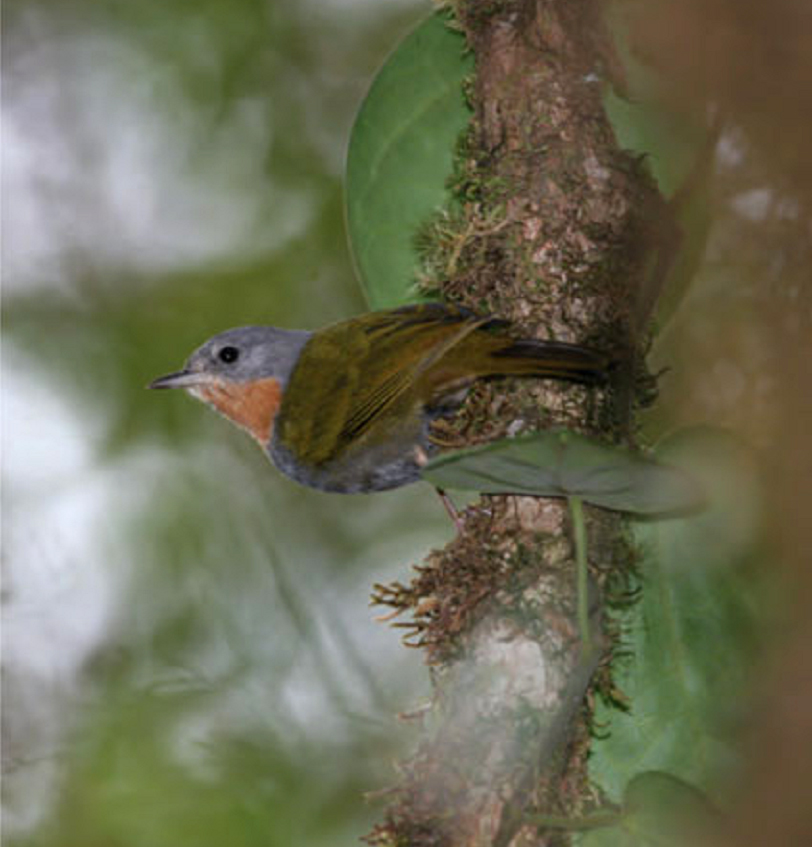
The Madanga exhibits a distinctive plumage characterized by its rufous throat, which stands out against its otherwise olive-brown upperparts. This striking feature serves as a key identification mark for birders. The bird's underparts are pale with subtle streaking, providing a contrast to its more vivid upper body. In terms of size, the Madanga is relatively small, measuring approximately 15 centimeters in length, making it comparable to other pipits. Male and female Madangas are similar in appearance, although males may display slightly brighter coloration during the breeding season. Juvenile Madangas, on the other hand, lack the pronounced rufous throat, instead exhibiting a more subdued brownish coloration overall. In flight, the Madanga's silhouette is slender and agile, reflecting its adaptation to navigating dense forest undergrowth. Its flight pattern is characterized by quick, darting movements, often accompanied by brief pauses on low branches or the forest floor. When perching, the Madanga assumes an upright posture, frequently bobbing its tail in a characteristic manner. While the Madanga is unlikely to be confused with other species within its limited range, its general appearance bears resemblance to other pipits, necessitating careful observation of its distinctive throat coloration and overall behavior.
Having trouble telling birds apart? Upload a photo to our bird identification tool for an instant species match.
Madanga Habitat and Range
Preferred Habitat
The Madanga inhabits montane forests, specifically those found on the island of Buru in Indonesia. These forests are characterized by high humidity and dense vegetation, providing ample cover and food resources for the bird. The Madanga typically resides at elevations ranging from 1,000 to 2,000 meters, where it can exploit the rich insect fauna and abundant plant life. Seasonal habitat shifts occur as the bird moves altitudinally to follow food availability and optimal breeding conditions. While the Madanga primarily occupies forested regions, its presence in adjacent shrublands and secondary growth areas suggests a degree of adaptability. However, its reliance on intact forest environments underscores the importance of preserving these habitats. The Madanga is not commonly found in urban or heavily disturbed areas, as it prefers the seclusion and complexity of montane forest ecosystems. The protection of these habitats is crucial for the bird's continued survival, as deforestation and land conversion pose significant threats to its existence.
Geographic Range
The Madanga's range is highly restricted, confined to the island of Buru in the Maluku archipelago of Indonesia. This limited distribution makes it an island endemic, with its presence recorded exclusively in the montane regions of the island. The bird's breeding range is similarly constrained, with breeding activities primarily occurring within the same montane habitats it occupies year-round. Due to its localized range, the Madanga does not undertake long-distance migrations. Instead, it exhibits altitudinal movements within its range, shifting between different elevations in response to seasonal changes in food availability and climatic conditions. Population density hotspots for the Madanga are centered around the forested highlands of Buru, where suitable habitat conditions prevail. The bird's restricted range highlights its vulnerability to habitat disturbance and underscores the importance of targeted conservation efforts within this specific geographic area. The Madanga's presence on Buru serves as a reminder of the unique avian diversity found within the Indonesian archipelago, emphasizing the need to protect these critical habitats from environmental threats.
Want to know which birds visit your area? Browse our backyard birds by location guides for region-specific species lists.
What Does the Madanga Eat?
The Madanga's diet primarily consists of insects, making it an insectivorous species that plays a vital role in controlling insect populations within its habitat. It forages predominantly on the forest floor, using its keen eyesight to detect movement among the leaf litter. The bird employs a combination of short hops and brief flights to capture its prey, which includes ants, beetles, and other small invertebrates. Seasonal variations in food availability influence the Madanga's diet, with the bird consuming a higher proportion of plant material, such as seeds and berries, when insect abundance declines. The Madanga's foraging behavior is largely diurnal, with peak feeding activity occurring in the early morning and late afternoon when insect activity is highest. Its ability to exploit different food sources within its habitat underscores its adaptability and resilience, yet also highlights its reliance on intact forest ecosystems for sustenance. The bird's dietary habits contribute to its ecological role as both a predator and seed disperser, aiding in the maintenance of forest health and biodiversity.
Madanga Behavior and Social Structure
The Madanga exhibits a range of behaviors that reflect its adaptation to the montane forest environment. It is generally solitary or found in pairs, particularly during the breeding season when territoriality becomes pronounced. Males engage in conspicuous courtship displays, often involving vocalizations and dynamic flight maneuvers to attract females and establish dominance within their territories. The Madanga's territorial behavior includes vocal defenses and physical displays against intruding conspecifics, ensuring exclusive access to resources and breeding opportunities. Outside of the breeding season, the bird may form loose associations with other small insectivorous birds, taking advantage of mixed-species foraging flocks to increase feeding efficiency and predator detection. The Madanga is diurnally active, with peak activity periods occurring during the cooler morning and late afternoon hours. Its response to predators involves seeking cover in dense vegetation and emitting alarm calls to alert nearby birds of potential threats. The Madanga's behaviors, from its solitary nature to its intricate courtship displays, provide a glimpse into the complex social dynamics within montane forest bird communities.
Madanga Nesting and Reproduction
The Madanga constructs cup-shaped nests using a variety of natural materials, including twigs, leaves, and grass, lined with softer substances such as moss and animal hair. These nests are typically located in sheltered sites, such as low shrubs or small trees, providing protection from predators and adverse weather conditions. The bird's clutch size generally consists of two to three eggs, which are incubated by the female for approximately 12 to 14 days. During this period, the male plays a supportive role by providing food and guarding the nest site. After hatching, both parents participate in feeding and caring for the chicks, which fledge after approximately 14 to 16 days. The Madanga is known to raise one to two broods per year, depending on environmental conditions and resource availability. Its nesting behavior reflects the bird's adaptability and resilience, yet also underscores its dependence on intact, undisturbed forest environments for successful reproduction. Understanding the Madanga's nesting ecology is crucial for informing conservation efforts aimed at preserving its habitat and ensuring its continued survival.
Madanga Sounds and Vocalizations
The Madanga's primary song consists of a series of melodious notes, characterized by a rhythmic pattern that rises and falls in pitch. The song serves as a means of communication and territory establishment, often delivered from a prominent perch within its forest habitat. Call notes are shorter and less complex, used primarily for maintaining contact between mates or signaling alarm. In response to threats, the Madanga emits sharp, high-pitched alarm calls to alert nearby conspecifics. During the dawn chorus, the bird's song is most prominent, contributing to the vibrant acoustic landscape of the montane forest. The Madanga's vocalizations, while not as complex as some songbirds, play an essential role in its social interactions and territory defense. Birders familiar with its calls can use these vocal cues to locate and identify the Madanga within its dense forest habitat.
Interesting Facts About the Madanga
- 1The Madanga is one of only a few bird species endemic to the island of Buru, highlighting its unique evolutionary history.
- 2Despite its small size, the Madanga's calls can carry over long distances, aiding in territory defense within dense forests.
- 3The Madanga's altitudinal movements mirror those of other montane species, adapting to seasonal changes in food availability.
- 4This bird's name, 'Madanga,' is derived from local nomenclature, emphasizing its cultural significance in its native region.
- 5The Madanga plays a crucial role in seed dispersal, contributing to the regeneration of its forest habitat.
- 6During the breeding season, male Madangas often engage in aerial displays, showcasing their agility and strength.
- 7The Madanga's rufous throat is a key identification feature, rarely seen in other members of the Motacillidae family.
Madanga Conservation Status
The Madanga is currently classified as Vulnerable on the IUCN Red List, reflecting its restricted range and potential threats to its habitat. The primary threats to the Madanga include habitat loss due to logging, agricultural expansion, and infrastructure development on the island of Buru. These activities reduce the availability of suitable forest habitats, posing significant challenges to the bird's survival. Conservation efforts focus on habitat protection and restoration, aiming to preserve the montane forests that the Madanga depends on. Local and international conservation organizations work to raise awareness of the Madanga's plight and implement measures to mitigate habitat destruction. Historical population changes are difficult to quantify due to the bird's elusive nature and limited distribution, but ongoing monitoring efforts are essential for assessing population trends and informing conservation strategies. Ensuring the long-term survival of the Madanga requires concerted efforts to address the root causes of habitat loss and promote sustainable land-use practices on Buru.