
Mangrove Whistler
Pachycephala cinerea
Order: Passeriformes / Family: Pachycephalidae
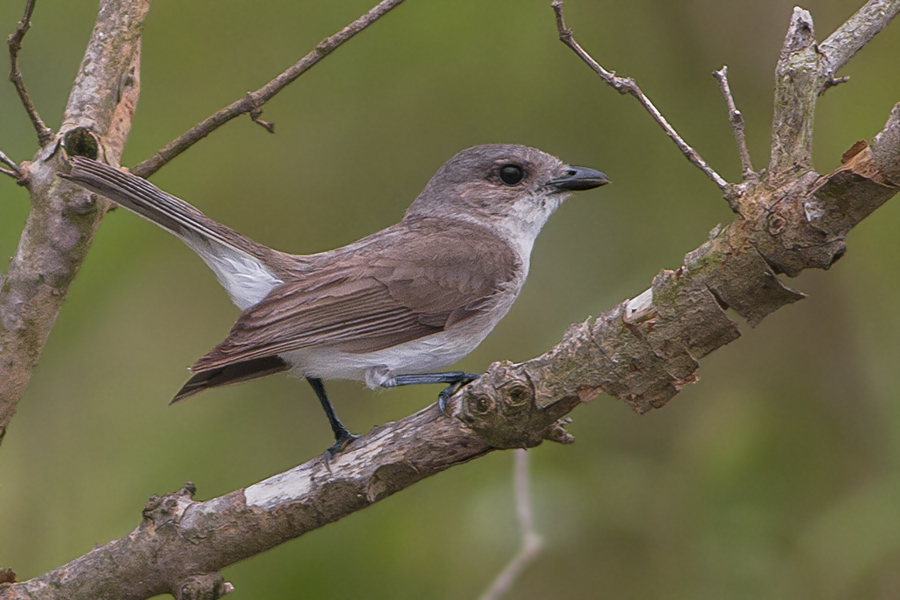
Wikimedia Commons
About the Mangrove Whistler
The Mangrove Whistler (Pachycephala cinerea) is a small passerine bird that inhabits the coastal mangrove ecosystems of Southeast Asia. Renowned for its powerful and melodious whistling, this bird plays a vital role in the soundscape of its habitat. It predominantly resides in countries such as Thailand, Malaysia, Indonesia, and the Philippines, where it is closely associated with dense mangrove forests. These habitats, characterized by saline conditions and a complex root system, provide essential resources for the Mangrove Whistler, including shelter and abundant food sources.
In terms of ecological significance, the Mangrove Whistler contributes to the balance of its ecosystem by controlling insect populations. It serves as both predator and prey within the food web, impacting the abundance and diversity of other species. Its presence is indicative of a healthy mangrove ecosystem, which in turn supports a myriad of other flora and fauna.
The Mangrove Whistler exhibits seasonal behaviors, particularly in response to breeding cycles and climatic conditions. This bird is generally sedentary but may undertake short-distance movements within its range during the non-breeding season in search of optimal foraging opportunities. The breeding season often coincides with the onset of the wet season when food is most plentiful, which aids in the successful rearing of chicks. During this time, the Mangrove Whistler becomes more vocal, with males frequently singing to establish and defend territories.
Human activities such as coastal development and deforestation pose significant threats to the Mangrove Whistler's habitat. Conservation efforts aim to protect these vital ecosystems, not only for the preservation of this species but also for the overall health of coastal environments. As mangroves are crucial in combating climate change through carbon sequestration, the conservation of the Mangrove Whistler's habitat holds broader environmental importance.
The Mangrove Whistler belongs to the family Pachycephalidae, within the order Passeriformes. These birds typically live average lifespan is around 5-7 years, with some individuals reaching 9 years..
How to Identify a Mangrove Whistler
The Mangrove Whistler is a medium-sized songbird, measuring approximately 16-18 cm in length. Adult plumage is predominantly grey, with a slightly paler underside, exhibiting a subtle sexual dimorphism where males appear slightly darker than females. Both sexes, however, possess a distinctive white throat and a faintly streaked breast, which can assist in identification.
Juveniles tend to have a duller appearance, with a more brownish tone to their feathers and less distinct markings. This can sometimes lead to confusion with other Pachycephala species, such as the Brown Whistler, which also inhabits similar regions. However, the Mangrove Whistler's consistent grey coloration and distinct vocalizations set it apart from its relatives.
In flight, the Mangrove Whistler presents a robust silhouette with broad wings and a slightly rounded tail. It often perches conspicuously in the mid to upper levels of mangrove trees, where it can be seen scanning for insects. Its posture is upright, with the tail slightly cocked, and it is not uncommon to spot this bird singing from an exposed branch, especially during the breeding season when its song is a defining characteristic.
Having trouble telling birds apart? Upload a photo to our bird identification tool for an instant species match.
Mangrove Whistler Habitat and Range
Preferred Habitat
The Mangrove Whistler is intrinsically linked to mangrove ecosystems, thriving in the unique conditions offered by these coastal habitats. It is predominantly found in lowland areas at sea level, where mangroves flourish in the intertidal zones. These areas are characterized by saline waters, muddy substrates, and a network of aerial roots that provide shelter and nesting sites.
Although primarily associated with mangroves, this bird may occasionally be observed in adjacent coastal scrub and secondary forests, particularly in regions where mangroves border other habitat types. Seasonal habitat shifts are minimal, but during the non-breeding season, some individuals may venture slightly inland to exploit different food resources.
While the Mangrove Whistler is not typically found in urban settings, it may be seen in rural coastal areas where human activity has not extensively altered the natural landscape. Conservation of its mangrove habitat is crucial, as these environments are increasingly threatened by urban expansion and agricultural encroachment.
Geographic Range
The range of the Mangrove Whistler spans the coastal regions of Southeast Asia, covering a significant part of the Malay Peninsula, the islands of Sumatra and Borneo, and extending into the Philippines. It is a resident species within these areas, showing limited migratory behavior.
In Thailand, the Mangrove Whistler can be found along the southern coasts, particularly in protected mangrove reserves. In Malaysia, its presence is notable in both Peninsular Malaysia and the island of Borneo, with population density hotspots in mangrove-rich regions such as Sabah and Sarawak.
The bird's range in Indonesia is more fragmented, found in suitable habitats on Sumatra, Java, and the lesser Sunda Islands. The Philippines hosts several subspecies of the Mangrove Whistler, each adapted to different islands, highlighting the bird's capacity for localized adaptation.
Migration corridors for this species are not well-defined, as it tends to remain within its established range. However, localized movements between neighboring habitats are possible, particularly in response to environmental changes or resource availability.
Want to know which birds visit your area? Browse our backyard birds by location guides for region-specific species lists.
What Does the Mangrove Whistler Eat?
The Mangrove Whistler primarily feeds on insects, which constitute the bulk of its diet. It exhibits a preference for small arthropods, including beetles, ants, and caterpillars. These are typically gleaned from foliage or captured mid-air in brief sallies from perches.
Seasonal changes affect its diet, with a noticeable increase in insect consumption during the breeding season when the demand for high-protein food is greatest. The bird supplements its diet with small fruits and seeds, particularly during periods when insect availability is low.
Foraging techniques of the Mangrove Whistler involve a combination of sit-and-wait tactics and active searching. It often perches quietly within the mangrove canopy, scanning the environment before making quick, agile movements to capture prey. The bird is most active during the early morning and late afternoon, aligning its feeding schedule with peak insect activity.
Mangrove Whistler Behavior and Social Structure
The Mangrove Whistler displays solitary behavior outside the breeding season, although it may occasionally join mixed-species foraging flocks within mangrove forests. During the breeding season, territoriality becomes pronounced, with males singing persistently to establish and defend their territories against rivals.
Courtship displays are subtle, involving vocal exchanges and occasional aerial pursuits. Once paired, the birds exhibit strong pair bonds, with both parents contributing to nest building, incubation, and feeding of the young.
In response to predators, the Mangrove Whistler employs alarm calls and evasive flight tactics. It is vigilant and often retreats deeper into the mangrove thickets when threatened. Daily activity patterns are closely tied to the tidal and light cycles of the mangrove environment, with increased movement and vocal activity during dawn and dusk.
Mangrove Whistler Nesting and Reproduction
The Mangrove Whistler constructs a cup-shaped nest, often utilizing the fork of a mangrove tree branch. Nest materials include twigs, grasses, and bark strips, which are woven together to create a sturdy structure.
Nests are typically situated 2-5 meters above the ground, providing protection from ground predators and flooding. The clutch size ranges from two to three eggs, with both parents sharing incubation duties over a period of approximately 14-16 days.
After hatching, chicks are fed and cared for by both parents until fledging, which occurs around 14-18 days post-hatching. The Mangrove Whistler is known to produce one to two broods per year, depending on environmental conditions and food availability.
Mangrove Whistler Sounds and Vocalizations
The Mangrove Whistler is celebrated for its melodious song, characterized by a series of clear, whistled notes that vary in pitch and rhythm. The primary song is often delivered from a high perch and can be heard over significant distances, serving as both a territorial and mate attraction signal.
Its call notes are softer and more subdued, typically a series of brief, whistled phrases used in communication between mates or within family groups. Alarm calls are sharper and more urgent, designed to alert conspecifics to potential threats.
During the dawn chorus, the Mangrove Whistler's song is particularly prominent, contributing to the vibrant acoustic environment of the mangrove forest. Its song is reminiscent of that of the Golden Whistler, albeit less complex and with a distinctive cadence.
Interesting Facts About the Mangrove Whistler
- 1The Mangrove Whistler's song can be heard from over 100 meters away, making it a prominent feature of the mangrove soundscape.
- 2Despite its name, the Mangrove Whistler can also be found in coastal scrub, highlighting its adaptability.
- 3The species exhibits localized subspecies variation, with distinct populations in the Philippines adapting to island-specific environments.
- 4Mangrove Whistlers help control insect populations, playing a crucial role in the health of mangrove ecosystems.
- 5The bird's nest is often camouflaged among the mangrove foliage, providing protection from predators.
- 6Mangrove Whistlers have a close relationship with specific mangrove species, often favoring Avicennia and Rhizophora trees for nesting.
- 7The Mangrove Whistler is one of the few birds that can tolerate the high salinity environment of mangrove ecosystems.
Mangrove Whistler Conservation Status
The Mangrove Whistler is currently listed as Least Concern by the IUCN, reflecting a relatively stable population across its range. However, ongoing threats such as habitat destruction, especially the clearance of mangroves for development and agriculture, pose significant risks to its future. Conservation efforts focus on the protection and restoration of mangrove habitats, crucial for the long-term survival of this species. Protected areas and local conservation initiatives play important roles in preserving these key environments. Historically, the Mangrove Whistler has maintained stable populations due to its adaptability and the relative abundance of mangrove habitats. However, as pressure on coastal ecosystems increases, continued vigilance and conservation action are necessary to ensure its continued presence in Southeast Asia.
Other Pachycephalidae Species


Birds Similar to the Mangrove Whistler
These species are often confused with the Mangrove Whistler due to similar appearance or overlapping range.
