
Marsh Seedeater
Sporophila palustris
Order: Passeriformes / Family: Thraupidae
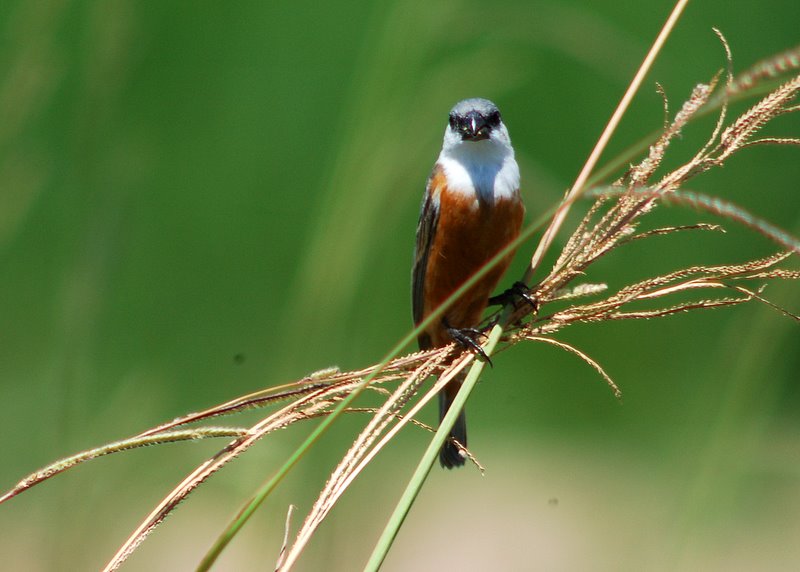
Wikimedia Commons
About the Marsh Seedeater
The Marsh Seedeater, known scientifically as Sporophila palustris, is a small passerine bird belonging to the family Thraupidae. This bird is notable for its striking contrast between the black and white plumage of the male and the more subdued colors of the female. It is primarily found in the marshlands and wetlands of southern South America, particularly in countries such as Argentina, Brazil, Paraguay, and Uruguay. These areas provide the dense grasses and abundant seed sources that the Marsh Seedeater requires for survival. The ecological role of the Marsh Seedeater is significant within these habitats, as it aids in seed dispersion and provides a prey base for local predators. During the breeding season, which typically occurs in the austral spring and summer months of September through February, the Marsh Seedeater becomes particularly active. Males engage in elaborate singing displays to attract females, and both sexes participate in nest building. Outside the breeding season, their behavior shifts as they form small flocks, often mixing with other seedeater species to forage. The Marsh Seedeater's presence in these regions is a key indicator of healthy marshland ecosystems. Conservation of their habitat ensures the survival of not just this species, but also the many other flora and fauna that rely on these unique environments.
The Marsh Seedeater belongs to the family Thraupidae, within the order Passeriformes. These birds typically live average 2-4 years, with a maximum recorded of 6 years..
How to Identify a Marsh Seedeater
Identifying the Marsh Seedeater involves noting its distinctive field marks. Adult males have a sharp contrast between their black upperparts and white underparts, with a small white patch on their wings. Females and juveniles, however, display a more subdued brownish-gray plumage, making them less conspicuous. The slight differences in plumage between sexes are more pronounced during the breeding season, when males exhibit their most vibrant colors. One might confuse the Marsh Seedeater with other Sporophila species, such as the Chestnut Seedeater, but the Marsh Seedeater's lack of chestnut coloration and distinctive white wing patch help differentiate it. In flight, the Marsh Seedeater's silhouette is relatively compact, with a short tail and rounded wings. When perching, they often adopt an upright posture, which, along with their distinct coloration, aids in identification.
Having trouble telling birds apart? Upload a photo to our bird identification tool for an instant species match.
Marsh Seedeater Habitat and Range
Preferred Habitat
The Marsh Seedeater thrives in wetland habitats, particularly in freshwater marshes and wet grasslands. These environments, often found at low elevations, provide the dense grasses and seeds vital for their diet and nesting. During the breeding season, they prefer areas with abundant cover to protect their nests from predators. As seasonal changes occur, the Marsh Seedeater might shift slightly within these habitats, seeking areas with optimal food availability. While they primarily occupy rural wetlands, occasionally, they can be found in degraded habitats near urban areas, provided there is sufficient vegetation.
Geographic Range
The Marsh Seedeater's range is primarily confined to southern South America. During the breeding season, they are found in the marshlands of Argentina, Brazil, Paraguay, and Uruguay. These regions offer the optimal conditions for breeding and foraging. Outside of the breeding season, they may disperse slightly but generally remain within these countries, as they are non-migratory. Population density hotspots are typically in areas with extensive marshland coverage, such as the Iberá Wetlands in Argentina and the Pantanal in Brazil. Despite their limited range, these regions support dense populations owing to the favorable habitat conditions.
Want to know which birds visit your area? Browse our backyard birds by location guides for region-specific species lists.
What Does the Marsh Seedeater Eat?
The diet of the Marsh Seedeater consists primarily of seeds, which they skillfully extract from grasses and other marshland vegetation. During the breeding season, their diet may include a higher proportion of insects to meet the increased nutritional demands. They employ a foraging technique that involves hopping along the ground or perching on stalks to reach seeds. This technique is efficient, allowing them to exploit their habitat effectively. The size of prey items, like seeds and small insects, suits their small bill size. Feeding occurs throughout the day, with peak activity in the morning and late afternoon when temperatures are cooler.
Marsh Seedeater Behavior and Social Structure
Marsh Seedeaters are known for their social behavior, especially outside the breeding season when they form flocks. These flocks often include other seedeater species, which can provide safety in numbers. During the breeding season, males become territorial, singing to establish dominance and attract mates. Their courtship displays include singing from prominent perches, a behavior that highlights their striking plumage. In response to predators, Marsh Seedeaters often rely on their cryptic plumage and rapid flight to evade threats. Daily activity patterns involve early morning and late afternoon foraging sessions, with midday spent resting in shaded areas to avoid heat stress.
Marsh Seedeater Nesting and Reproduction
Marsh Seedeaters build cup-shaped nests using grasses and plant fibers, often located low within dense vegetation to conceal them from predators. Preferred nesting sites include clumps of reeds or grasses in marshy areas. The female typically lays a clutch of 2 to 3 eggs, which she incubates for about 12 to 14 days. Both parents participate in feeding the fledglings, which leave the nest after approximately two weeks. The species may raise one or two broods per year, depending on the availability of food and environmental conditions.
Marsh Seedeater Sounds and Vocalizations
The primary song of the Marsh Seedeater is a series of musical, melodious notes delivered in a rising and falling rhythm. This song is a key tool for males during the breeding season to establish territory and attract mates. Their call notes are simpler, often described as a sharp 'chip' sound, used for communication within flocks. Alarm calls are more rapid and intense, signaling potential danger to nearby birds. At dawn, the Marsh Seedeater contributes to the chorus of marshland birds, adding to the vibrant soundscape of their habitat.
Interesting Facts About the Marsh Seedeater
- 1The Marsh Seedeater can consume up to 50% of its body weight in seeds each day.
- 2Males exhibit their brightest plumage during the breeding season to attract females.
- 3The Marsh Seedeater is a key indicator species for the health of South American wetland ecosystems.
- 4Despite their small size, Marsh Seedeaters can travel considerable distances within their habitat in search of food.
- 5Their scientific name, Sporophila palustris, reflects their seed-eating habits and marshland habitat.
- 6Marsh Seedeaters often join mixed-species flocks during non-breeding seasons to enhance foraging efficiency.
- 7The Iberá Wetlands in Argentina are one of the most significant habitats for the Marsh Seedeater.
Marsh Seedeater Conservation Status
The Marsh Seedeater is currently listed as Vulnerable on the IUCN Red List due to habitat loss and degradation. Populations have been declining as marshlands are drained or converted for agriculture. Conservation efforts focus on preserving and restoring natural wetlands. Historically, the population was more widespread, but human activities have significantly reduced available habitat. Continued conservation actions are crucial to prevent further declines.


