Marsh Widowbird
Euplectes hartlaubi
Order: Passeriformes / Family: Ploceidae
Wikimedia Commons
About the Marsh Widowbird
The Marsh Widowbird, scientifically named Euplectes hartlaubi, is a striking member of the family Ploceidae. This bird is predominantly found in the wetland regions of central Africa, where it plays a crucial role in maintaining the ecological balance. The Marsh Widowbird is known for its distinct seasonal plumage, with males displaying a vibrant transformation during the breeding season. This species, along with others in its genus, contributes to the rich biodiversity of African wetlands. While they are not considered migratory, Marsh Widowbirds may exhibit local movements in response to seasonal changes in water levels and food availability. During the breeding season, males develop long tail feathers, which are used in elaborate courtship displays. These displays are not only a testament to the bird's adaptability but also highlight the evolutionary pressures that shape its physical characteristics. The Marsh Widowbird's role in its ecosystem is multifaceted. It acts as both a predator and prey, participating in the intricate food webs of its habitat. By feeding on seeds and insects, it helps control insect populations and aids in seed dispersal, thus supporting plant diversity in its environment. The presence of the Marsh Widowbird in wetland areas indicates a healthy ecosystem, as these birds require specific conditions to thrive. The loss of wetlands due to human activities poses a significant threat to their populations, emphasizing the need for conservation efforts in these regions. Overall, the Marsh Widowbird serves as a vital component of the ecological fabric of central African wetlands, with its presence reflecting the health and biodiversity of these environments.
The Marsh Widowbird belongs to the family Ploceidae, within the order Passeriformes. These birds typically live typically 3-5 years, with some individuals living up to 7 years..
How to Identify a Marsh Widowbird
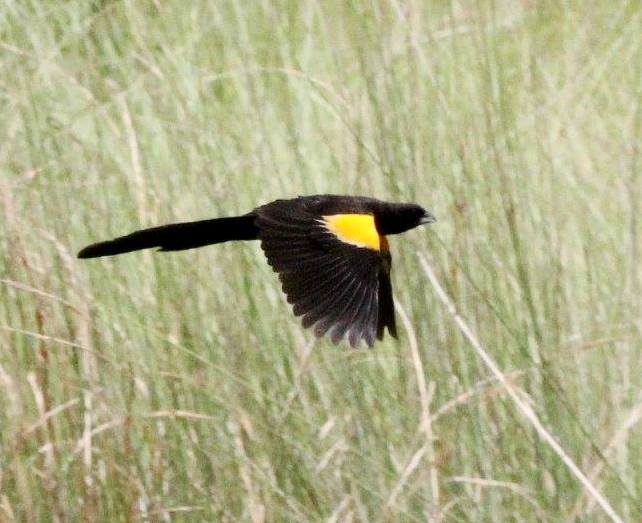
The Marsh Widowbird is best recognized by its predominantly black plumage, which is particularly striking in adult males during the breeding season. These males exhibit long, flowing tail feathers and a glossy sheen that adds to their allure. Female and non-breeding males, in contrast, display a more subdued coloration, typically brown with streaks, which provides camouflage in their grassy habitats. Juveniles resemble the females, lacking the distinctive long tail feathers and vibrant sheen of the breeding males. Observers might confuse the Marsh Widowbird with the similar-looking Red-collared Widowbird, but the latter features red markings not present in the Marsh Widowbird. In flight, the Marsh Widowbird's silhouette is marked by its elongated tail feathers, especially pronounced in males. While perched, the bird's upright posture and the contrast between its dark plumage and the lighter grasses or reeds make it relatively easy to identify. Despite potential confusion with other widowbird species, the combination of its habitat preference and specific plumage traits aids in its identification.
Having trouble telling birds apart? Upload a photo to our bird identification tool for an instant species match.
Marsh Widowbird Habitat and Range
Preferred Habitat
The Marsh Widowbird inhabits wetland areas, particularly favoring marshes, swamps, and floodplains across central Africa. These environments provide abundant food sources and nesting sites. They are typically found at low elevations, often near bodies of water with dense vegetation. Seasonal changes in water levels influence their habitat use, as they may move to areas with optimal water conditions during dry or wet periods. While primarily associated with rural and natural landscapes, Marsh Widowbirds can occasionally be spotted in more urbanized areas if suitable wetland conditions exist nearby. Their reliance on wetlands makes them vulnerable to habitat destruction, highlighting the importance of preserving these ecosystems.
Geographic Range
The Marsh Widowbird's range is centered in central Africa, where it predominantly resides in countries such as Kenya, Uganda, Tanzania, and the Democratic Republic of the Congo. Its distribution is closely tied to the availability of suitable wetland habitats. Unlike many other bird species, the Marsh Widowbird does not undertake long-distance migrations, although it may make local movements to adapt to changing environmental conditions. These shifts are often driven by seasonal variations in rainfall and water levels, which affect the availability of food and nesting sites. In regions where wetlands are abundant, the Marsh Widowbird can be relatively common, forming small, localized populations that thrive in these environments.
Want to know which birds visit your area? Browse our backyard birds by location guides for region-specific species lists.
What Does the Marsh Widowbird Eat?
The diet of the Marsh Widowbird consists primarily of grass seeds and insects. During the breeding season, when energy demands are high, males and females alike increase their insect consumption due to the high protein content that aids in reproduction. This includes small beetles, caterpillars, and other arthropods found in their wetland habitats. Outside of the breeding season, their diet shifts more heavily towards seeds, which are abundant in the dense grasses of their environment. Foraging typically occurs during the cooler parts of the day, often in early morning or late afternoon. The Marsh Widowbird employs a combination of ground foraging and low, hovering flights to capture its prey, demonstrating its adaptability and efficiency in exploiting available resources.
Marsh Widowbird Behavior and Social Structure
The Marsh Widowbird is a socially dynamic species, often seen in flocks outside the breeding season. During the breeding period, males become highly territorial, engaging in elaborate courtship displays that include aerial flights and tail feather displays to attract females. These displays are crucial for mating success and demonstrate the male's fitness. The species exhibits a polygynous mating system, with dominant males often securing multiple mates. When not breeding, they exhibit more communal behavior, forming flocks that can number in the dozens. In terms of predator response, Marsh Widowbirds rely on their keen eyesight and the protective cover of dense vegetation to avoid predation. Daily activity patterns involve periods of foraging and rest, with peak activity occurring at dawn and dusk when temperatures are cooler and predators are less active.
Marsh Widowbird Nesting and Reproduction
Marsh Widowbirds build their nests in thick vegetation, often within reeds or grasses overhanging water. The nest is a spherical structure with a side entrance, intricately woven from grasses and other plant materials. Clutch sizes typically range from two to four eggs, with an incubation period of about 12-14 days. Both parents participate in feeding the chicks, which fledge approximately 14-18 days after hatching. The species may produce two broods per year, depending on environmental conditions and food availability. Parental care extends beyond fledging, with adults continuing to feed and protect young birds until they are fully independent.
Marsh Widowbird Sounds and Vocalizations
The primary song of the Marsh Widowbird is a series of melodious whistles and chirps, characterized by a rhythmic, ascending pattern. These vocalizations serve both to attract mates and assert territorial boundaries. In addition to their song, Marsh Widowbirds produce sharp call notes that function as alarm calls when predators are near. During the dawn chorus, their vocal activity peaks, creating a lively atmosphere in their wetland habitats. The quality of their song is often compared to other passerines, though it carries a unique briskness and clarity distinctive to the species.
Interesting Facts About the Marsh Widowbird
- 1The Marsh Widowbird's long tail feathers in males can be up to three times the length of their body during the breeding season.
- 2Despite their striking appearance, Marsh Widowbirds rely heavily on camouflage when not breeding, blending into their wetland habitats.
- 3The Marsh Widowbird's courtship display involves not just tail feather display but also aerial acrobatics to impress potential mates.
- 4Unlike many other birds, Marsh Widowbirds remain in the same general area year-round, showcasing their adaptation to local conditions.
- 5Marsh Widowbirds contribute to seed dispersal in wetlands, aiding in the maintenance of plant diversity in their ecosystems.
- 6Their call, while musical, is often described as having a harsher quality compared to other widowbird species.
- 7The presence of Marsh Widowbirds in an area can indicate a thriving and healthy wetland ecosystem due to their habitat specificity.
Marsh Widowbird Conservation Status
Currently, the Marsh Widowbird is classified as Least Concern by the IUCN, though populations face pressures from habitat destruction and degradation. Wetland drainage for agriculture and urban development poses significant threats. Despite these challenges, some populations remain stable due to conservation efforts focused on wetland preservation. Historical population changes have been marked by fluctuations corresponding to habitat availability. Ongoing conservation projects aim to monitor populations and protect critical habitats, ensuring the survival of the species amidst environmental changes.