Masafuera Rayadito
Aphrastura masafuerae
Order: Passeriformes / Family: Furnariidae

Wikimedia Commons
About the Masafuera Rayadito
The Masafuera Rayadito (Aphrastura masafuerae) is a fascinating and rare bird species found exclusively on Isla Alejandro Selkirk, part of the Juan Fernández Islands, Chile. As a member of the Furnariidae family, it exhibits a suite of unique traits that make it particularly interesting to ornithologists and conservationists. This bird is notable for its strong affiliation with the native flora of the island, often seen foraging in the dense forests that blanket the rugged terrain. The island's isolation has led to a high degree of endemism, with the Masafuera Rayadito serving as a prime example. Its presence signifies the ecological uniqueness of the habitat, which comprises a mix of temperate forests and shrublands. The rayadito plays a crucial ecological role as an insectivore, helping to maintain insect populations in check, which aids in the health of the island's ecosystems. During different seasons, the Masafuera Rayadito exhibits slight changes in behavior, particularly in its foraging habits, as shifts in insect abundance require it to adapt. By monitoring these seasonal behaviors, researchers gain insights into the broader ecological dynamics at play on Isla Alejandro Selkirk. Because of its restricted range, the Masafuera Rayadito stands as a symbol of the fragile balance within island ecosystems, where even minor changes can have significant impacts.
The Masafuera Rayadito belongs to the family Furnariidae, within the order Passeriformes. These birds typically live average 6 years with a maximum recorded of 9 years..
How to Identify a Masafuera Rayadito
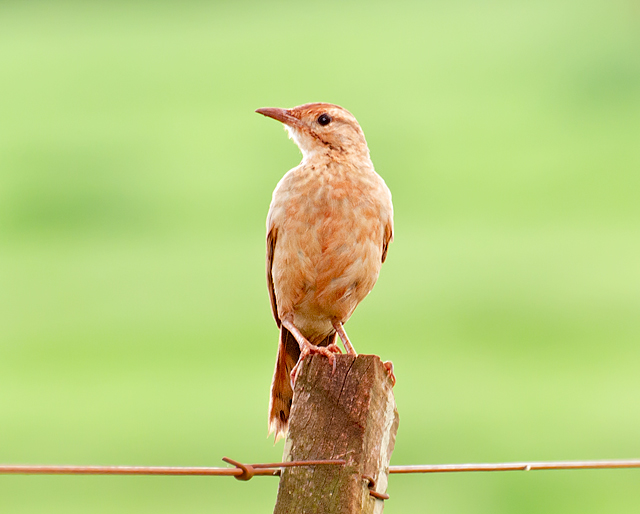
The Masafuera Rayadito can be identified by its petite size and striking black and brown plumage. Adults have a predominantly dark brown body with black streaks running along the back and wings, creating a distinctive pattern that aids in camouflage among the island's vegetation. The face features a notable white stripe above the eye, contrasting sharply with the darker head. Juveniles resemble adults but with more muted colors, lacking the pronounced streaking seen in mature birds. There are no significant plumage differences between males and females, making gender identification in the field challenging. In flight, the rayadito exhibits a rapid, fluttering wingbeat typical of small passerines, while it perches with an upright posture, often flicking its tail energetically. Similar species confusion is minimal due to its unique geographic location and distinct markings, though it could be mistaken for other rayaditos by those unfamiliar with its specific characteristics.
Having trouble telling birds apart? Upload a photo to our bird identification tool for an instant species match.
Masafuera Rayadito Habitat and Range
Preferred Habitat
The Masafuera Rayadito inhabits the temperate forests and shrublands of Isla Alejandro Selkirk, thriving in areas with dense vegetation and abundant insect life. These habitats typically range from sea level to higher elevations, where the bird finds ample cover and foraging opportunities. Seasonal habitat shifts are minimal due to the island's consistent climate, allowing the rayadito to maintain a relatively stable range throughout the year. Unlike many birds, the Masafuera Rayadito shows little affinity for urban areas, remaining in the natural, undisturbed parts of the island. Its presence is a testament to the island's rich biodiversity and the importance of preserving such pristine environments.
Geographic Range
The Masafuera Rayadito is an endemic species confined to Isla Alejandro Selkirk in the Juan Fernández Islands, Chile. Its range is limited to this specific island, where it resides year-round, with no evidence of long-distance migration. The bird's distribution is restricted to the areas of the island that support its preferred forest and shrubland habitats. Population density is highest in regions where the native vegetation is most intact, providing the necessary resources for survival. The bird does not engage in the migratory behaviors seen in many other passerines, reflecting its adaptation to the stable environmental conditions of its isolated range.
Want to know which birds visit your area? Browse our backyard birds by location guides for region-specific species lists.
What Does the Masafuera Rayadito Eat?
Primarily an insectivore, the Masafuera Rayadito feeds on a diverse array of insects and their larvae, including beetles, caterpillars, and spiders. Its diet varies slightly with the seasons as the abundance and type of prey change, demonstrating the bird's adaptability to shifting food resources. The rayadito employs a meticulous foraging technique, carefully gleaning insects from foliage and tree bark, often hanging upside down to reach hidden prey. Prey size is generally small, suitable for its diminutive stature, and it feeds throughout the day, with peaks in activity during early morning and late afternoon when insect activity is highest.
Masafuera Rayadito Behavior and Social Structure
The Masafuera Rayadito exhibits solitary or small group behavior, often seen foraging alone or in pairs. It maintains territories within the dense island forests, defending these areas against intruders with vocal displays and physical presence. During the breeding season, males engage in courtship displays involving song and flight maneuvers to attract mates. The bird responds to predators with alarm calls and evasive flight, retreating to dense cover for safety. Daily activity patterns include periods of intensive foraging interspersed with rest and preening, reflecting a balance between energy expenditure and conservation.
Masafuera Rayadito Nesting and Reproduction
Masafuera Rayaditos typically nest in tree cavities, utilizing natural holes or old woodpecker nests, where they construct nests from a mix of moss, grass, and feathers. These nests are often located several meters above the ground, providing protection from ground predators. Clutch size varies from 2 to 4 eggs, with both parents participating in incubation, lasting approximately 14 to 16 days. After hatching, the fledging period extends for about 18 to 21 days, during which both parents feed and care for the young. The species may have one or two broods per year, depending largely on environmental conditions and food availability.
Masafuera Rayadito Sounds and Vocalizations
The primary song of the Masafuera Rayadito is a series of high-pitched, melodious notes delivered in rapid succession, often described as a tinkling chorus. Call notes include sharp, repetitive 'chip' sounds, used for communication between individuals. Alarm calls are harsher and more rapid, serving to alert others of potential danger. During the dawn chorus, the bird is particularly vocal, contributing to the island's natural soundscape with its lively and engaging song.
Interesting Facts About the Masafuera Rayadito
- 1The Masafuera Rayadito is one of only two bird species endemic to the Juan Fernández Islands, highlighting its unique evolutionary path.
- 2With an estimated population of fewer than 500 individuals, the Masafuera Rayadito is one of the world's rarest birds.
- 3The isolated habitat of Isla Alejandro Selkirk has allowed the Masafuera Rayadito to evolve without competition from similar species.
- 4Despite its small size, the Masafuera Rayadito plays a significant role in controlling insect populations on its native island.
- 5The bird's name, 'rayadito,' refers to the streaked appearance of its plumage, which is distinctive among the Furnariidae family.
Masafuera Rayadito Conservation Status
The IUCN lists the Masafuera Rayadito as Critically Endangered, with population trends showing a decline due to habitat loss and degradation. Primary threats include introduced species, such as invasive plants and predators, which disrupt the delicate island ecosystem. Conservation efforts focus on habitat restoration and invasive species control to stabilize and increase population numbers. Historically, the bird's population has fluctuated in response to environmental pressures, necessitating ongoing monitoring and intervention to ensure its survival.
Other Furnariidae Species


Birds Similar to the Masafuera Rayadito
These species are often confused with the Masafuera Rayadito due to similar appearance or overlapping range.