
Moorland Francolin
Scleroptila psilolaema
Order: Galliformes / Family: Phasianidae
Wikimedia Commons
About the Moorland Francolin
The Moorland Francolin (Scleroptila psilolaema) is a terrestrial bird endemic to the high-altitude grasslands of the Ethiopian plateau, primarily inhabiting regions above 2,000 meters. This species plays a crucial role in its ecosystem as both predator and prey. It controls insect populations while serving as a food source for raptors and other predators. In Ethiopia and Somalia, the Moorland Francolin thrives in areas where human agricultural impact is minimal. The bird's preference for undisturbed moorlands makes it a reliable indicator of habitat health and biodiversity in its range. During the breeding season, which coincides with the rainy months from June to September, the Moorland Francolin becomes more vocal and visible. Its diet shifts to accommodate the abundance of insects and seeds available during this period. The bird's ecological role extends beyond predation, as it also contributes to soil health through its foraging activities, which aerate the soil and promote nutrient cycling. Understanding the significance of the Moorland Francolin within its habitat allows conservationists to prioritize the preservation of high-altitude grasslands, which are increasingly threatened by climate change and land conversion.
The Moorland Francolin belongs to the family Phasianidae, within the order Galliformes. These birds typically live 4-5 years in the wild.
How to Identify a Moorland Francolin
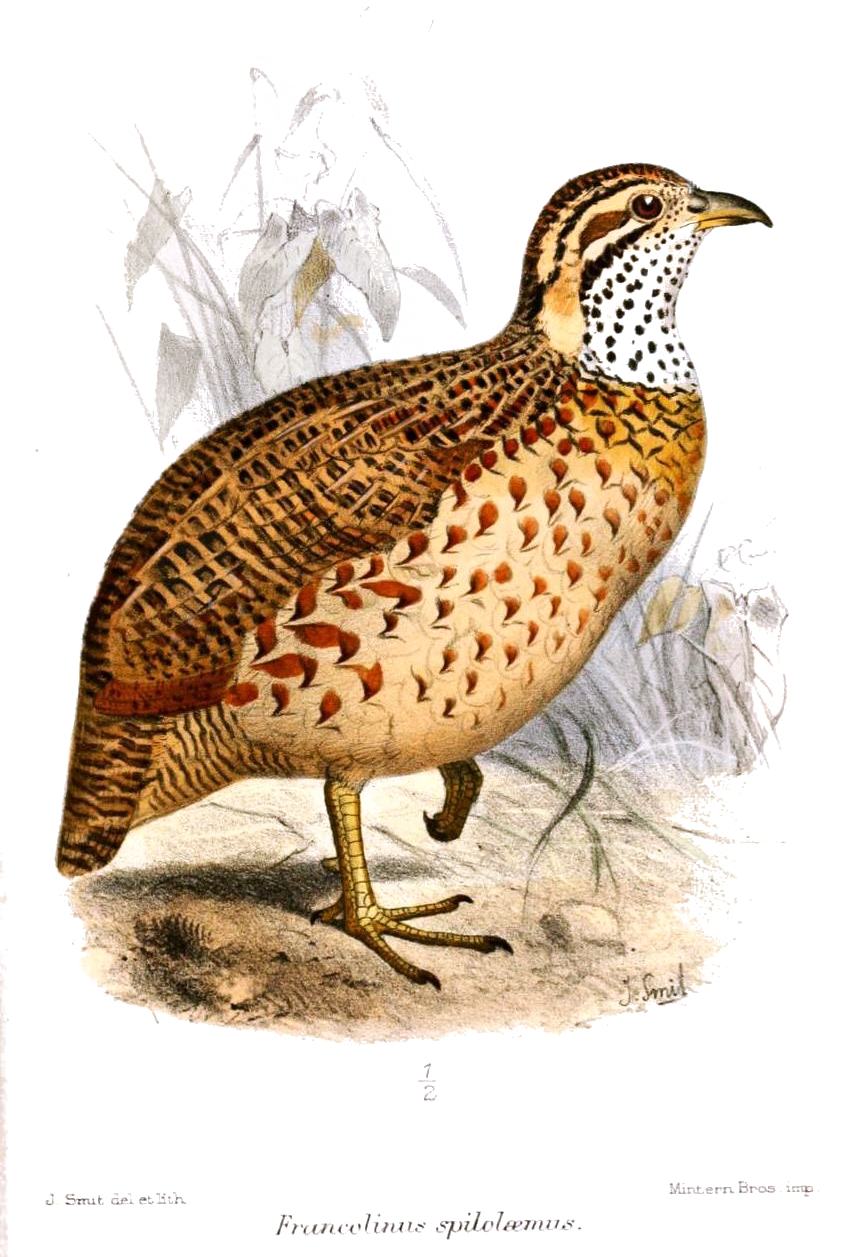
Adult Moorland Francolins possess a distinctive white throat and a barred pattern on their chestnut and gray plumage, aiding in camouflage against grassland predators. Males and females exhibit similar coloration, though males are slightly larger. Juveniles are duller, with less defined barring and a more uniform brown appearance, which helps them blend into their surroundings during development. In flight, the bird displays rounded wings and a short tail, typical of ground-dwelling francolins. Its flight silhouette is characterized by a rapid, low-altitude burst followed by a glide, a behavior used to evade predators. The Moorland Francolin is often confused with the Orange River Francolin, but the latter has more pronounced orange underparts and lacks the distinctive white throat. Observers should note the bird’s perching posture, as Moorland Francolins prefer to remain on the ground or low perches, unlike tree-dwelling species.
Having trouble telling birds apart? Upload a photo to our bird identification tool for an instant species match.
Moorland Francolin Habitat and Range
Preferred Habitat
Moorland Francolins inhabit the montane grasslands and moorlands of Ethiopia, extending into parts of Somalia and northern Kenya. They are most commonly found at elevations ranging from 2,000 to 4,000 meters, where dense grasses and scattered shrubs provide cover and food. These birds avoid urban areas, preferring remote regions where human activity is limited. Seasonal shifts in habitat occur as they move to slightly lower elevations during periods when higher altitudes become inhospitable due to harsh weather conditions. The bird's reliance on specific grassland ecosystems underscores the importance of preserving these habitats from agricultural encroachment and overgrazing.
Geographic Range
The breeding range of the Moorland Francolin includes the Ethiopian highlands, where they are resident throughout the year. Unlike many avian species, the Moorland Francolin does not undertake long migrations but may move locally within its range to find optimal feeding and nesting sites. The densest populations occur in the Bale Mountains National Park and Simien Mountains National Park, both critical conservation areas for montane biodiversity. Although the bird's range extends into neighboring Somalia and Kenya, its presence there is less prominent, often confined to isolated patches of suitable habitat. Understanding the bird’s range helps inform conservation efforts, particularly regarding habitat connectivity and protection.
Want to know which birds visit your area? Browse our backyard birds by location guides for region-specific species lists.
What Does the Moorland Francolin Eat?
The Moorland Francolin's diet primarily consists of seeds, leaves, and small invertebrates, which it forages for on the ground. This diet shifts seasonally, with a noticeable increase in insect consumption during the breeding season when protein demands are higher. Foraging typically occurs in the early morning and late afternoon, allowing the bird to avoid the midday heat. The francolin uses its strong beak to dig into the soil, uncovering hidden insects and seeds, a behavior that not only provides sustenance but also aids in soil turnover and seed dispersal. The size of prey varies, ranging from small beetles to larger grasshoppers. The bird's foraging techniques are highly adapted to its grassland environment, demonstrating a keen ability to exploit available resources.
Moorland Francolin Behavior and Social Structure
Moorland Francolins exhibit a social structure centered around small family groups, often seen foraging together. They are territorial, with males actively defending their patch against intruders through calls and displays. During courtship, males perform elaborate displays, including puffing up feathers and issuing a series of short, sharp calls to attract females. These birds are generally non-migratory, but they exhibit some movement in response to environmental pressures, such as food scarcity or extreme weather. Flocking behavior is uncommon, as these birds prefer the safety and familiarity of their territory. When threatened, the francolin relies on camouflage and its ability to remain motionless, only taking flight as a last resort.
Moorland Francolin Nesting and Reproduction
Moorland Francolin nests are simple scrapes in the ground, lined with grass and leaves for insulation. These nests are typically hidden beneath dense vegetation to protect against predators. The female lays a clutch of 3 to 5 eggs, which she incubates alone for about 21 days. During this period, the male provides food and guards the territory. Once hatched, the chicks are precocial and leave the nest shortly after birth, though they continue to rely on the parents for warmth and guidance. The fledging period lasts about three weeks, after which the young birds gradually become independent. The species usually raises one brood per year, timed to coincide with the rainy season to ensure ample food supply.
Moorland Francolin Sounds and Vocalizations
The primary song of the Moorland Francolin is a series of sharp, ascending whistles, often delivered in bursts during the early morning and late afternoon. These calls serve both to establish territory and to maintain contact within family groups. Alarm calls are shorter, more staccato notes, signaling the presence of predators. The dawn chorus of the Moorland Francolin is a distinctive feature of its habitat, with males calling from exposed perches. The sound is reminiscent of a distant whistle, carrying over the open grassland and contrasting with the more melodious songs of cohabiting birds.
Interesting Facts About the Moorland Francolin
- 1The Moorland Francolin is one of the few bird species adapted to live above 2,000 meters year-round.
- 2This francolin's call is a key indicator of its presence, often heard before the bird is seen.
- 3The bird's plumage provides excellent camouflage, making it difficult to spot even in open grasslands.
- 4While primarily ground-dwelling, the Moorland Francolin can perform short, rapid flights to escape predators.
- 5The species is monogamous, with pairs remaining together throughout the breeding season.
- 6Insect abundance during the rainy season significantly influences the francolin's breeding success.
- 7Moorland Francolins contribute to seed dispersal, aiding in the maintenance of their grassland habitats.
Moorland Francolin Conservation Status
The Moorland Francolin is currently classified as Least Concern by the IUCN, though its population is experiencing localized declines due to habitat loss. The primary threats include overgrazing, agricultural expansion, and climate change, which alter the fragile montane ecosystems. Conservation efforts focus on habitat preservation and the establishment of protected areas such as national parks. Historically, the species has shown resilience, but ongoing monitoring is essential to ensure that population trends remain stable. Collaboration between local communities and conservation organizations remains key to effective management of the species’ habitat.


