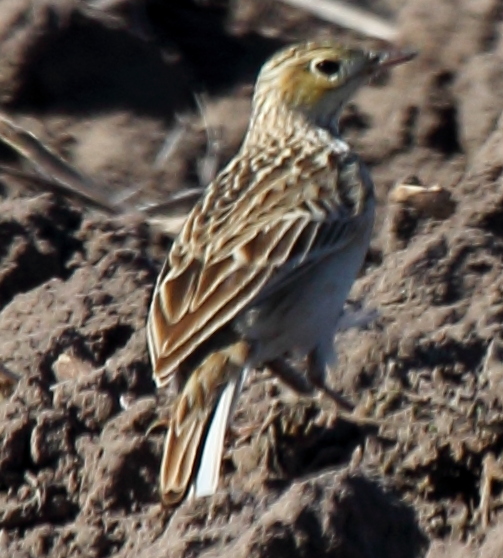
Eastern Yellow Wagtail
Motacilla citrinus
Order: Passeriformes / Family: Motacillidae

Wikimedia Commons
About the Eastern Yellow Wagtail
The Eastern Yellow Wagtail, scientifically known as Motacilla citrinus, is a vibrant songbird that belongs to the family Motacillidae within the order Passeriformes. This species is renowned for its striking yellow plumage, which contrasts beautifully with its darker wings and tail. Found across a range of habitats, the Eastern Yellow Wagtail favors open areas near water, such as lakes, rivers, and marshes. During the breeding season, which extends from April to July, these wagtails establish territories in grasslands and cultivated fields across Central Asia and the Indian subcontinent.
This wagtail plays a vital ecological role as an insectivore, primarily feeding on small invertebrates. By controlling insect populations, it maintains the health of its ecosystems. The Eastern Yellow Wagtail's presence often indicates a biodiverse environment, as it thrives in areas with abundant insect life.
Seasonal movements are a hallmark of this species. The Eastern Yellow Wagtail migrates in large flocks, traveling from its breeding grounds in Central Asia to its wintering territories in Southeast Asia and the Indian subcontinent. During migration, it can be observed in a variety of habitats, including coastal areas and wetlands, where it finds adequate food resources. These seasonal journeys highlight the wagtail's adaptability and resilience, as it navigates diverse landscapes and climatic conditions.
In summary, the Eastern Yellow Wagtail is not only a visual delight but also an important component of its ecosystems. Its migratory patterns, dietary habits, and ecological significance make it a subject of interest for ornithologists and birdwatchers alike. Understanding this species contributes to broader conservation efforts and the preservation of the habitats it relies upon.
The Eastern Yellow Wagtail belongs to the family Motacillidae, within the order Passeriformes. These birds typically live average 2-4 years, with a maximum recorded of 6 years..
How to Identify a Eastern Yellow Wagtail
The Eastern Yellow Wagtail is easily identifiable by its vivid yellow underparts and face, which contrast sharply with its olive-green upperparts. This color palette makes it one of the more colorful members of the wagtail family. Adults exhibit a black crown and ear coverts, which are particularly prominent during the breeding season. In non-breeding plumage, the head markings become less defined, and the overall coloration may appear more muted.
Juveniles differ from adults in having less vibrant yellow plumage and more of a grayish wash over their underparts. They also lack the distinct black head markings seen in mature birds. In terms of sexual dimorphism, males generally display brighter colors and more pronounced head markings compared to females, which are slightly duller and have more subdued patterns.
When compared to similar species, such as the Western Yellow Wagtail, the Eastern Yellow Wagtail's more pronounced yellow coloration and distinct head pattern serve as key differentiators. In flight, the Eastern Yellow Wagtail presents a slender silhouette with a characteristic long tail and rapid wing beats. When perched, it often exhibits a low, horizontal posture and a constant tail-wagging motion, which are typical behaviors of the wagtail family.
Having trouble telling birds apart? Upload a photo to our bird identification tool for an instant species match.
Eastern Yellow Wagtail Habitat and Range
Preferred Habitat
The Eastern Yellow Wagtail occupies a diverse array of habitats, though it shows a preference for open areas near water. These habitats include grasslands, marshes, and the banks of rivers and lakes. During the breeding season, it is commonly found in agricultural fields and meadows where insects are abundant.
The species is predominantly a lowland bird, although it can be found at elevations up to 2,500 meters in some parts of its range, particularly in mountainous regions of Central Asia. Seasonal shifts in habitat are evident as the birds migrate, wintering in wetlands and rice paddies across Southeast Asia and the Indian subcontinent.
In urban areas, the Eastern Yellow Wagtail is less common, favoring rural and semi-rural environments where it can forage effectively. Its adaptability to different habitats during migration underscores its resilience and ecological flexibility.
Geographic Range
The Eastern Yellow Wagtail breeds across a broad expanse stretching from Central Asia to parts of the Indian subcontinent, including countries such as Kazakhstan, Uzbekistan, and northern India. Its breeding range is characterized by open grasslands and agricultural fields where it can find ample food and nesting sites.
During migration, this species travels through diverse regions, often seen in countries like China, Southeast Asia, and parts of the Middle East. Its migration corridors are extensive, reflecting its capacity for long-distance travel.
In winter, the Eastern Yellow Wagtail resides in the warmer climates of Southeast Asia, including Thailand, Myanmar, and Vietnam, as well as parts of India. These areas provide the necessary resources for survival during the colder months, with wetlands and rice fields serving as key habitats. Population density tends to be higher in these wintering grounds, where the birds congregate in large flocks.
Want to know which birds visit your area? Browse our backyard birds by location guides for region-specific species lists.
What Does the Eastern Yellow Wagtail Eat?
The Eastern Yellow Wagtail primarily feeds on a diet of insects and other small invertebrates. Its diet includes beetles, flies, ants, and various larvae, which it forages from the ground and low vegetation. This wagtail employs a dynamic foraging technique, actively running and darting in pursuit of prey, often in open grassy areas or along water edges.
Seasonal variations in diet are notable, with the bird consuming a higher proportion of aquatic insects and larvae during wetter months. In drier seasons, terrestrial insects become the primary food source. The Eastern Yellow Wagtail's foraging activity peaks during early morning and late afternoon, coinciding with the availability of prey.
Prey size generally falls within the small to medium range, suitable for the wagtail's slender bill. This diet not only sustains the bird but also plays an essential role in controlling insect populations in its habitat, contributing to ecological balance.
Eastern Yellow Wagtail Behavior and Social Structure
The Eastern Yellow Wagtail exhibits fascinating social and territorial behaviors. During the breeding season, it establishes territories that it defends vigorously against intruders. Males perform elaborate courtship displays, which involve singing and aerial displays to attract females. These courtship rituals are crucial in pair formation and breeding success.
Outside the breeding season, the wagtail becomes more social, joining flocks for foraging and migration. These flocks can number in the hundreds, providing safety in numbers against predators. The wagtail's flight is characterized by undulating patterns, facilitating quick movement across landscapes.
In response to predators, the Eastern Yellow Wagtail employs alarm calls and evasive maneuvers, often taking flight in a rapid, zigzagging pattern to escape threats. Daily activity patterns reveal a preference for dawn and dusk, times when insect activity is highest, allowing the wagtail to maximize foraging efficiency.
Eastern Yellow Wagtail Nesting and Reproduction
The Eastern Yellow Wagtail constructs its nest on the ground, typically hidden among tall grasses or low shrubs. The nest is a cup-shaped structure made from dry grasses, leaves, and rootlets, often lined with softer materials like feathers and hair. This placement provides both camouflage and protection from predators.
Clutch size typically ranges from 4 to 6 eggs, which are pale with fine speckling. The female primarily incubates the eggs over a period of 11 to 14 days. Once hatched, the chicks remain in the nest for approximately 10 to 13 days before fledging.
Both parents participate in feeding the chicks, bringing insects to the nest. This cooperative effort ensures the rapid growth and development of the young. The Eastern Yellow Wagtail may raise two broods per year, depending on environmental conditions and food availability.
Eastern Yellow Wagtail Sounds and Vocalizations
The Eastern Yellow Wagtail's song is a series of rapid, high-pitched notes that can be described as cheerful and melodious. It often sings from a prominent perch, its voice carrying across open landscapes. The song serves both to establish territory and attract mates during the breeding season.
In addition to its song, the wagtail produces a variety of call notes, including a sharp "tsip" sound used in flight and as an alarm call. These vocalizations are integral to communication within flocks, particularly during migration.
The wagtail participates in a dawn chorus, contributing to the morning symphony of bird calls. Its song and calls, while not as complex as those of some songbirds, are distinctive and serve multiple social functions within its environment.
Interesting Facts About the Eastern Yellow Wagtail
- 1The Eastern Yellow Wagtail can travel over 3,000 kilometers during its migratory journey, showcasing remarkable endurance.
- 2This species is part of a larger wagtail complex, with various subspecies exhibiting slight differences in plumage and behavior.
- 3Eastern Yellow Wagtails display a unique foraging behavior known as 'tail-wagging,' which is thought to flush insects into view.
- 4During migration, these wagtails form flocks of several hundred individuals, creating a striking visual spectacle.
- 5The wagtail's diet shifts seasonally, with a notable increase in aquatic insects during the monsoon season.
- 6Eastern Yellow Wagtails are known to hybridize with other wagtail species, resulting in intriguing plumage variations.
- 7Despite being ground nesters, wagtails skillfully camouflage their nests, reducing predation risk.
Eastern Yellow Wagtail Conservation Status
The IUCN lists the Eastern Yellow Wagtail as a species of Least Concern, reflecting its stable population trend across most of its range. However, habitat loss due to agricultural expansion and wetland drainage poses ongoing threats. Conservation efforts focus on preserving critical breeding and wintering habitats, particularly in regions facing rapid development. Historically, the population has remained relatively stable, though localized declines have occurred in areas experiencing significant habitat alteration. Conservationists advocate for integrated land management practices that balance human activity with wildlife needs, ensuring the continued health of wagtail populations. Monitoring programs and habitat restoration projects aim to mitigate the impact of human activities, promoting sustainable environments for the Eastern Yellow Wagtail and other grassland and wetland species.