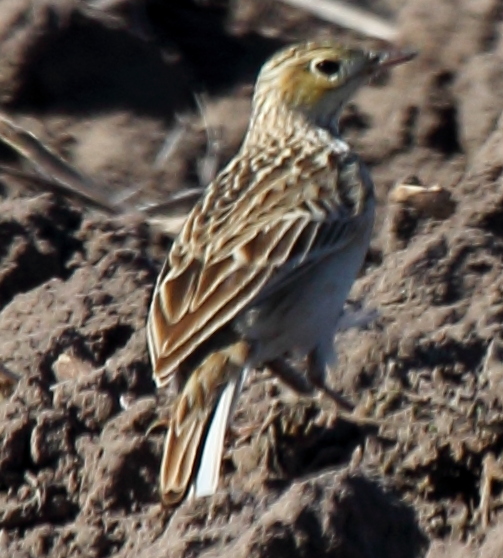
American Pipit
Motacilla currucoides
Order: Passeriformes / Family: Motacillidae

Wikimedia Commons
About the American Pipit
The American Pipit, scientifically known as Motacilla currucoides, is a small passerine bird renowned for its adaptability to diverse habitats across North America. This species exhibits a remarkable ecological role, often acting as an indicator of environmental health in alpine and tundra ecosystems. The American Pipit thrives in open landscapes, from the Arctic tundra to the high-altitude grasslands of the Rocky Mountains. Its seasonal migrations are notable, with these birds traveling thousands of miles between breeding and wintering grounds.
During the breeding season, the American Pipit occupies the northern reaches of Canada and Alaska, where it nests on the ground amidst the sparse vegetation of the tundra. These areas provide an abundance of invertebrate prey during the short Arctic summer. As winter approaches, the pipit migrates to southern parts of the United States and Mexico, demonstrating its adaptability to contrasting environments. In its wintering grounds, the pipit can be found in agricultural fields, coastal beaches, and other open areas.
The ecological significance of the American Pipit extends beyond its habitat preferences. Its diet primarily consists of insects and other small invertebrates, which it forages by walking along the ground. This feeding behavior helps control pest populations in agricultural areas, highlighting the bird's role in maintaining ecological balance. The species also serves as prey for various predators, including raptors and mammals, integrating it into the broader food web.
The American Pipit’s presence in diverse habitats across North America underscores its adaptability and ecological importance. Despite facing challenges such as habitat degradation and climate change, the species remains a key component of its ecosystems. Its migratory patterns and seasonal behaviors continue to fascinate ornithologists and bird enthusiasts alike, as they reveal the complexities of avian life in ever-changing environments.
The American Pipit belongs to the family Motacillidae, within the order Passeriformes. These birds typically live average 1-3 years, with a maximum recorded of 5 years..
How to Identify a American Pipit
The American Pipit is a small bird with a length of approximately 5.5 to 6.5 inches and a wingspan of about 9 to 10 inches. It is characterized by its slim build, long legs, and relatively long tail, which it frequently bobs up and down. The plumage of the American Pipit is primarily brown with streaked underparts, providing excellent camouflage against the ground.
Adult plumage includes a pale eyebrow and a dark eyeline, which help distinguish it from similar species. The breast and sides are finely streaked, and the belly is lighter, often appearing whitish. Juveniles resemble adults but tend to have more pronounced streaking and a slightly duller overall coloration.
Males and females are similar in appearance, although males may exhibit slightly brighter coloration during the breeding season. In flight, the American Pipit shows a distinctive, bounding flight pattern typical of pipits, with bursts of flapping followed by short glides. When perched, it often adopts an upright posture, which can aid in identification.
Having trouble telling birds apart? Upload a photo to our bird identification tool for an instant species match.
American Pipit Habitat and Range
Preferred Habitat
The American Pipit inhabits a variety of open landscapes, including alpine tundra, grasslands, and coastal areas. During the breeding season, it is commonly found in the high latitudes of Canada and Alaska, favoring the sparse vegetation of the tundra and high-altitude meadows in the Rockies. These environments provide ample feeding opportunities and nesting sites.
In winter, the American Pipit shifts to lower elevations and more temperate climates, occupying habitats such as agricultural fields, coastal beaches, and grassy areas across the southern United States and Mexico. It adapts well to rural and semi-urban environments where open, flat spaces are available. While primarily a bird of wild, open habitats, it can occasionally be found in urban parks and expansive lawns, especially during migration.
Geographic Range
The breeding range of the American Pipit extends across the northern regions of North America, particularly in Canada, Alaska, and parts of the Rocky Mountains. During this time, they nest from the tundra fringes in the Arctic to alpine meadows in the mountainous west. In winter, the American Pipit migrates southward, inhabiting a wide range that includes the southern United States, Mexico, and occasionally Central America.
Migration corridors for the American Pipit often follow the central flyway, with birds stopping over in areas like the Great Plains and Mississippi River basin. The species is widespread during migration, with more concentrated populations observed in regions that provide ample food resources and open landscapes.
Hotspots for wintering populations include coastal areas of the Gulf of Mexico, agricultural fields across Texas and the southeastern United States, and the interior valleys of California. The adaptability of the American Pipit allows it to exploit a variety of environments throughout its range, making it a common sight in many suitable habitats.
Want to know which birds visit your area? Browse our backyard birds by location guides for region-specific species lists.
What Does the American Pipit Eat?
The diet of the American Pipit primarily consists of insects and other small invertebrates, which it captures through active foraging on the ground. During the breeding season, the bird consumes a wide array of arthropods, including beetles, caterpillars, and spiders, which are abundant in the tundra and alpine habitats.
In winter, the American Pipit's diet expands to include seeds and other plant material, reflecting the reduced availability of insects. It often forages in flocks, walking methodically across fields and beaches to locate food. The bird's slender bill and acute eyesight aid in picking small prey from the ground.
Foraging typically occurs during daylight hours, with peak activity in the early morning and late afternoon. The American Pipit's feeding strategy of walking and probing makes it an efficient forager in open environments, where it can capitalize on the patchy distribution of its prey.
American Pipit Behavior and Social Structure
American Pipits exhibit a social structure that often involves loose flocking, particularly during migration and winter. These flocks can vary in size and may include a few dozen to several hundred individuals. Flocking behavior provides benefits such as increased vigilance against predators and more efficient foraging.
During the breeding season, males establish and defend territories through displays that include singing from elevated perches or during flight. The courtship display involves males performing fluttering flights accompanied by song, intended to attract females and establish breeding pairs.
American Pipits are diurnal, with most activity occurring during daylight hours. They display a characteristic tail-bobbing behavior while foraging and may exhibit this action as a response to potential threats. When approached, they tend to walk rather than fly, showing a preference for conserving energy in open habitats where escape through flight may not be immediately necessary.
American Pipit Nesting and Reproduction
The American Pipit nests on the ground, often selecting sites with sparse vegetation for concealment. The nest itself is a shallow cup constructed from grasses, moss, and lichens, lined with finer materials such as feathers or hair. This choice of nesting site helps to camouflage the nest from predators.
A typical clutch consists of 4 to 6 eggs, which are speckled and well-camouflaged. The incubation period lasts about 13 to 15 days, with both parents participating in incubation, though the female does the majority. After hatching, the chicks remain in the nest for approximately 14 days before fledging.
Parental care continues after fledging, with both parents feeding the young and teaching them foraging skills. The American Pipit usually raises one brood per year, although in some regions with longer breeding seasons, a second brood may be attempted.
American Pipit Sounds and Vocalizations
The American Pipit's primary song is a series of high-pitched notes delivered in a rapid, cascading sequence. This song is often heard during flight displays and is a common sound in its breeding territories. The quality of the song is thin and clear, resembling the tinkling of a small bell.
Call notes of the American Pipit include a distinctive 'pip-it' sound, which serves as both a contact call among flock members and an alarm call when predators are present. These calls are sharp and crisp, aiding in communication over long distances in open habitats.
During the dawn chorus, the American Pipit's song can be a prominent feature, mingling with the calls of other tundra and alpine species. This vocal activity underscores the bird's presence in its breeding environments and contributes to the acoustic landscape of these areas.
Interesting Facts About the American Pipit
- 1The American Pipit undertakes one of the longest migrations of any North American songbird, traveling over 3,000 miles from its breeding grounds to winter habitats.
- 2Unlike many songbirds, the American Pipit nests directly on the ground, using its surroundings for camouflage and protection against predators.
- 3American Pipits can be found at elevations exceeding 14,000 feet, adapting to the thin air and harsh conditions of high-altitude environments.
- 4During winter, the American Pipit often forages in flocks on beaches, where its pale plumage blends seamlessly with the sand.
- 5The American Pipit's flight song, a series of high-pitched notes, is a common sound in the tundra during the short Arctic summer.
- 6In some years, the American Pipit attempts a second brood, particularly in regions with extended breeding seasons and abundant food.
- 7The pipit’s 'tail-bobbing' behavior is a signature move that aids in distinguishing it from similar ground-dwelling birds.
American Pipit Conservation Status
The American Pipit currently holds a conservation status of Least Concern according to the IUCN, with a stable population trend across much of its range. However, certain factors pose potential threats to its habitats and populations. Primary threats include habitat loss due to agricultural expansion and climate change, which affects both breeding and wintering grounds. Additionally, pesticide use in agricultural areas can impact food availability and quality. Conservation efforts focus on habitat protection and monitoring population trends to ensure long-term stability. Historical population changes have been relatively stable, with localized declines in areas experiencing significant environmental alteration. Continued research and habitat management are essential to mitigate future threats.