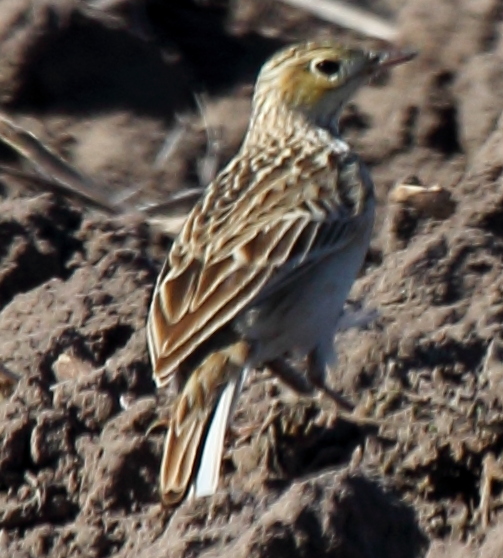
Elegant Wagtail
Motacilla elegans
Order: Passeriformes / Family: Motacillidae
About the Elegant Wagtail
The Elegant Wagtail, scientifically known as Motacilla elegans, thrives across diverse habitats, from lush riverbanks to urban gardens. This bird belongs to the family Motacillidae and order Passeriformes. Its presence is a testament to its adaptability, as it can be found in Europe, Asia, and parts of Africa. Often seen along streams and in wetlands, the Elegant Wagtail plays an essential role in controlling insect populations, making it a critical part of its ecosystem.
This species exhibits a fascinating array of seasonal behaviors. During breeding season, which typically occurs in the spring and summer months, the Elegant Wagtail becomes more territorial. Males showcase aerial displays to establish dominance and attract mates. Outside the breeding period, these birds often form loose flocks, especially in areas abundant with water and food resources.
The Elegant Wagtail's ability to thrive in human-modified landscapes demonstrates its resilience. It often frequents agricultural fields and urban parks, where it finds ample feeding opportunities. As a species, it contributes to the ecological balance by preying on various insects, thus aiding in pest control. Its striking plumage and dynamic behavior make it a favorite among birdwatchers, further highlighting its significance in both natural and human-influenced environments.
The Elegant Wagtail belongs to the family Motacillidae, within the order Passeriformes. These birds typically live average 5 years, with a maximum recorded of 8 years..
How to Identify a Elegant Wagtail
The Elegant Wagtail is a medium-sized bird with a body length ranging between 16 to 19 cm. Adults exhibit a striking plumage with a predominantly gray back, contrasting sharply with their white underparts. The bird's most distinctive feature is its long, constantly wagging tail, which is black with white outer feathers. In flight, this tail creates a distinctive silhouette, making it easier to identify even from a distance.
Males and females appear very similar, though males may exhibit slightly brighter plumage, particularly during the breeding season. Juveniles, on the other hand, tend to have duller colors, with more brownish tones on the back and a less defined facial pattern compared to adults. Despite these differences, the wagging tail remains a consistent trait across all ages and sexes.
In terms of similar species, the Elegant Wagtail might be confused with the Grey Wagtail, which shares a similar habitat but can be distinguished by its yellow undertones and longer tail. When perched, the Elegant Wagtail often adopts a horizontal posture, keeping its body parallel to the ground, enhancing its streamlined appearance.
Having trouble telling birds apart? Upload a photo to our bird identification tool for an instant species match.
Elegant Wagtail Habitat and Range
Preferred Habitat
The Elegant Wagtail is versatile in its habitat selection, thriving in environments ranging from wetlands and riverbanks to urban gardens and agricultural fields. Typically found at elevations from sea level up to 2,000 meters, it shows a preference for areas with abundant water sources, which provide both food and nesting opportunities.
During the warmer months, these wagtails favor riparian zones where insects are plentiful, while in colder months, they may move towards urban areas or lower elevations where conditions are milder. This adaptability enables them to exploit a wide range of habitats, ensuring their presence in both rural and city landscapes. Despite their adaptability, they are less commonly found in dense forests or arid deserts, where their primary food sources are scarce.
Geographic Range
The Elegant Wagtail's range extends across Europe, parts of Asia, and northern Africa. During the breeding season, they are predominantly found in northern and central Europe, with significant populations in countries like the United Kingdom, France, and Germany. As migratory birds, they travel southwards as winter approaches, seeking milder climates.
In winter, their range expands into southern Europe, North Africa, and parts of the Middle East. Notable wintering grounds include Spain, Italy, and Morocco. Migration corridors are well-established, with birds typically traveling along river valleys and coastal routes where food is abundant. Within these regions, population density hotspots often occur near water bodies, where insects thrive year-round.
Want to know which birds visit your area? Browse our backyard birds by location guides for region-specific species lists.
What Does the Elegant Wagtail Eat?
The Elegant Wagtail primarily feeds on insects, with a diet comprising flies, beetles, and caterpillars. During the breeding season, when the demand for protein increases, they may also consume spiders and small crustaceans. Their foraging technique is notable, as they often hunt by running or hopping on the ground, capturing prey with swift, precise movements.
Seasonal changes influence their diet significantly. Insects are more abundant in the warmer months, while in winter, they may turn to seeds and small berries, especially in urban areas where these are more accessible. Their feeding schedule varies, with peak activity during dawn and dusk when insects are most active. Despite their reliance on insects, the Elegant Wagtail's adaptability allows it to exploit a range of food sources depending on availability.
Elegant Wagtail Behavior and Social Structure
The Elegant Wagtail exhibits a fascinating array of behaviors that reflect its adaptability and survival strategies. Socially, they are primarily solitary or found in pairs during the breeding season, becoming more gregarious in winter when they form small flocks. These flocks often gather in areas rich in food resources or at communal roosting sites.
Territorial behavior is pronounced during the breeding season, with males vigorously defending their chosen nesting areas. Courtship displays involve a series of aerial maneuvers and vocalizations, designed to attract females and deter rivals. In terms of predator response, Elegant Wagtails rely on their agility and alertness, often using their characteristic flight pattern to evade threats.
Daily activity patterns show a preference for the early morning and late afternoon, aligning with the activity of their insect prey. Their tail-wagging behavior, a constant motion, serves multiple purposes, including communication and balance while foraging on uneven terrain.
Elegant Wagtail Nesting and Reproduction
Elegant Wagtails typically nest close to water, utilizing a variety of locations such as riverbanks, ditches, and even urban structures. The nest is an open cup made of grass, twigs, and moss, lined with softer materials like feathers or hair to provide insulation and comfort for the eggs.
Clutch size usually ranges from three to six eggs, with an incubation period lasting about 11 to 13 days. Both parents share incubation duties, although the female takes the lead. Once hatched, chicks fledge approximately two weeks later, during which both parents actively feed and protect them. The species often raises two broods per year, particularly in regions with longer breeding seasons.
Elegant Wagtail Sounds and Vocalizations
The Elegant Wagtail's primary song is a series of rapid, high-pitched notes that form a short, sweet melody. This song is most frequently heard during the breeding season as males establish territory and attract mates. In addition to their song, these birds produce a characteristic 'tsip' call, used for communication between individuals and as an alarm signal when predators are near.
During the dawn chorus, the Elegant Wagtail's song adds a soft, rhythmic element to the mix of bird sounds, distinguishable by its clarity and lightness. The alarm call, a sharper, more urgent sound, is often compared to the 'chit' of a sparrow but with a distinct wagging rhythm.
Interesting Facts About the Elegant Wagtail
- 1The Elegant Wagtail can travel over 2000 km during its migrations between breeding and wintering grounds.
- 2Unlike many birds, the Elegant Wagtail uses its tail not just for balance but as a communication tool.
- 3This species can be found in urban areas, often nesting in unusual places like rooftops and building ledges.
- 4The Elegant Wagtail's diet shifts seasonally, with a greater reliance on seeds and berries during colder months.
- 5During the breeding season, males perform aerial displays that can last several minutes, showcasing their agility.
- 6The species has adapted well to changes in the environment, often thriving in areas with human activity.
- 7Elegant Wagtails are known to be monogamous, forming strong pair bonds that last throughout the breeding season.
Elegant Wagtail Conservation Status
The Elegant Wagtail is currently classified as Least Concern by the IUCN, with a stable population trend observed across its range. However, habitat loss due to agricultural expansion and urban development poses potential threats. Conservation efforts focus on preserving wetlands and riparian habitats vital for breeding and feeding. Historically, the population has shown resilience, adapting to changes in land use and climate. Ongoing monitoring and habitat restoration projects play a crucial role in ensuring the continued survival of this adaptable species.