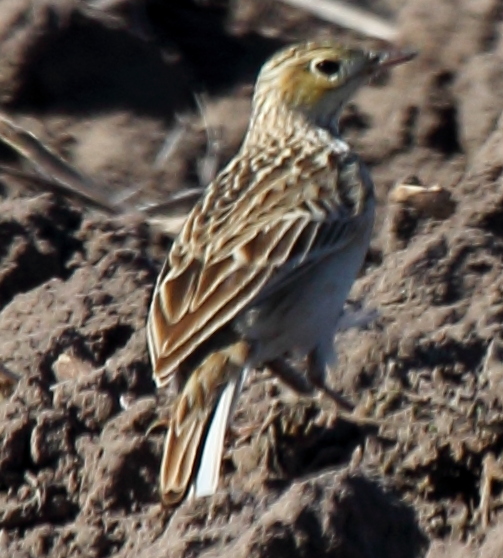
Motacilla fulicata
Motacilla fulicata
Order: Passeriformes / Family: Motacillidae

Wikimedia Commons
About the Motacilla fulicata
The White-browed Wagtail, or Motacilla fulicata, is an iconic bird of the Indian subcontinent, celebrated for its vibrant black and white plumage and rhythmic tail-wagging behavior. This medium-sized passerine is the largest member of the wagtail family, Motacillidae, and plays a significant ecological role in its native habitats. It can be found in a variety of environments, from urban gardens and wetlands to riverbanks and agricultural fields. Its adaptability to both natural and man-made environments highlights its importance in ecosystem balance, as it helps control insect populations. The White-browed Wagtail is predominantly a resident species, with some local seasonal movements influenced by rainfall and food availability. In India, it is commonly seen near water bodies, where it forages for insects and small invertebrates. During the breeding season, which typically spans from March to October, these birds become more territorial, with males performing aerial displays to attract mates. In the context of ecological significance, the White-browed Wagtail contributes to pest control by feeding on aquatic and terrestrial insects. Its presence in wetlands and along waterways indicates healthy ecosystems, as it relies on clean water sources for feeding. The bird's adaptability to urban environments also makes it an important indicator of urban biodiversity. Seasonal behaviors are influenced by monsoon patterns, with the bird often seen in pairs or small family groups during the breeding season. Its widespread presence across the Indian subcontinent, including countries like India, Pakistan, Nepal, and Sri Lanka, reflects its successful adaptation to diverse habitats. As a bird often found near human habitation, it is a familiar sight to residents, bridging the connection between avian biodiversity and human communities. The White-browed Wagtail's ability to thrive in various environments, from bustling cities to serene rural landscapes, underscores its resilience and ecological importance.
The Motacilla fulicata belongs to the family Motacillidae, within the order Passeriformes. These birds typically live typically lives 4-6 years, with some individuals reaching 8 years..
How to Identify a Motacilla fulicata
The White-browed Wagtail is easily recognized by its contrasting black and white plumage. Adults display a glossy black head, nape, and back, with a distinct white eyebrow stripe that gives the bird its common name. The underparts are predominantly white, with a black breast band. Juveniles lack the stark contrast of adults, showing duller browns and grays in their plumage. Males and females look similar, but males may exhibit slightly more vivid coloration during the breeding season. The bird's long tail is constantly wagged up and down, a behavior that is characteristic of wagtails. In flight, the White-browed Wagtail shows a distinctive pattern with its broad white wingbars and edged tail feathers, making it identifiable even from a distance. While perched, it often flicks its tail and bobs its head, adding to its active demeanor. Confusion with similar species, such as the Pied Wagtail, can occur, but the latter is generally more widespread in Europe and has different tail and wing patterns. The clear white eyebrow stripe and extensive white in the wings help to distinguish the White-browed Wagtail in its native range.
Having trouble telling birds apart? Upload a photo to our bird identification tool for an instant species match.
Motacilla fulicata Habitat and Range
Preferred Habitat
The White-browed Wagtail thrives in a variety of habitats, predominantly near water bodies such as rivers, lakes, and ponds. It is also common in urban areas where water is present, like gardens, parks, and drainage channels. In rural settings, it frequents agricultural fields and village ponds. This adaptability to both natural and human-modified landscapes makes it a widespread species across its range. Typically found at elevations from sea level up to 2,000 meters, the wagtail is absent from dense forests and arid deserts. Seasonal habitat shifts occur in response to water availability and food resources, with birds often moving to wetter areas during dry spells. In cities, the White-browed Wagtail can be seen in open spaces with sparse vegetation, where it forages for insects.
Geographic Range
The breeding range of the White-browed Wagtail includes much of the Indian subcontinent. It is a resident bird throughout India, Pakistan, Nepal, and Sri Lanka. The species is largely non-migratory, although it may undertake local movements in response to environmental conditions, especially rainfall. Population density tends to be higher in regions with abundant water sources, such as the Ganges River basin and coastal areas. In urban environments, it is common in cities such as Mumbai, Delhi, and Kolkata, where it utilizes artificial water bodies. The bird's adaptability allows it to inhabit a wide geographic range, although it is largely absent from extreme arid and heavily forested regions. Its distribution is indicative of its versatile nature and ability to exploit a variety of ecological niches.
Want to know which birds visit your area? Browse our backyard birds by location guides for region-specific species lists.
What Does the Motacilla fulicata Eat?
The diet of the White-browed Wagtail primarily consists of insects and small invertebrates. It feeds on a wide array of prey, including flies, beetles, caterpillars, and spiders. During the breeding season, its diet may expand to include aquatic insects and their larvae, reflecting the bird's proximity to water bodies. The wagtail employs a foraging technique that involves actively running and hopping on the ground, often near water, to catch its prey. It uses its keen eyesight to spot and capture insects, either picking them off the ground or snatching them from the air. Prey size generally ranges from small to medium, allowing the bird to consume a variety of available invertebrates. Feeding schedules are diurnal, with peak activity occurring during the early morning and late afternoon when insect activity is highest.
Motacilla fulicata Behavior and Social Structure
The White-browed Wagtail exhibits a range of interesting behaviors. It is typically seen alone or in pairs, especially during the breeding season when it becomes territorial. Males engage in aerial displays, often singing in flight to attract females and defend their territory. These displays involve rapid flights interspersed with gliding, showcasing their agility and stamina. Social structure outside the breeding season is more relaxed, with birds occasionally forming loose flocks. The wagtail's tail-wagging behavior is a constant, believed to be a method of communication or a means to flush out insects. In response to predators, the wagtail may use alarm calls and perform distraction displays to protect its offspring. It is primarily active during daylight hours, with feeding and social interactions concentrated around dawn and dusk.
Motacilla fulicata Nesting and Reproduction
The White-browed Wagtail builds cup-shaped nests using grass, twigs, and feathers, often positioned near water. Preferred nesting locations include riverbanks, ledges, and even man-made structures such as bridges and buildings. Clutch size typically ranges from three to five eggs, with the incubation period lasting about 12 to 14 days. Both parents participate in feeding and caring for the young. Fledging occurs approximately 14 to 16 days after hatching, with parents continuing to feed the fledglings for several weeks. The species often raises two to three broods per year, depending on environmental conditions and food availability. The choice of nesting sites close to water helps ensure a steady food supply for the chicks.
Motacilla fulicata Sounds and Vocalizations
The primary song of the White-browed Wagtail is a series of clear, melodious whistles interspersed with chirping notes. The rhythm is steady, and the pitch varies from mid to high. Call notes consist of sharp 'chit-chit' sounds, often repeated in quick succession. Alarm calls are more piercing and urgent, used to warn off potential threats. During the dawn chorus, the wagtail's song blends with those of other early morning birds, contributing to the vibrant soundscape of its habitat. The bird's vocalizations are an essential part of its territorial and courtship behaviors.
Interesting Facts About the Motacilla fulicata
- 1The White-browed Wagtail is known for its distinctive tail-wagging behavior, which can occur up to 4 times per second.
- 2Despite its adaptability, the White-browed Wagtail rarely ventures into dense forests or arid desert regions.
- 3The species is the largest of the wagtails, measuring about 21 cm in length, including its long tail.
- 4White-browed Wagtails often use human-made structures like bridges for nesting, showcasing their adaptability.
- 5The bird's clear, melodious song can be heard over 100 meters away, making it a prominent feature in its habitat.
- 6White-browed Wagtails are known to consume over 50 different types of insects, contributing significantly to pest control.
- 7In urban areas, they can often be seen around drainage channels, where they find abundant food resources.
Motacilla fulicata Conservation Status
The White-browed Wagtail is currently listed as Least Concern by the IUCN, with a stable population trend. The primary threats to this species include habitat destruction and pollution, particularly in urban and agricultural areas. Conservation efforts focus on preserving natural and artificial water bodies, which are crucial for the wagtail's foraging and nesting. Historical population changes have been relatively minor, as the bird's adaptability has allowed it to thrive despite increasing urbanization. Continued monitoring and habitat management are essential to ensure its long-term survival.