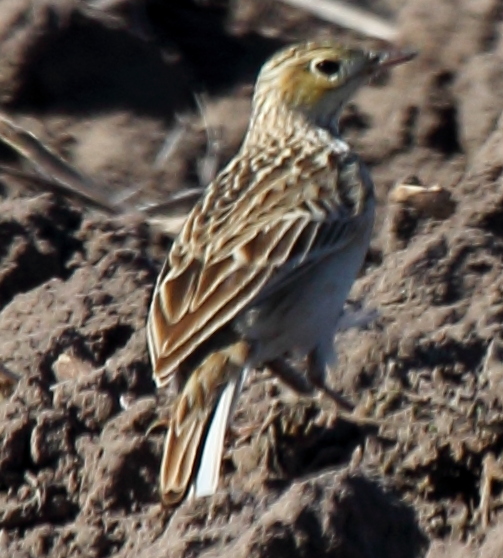
Little Wagtail
Motacilla minuta
Order: Passeriformes / Family: Motacillidae

Wikimedia Commons
About the Little Wagtail
The Little Wagtail (Motacilla minuta) is a fascinating bird that captivates bird watchers with its distinctive behavior and striking appearance. This small passerine belongs to the family Motacillidae and is well-known for its incessant tail-wagging behavior, a trait that gives the wagtail family its name. The Little Wagtail is of particular interest to ornithologists due to its adapted behaviors and ecological significance in various ecosystems. Found across a range of environments, from open grasslands to the edges of wetlands, this bird plays an essential role in controlling insect populations, making it a vital component of its ecosystem. The Little Wagtail has a widespread distribution, occurring in diverse habitats such as the open fields of Eastern Europe, the riverbanks of Central Asia, and occasionally, the temperate regions of Southeast Asia. During the breeding season, it is commonly found in temperate regions where its presence signifies the health of the local ecosystem, particularly in maintaining the balance of insect populations. As an indicator species, changes in its population can signal shifts in environmental health, making it a subject of continuous study. The Little Wagtail exhibits intriguing migratory patterns, undertaking seasonal journeys to exploit different ecological niches. In summer, it breeds in temperate regions where long daylight hours provide abundant food supplies for raising young. As the seasons change, it moves to milder climates, showcasing its adaptability to various environmental conditions. This seasonal movement is crucial for its survival, as it avoids the harsh winters of its breeding grounds and takes advantage of the resources in its wintering territories. The Little Wagtail's ecological role extends beyond predation on insects. It serves as prey for larger birds and mammals, integrating it into the food web of its habitat. Its presence in agricultural areas can be beneficial for farmers, as it helps control pest populations naturally. Thus, this small bird not only contributes to the ecological balance but also supports human agricultural practices. Observing the Little Wagtail in its natural habitat offers a glimpse into the intricate workings of nature, where every species, big or small, plays a role in maintaining the delicate balance of life.
The Little Wagtail belongs to the family Motacillidae, within the order Passeriformes. These birds typically live 4-6 years with a maximum recorded of 8 years.
How to Identify a Little Wagtail
The Little Wagtail is a small, slender bird with a length of about 15 centimeters and a wingspan ranging from 20 to 22 centimeters. Its most distinguishing feature is its perpetually wagging tail, which is both a behavioral hallmark and a useful field mark. The plumage of the Little Wagtail is characterized by a bright yellow underbelly and a contrasting gray back, with a prominent white stripe above the eye. Males exhibit slightly brighter colors during the breeding season, with more vivid yellow tones compared to females. Juveniles are generally duller, with a pale yellow wash on the underparts and a more muted grayish-brown upper body. This helps them blend into their surroundings, offering some protection from predators. The flight silhouette of the Little Wagtail is distinctive, with its long tail and wings that appear slightly rounded when in motion. When perched, it often bobs up and down, a behavior that aids in identification. Although similar in appearance to other wagtails, such as the White Wagtail (Motacilla alba), the Little Wagtail can be distinguished by its smaller size and the absence of the extensive black markings found on its larger relatives.
Having trouble telling birds apart? Upload a photo to our bird identification tool for an instant species match.
Little Wagtail Habitat and Range
Preferred Habitat
The Little Wagtail thrives in a variety of habitats, showing a preference for open areas with low vegetation and proximity to water sources. It frequents meadows, riverbanks, and marshy areas, where insect prey is abundant. During the breeding season, it occupies temperate zones, favoring grasslands and agricultural fields at elevations ranging from sea level to 2000 meters. In winter, the Little Wagtail may shift to slightly warmer regions, including urban parks and gardens, where it can find both shelter and food. Although primarily a rural bird, it adapts well to urban environments, often spotted near human settlements, especially if water bodies are present nearby. This adaptability to different habitats demonstrates its resilience and ability to exploit various ecological niches throughout the year.
Geographic Range
The Little Wagtail exhibits a broad breeding range, spanning across temperate regions of Eastern Europe and extending into Central Asia. During the breeding season, it is commonly found in countries like Russia, Kazakhstan, and parts of China. As a migratory species, it undertakes significant journeys to reach its wintering grounds. In winter, the Little Wagtail moves southward to warmer climates, including parts of the Middle East and Southeast Asia. It is known to migrate through established corridors, often following river valleys and other natural landmarks. The population density of the Little Wagtail can vary significantly, with higher concentrations observed in areas that provide ample food resources and suitable nesting sites. These population hotspots are critical for understanding the bird's migratory patterns and ecological preferences.
Want to know which birds visit your area? Browse our backyard birds by location guides for region-specific species lists.
What Does the Little Wagtail Eat?
The diet of the Little Wagtail is primarily insectivorous, consisting largely of small insects and larvae. During the breeding season, its diet is dominated by caterpillars, beetles, and flies, which are abundant in its preferred grassland and wetland habitats. The bird employs a distinctive foraging technique, often seen walking or running on the ground as it searches for prey. Its keen eyesight allows it to spot and capture insects with precision. In winter, the Little Wagtail's diet may expand to include seeds and small aquatic organisms, adapting to the availability of food. This flexibility in diet ensures its survival across diverse environments and seasonal changes. The bird typically forages during daylight hours, taking advantage of periods when insect activity is highest, and can often be observed near water bodies where insect density is greater.
Little Wagtail Behavior and Social Structure
The Little Wagtail displays a range of behaviors that are both fascinating and functionally significant. It is primarily a solitary bird outside the breeding season, but during migration and winter, it joins loose flocks that provide safety in numbers. Territorial behavior is prominent during the breeding season, with males establishing and defending territories through song and display flights. These displays are crucial for attracting mates and deterring rivals. Courtship involves complex aerial displays and vocalizations, with males showcasing their agility and plumage to potential mates. Once paired, both parents participate in rearing the young, showcasing cooperative breeding behavior. The Little Wagtail is diurnal, active during the day, and often observed wagging its tail-a behavior thought to flush insects from the ground. In response to predators, it employs alarm calls and seeks cover in dense vegetation. Its adaptability to changing environments and ability to coexist with humans make it a successful and widespread species.
Little Wagtail Nesting and Reproduction
The nesting habits of the Little Wagtail are well-adapted to its environment. This species typically selects nest sites on the ground, hidden among tall grasses or under the cover of shrubs. The nest itself is a compact cup made from grass, moss, and lined with feathers for insulation. The female lays a clutch of 4 to 6 eggs, which are pale with speckled markings. The incubation period lasts about 12 to 14 days, during which both parents share the responsibility of keeping the eggs warm. After hatching, the chicks are altricial, requiring constant care and feeding by both parents. Fledging occurs about 14 days after hatching, with young birds remaining dependent on their parents for food and protection for several weeks. The Little Wagtail typically produces one to two broods per year, depending on environmental conditions and food availability.
Little Wagtail Sounds and Vocalizations
The vocalizations of the Little Wagtail are distinctive and play a crucial role in its communication. The primary song is a series of high-pitched, rapid notes that rise and fall in a melodious rhythm. This song is often heard during the breeding season, used by males to attract females and establish territory. The call notes are sharp and clear, often described as a 'tsee-tsee' sound, which serves as an alarm call or contact call among individuals. During the dawn chorus, the Little Wagtail's song is more pronounced, blending with the calls of other bird species to create a symphony of avian sounds. These vocalizations are vital for maintaining social bonds and coordinating activities within flocks.
Interesting Facts About the Little Wagtail
- 1The Little Wagtail's constant tail-wagging may help it startle insects, making them easier to catch.
- 2Despite its name, the Little Wagtail is not the smallest member of its family; that title goes to the Forest Wagtail.
- 3Little Wagtails can cover over 1000 kilometers during their migratory journeys each year.
- 4This bird is known for its adaptability, thriving in both urban parks and remote grasslands.
- 5Little Wagtails can often be seen following livestock, catching insects disturbed by grazing animals.
- 6They have been observed using stones and other objects as tools to help dislodge insects from crevices.
- 7The Little Wagtail's song has been compared to the tinkling of a small bell, adding charm to its vocal repertoire.
Little Wagtail Conservation Status
The conservation status of the Little Wagtail is currently listed as Least Concern on the IUCN Red List. Its population appears stable, with no immediate threats causing significant declines. However, habitat loss and degradation due to agricultural expansion and urbanization pose potential risks. Conservation efforts focus on preserving wetlands and grasslands, ensuring these critical habitats remain intact. Monitoring programs track population trends, providing data to guide conservation strategies. Historically, the Little Wagtail has shown resilience in adapting to changing environments, but continued vigilance is necessary to safeguard its future.