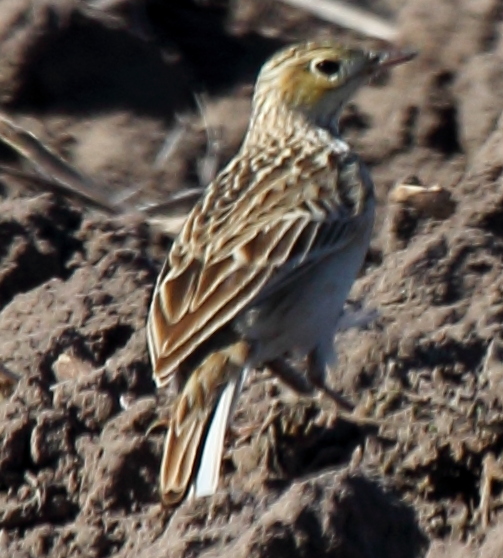
Grey Wagtail
Motacilla philippensis
Order: Passeriformes / Family: Motacillidae

Wikimedia Commons
About the Grey Wagtail
The Grey Wagtail (Motacilla cinerea) is a medium-sized passerine bird known for its elegant appearance and distinctive tail-wagging behavior. Belonging to the family Motacillidae, this bird is commonly seen flitting alongside bodies of water, where its graceful movements and striking plumage catch the eye of birdwatchers. The Grey Wagtail is widely distributed across Europe, Asia, and parts of Africa, thriving in environments that provide abundant aquatic insect life. Its ecological role is significant as it helps control insect populations, particularly those near freshwater sources. During the breeding season, which typically begins in April and can extend through July, the Grey Wagtail establishes territories along fast-flowing streams and rivers. These habitats provide both the food resources and nesting sites necessary for raising young. Despite its name, it is not entirely grey; the species exhibits vibrant yellow underparts, a feature that becomes more pronounced during the breeding season. In the winter months, the Grey Wagtail may migrate to lower altitudes or slightly warmer regions, although some populations, especially in milder climates, remain resident year-round. It is adaptable, making use of urban waterways and even farm ponds, but always stays close to water. The bird's ability to thrive in a variety of environments underscores its ecological versatility and resilience.
The Grey Wagtail belongs to the family Motacillidae, within the order Passeriformes. These birds typically live typically lives 3-4 years, with some individuals reaching up to 6 years..
How to Identify a Grey Wagtail
The Grey Wagtail is a slender bird measuring between 18 to 21 cm in length, notable for its exceptionally long tail which it constantly wags. Adults exhibit a grey back, bright yellow underparts, and a distinctive white supercilium above the eye. During the breeding season, males display a more vivid yellow on the breast, and some may show a black throat patch, though this is not always present. Juveniles are duller with less pronounced yellow and grey shades. The differences between males and females can be subtle outside of the breeding season, as females tend to have slightly paler underparts. The Grey Wagtail can be confused with the more common Yellow Wagtail, but the latter has an olive-green back and is more closely associated with open countryside rather than waterways. In flight, the Grey Wagtail's long tail and undulating flight pattern are key identification features. When perched, its habit of tail-wagging is distinctive and helps differentiate it from similar species.
Having trouble telling birds apart? Upload a photo to our bird identification tool for an instant species match.
Grey Wagtail Habitat and Range
Preferred Habitat
Grey Wagtails are typically found in habitats associated with water, including streams, rivers, lakes, and even urban waterways. They prefer locations with clear, flowing water where insects are plentiful. In terms of elevation, they can be found from sea level up to mountainous regions reaching altitudes of 2,000 meters. Seasonal shifts in habitat can occur, especially in colder climates where some populations move to coastal or lowland areas during winter. Although primarily associated with rural environments, Grey Wagtails have adapted to urban settings, often seen along canals and in city parks with water features.
Geographic Range
The Grey Wagtail breeds across a wide range, from the British Isles and across continental Europe to the Ural Mountains, and from there extending into Central Asia. The species also breeds in parts of the Middle East, with populations reaching into the northwestern regions of Africa. In winter, many northern and eastern populations migrate southward to southern Europe, North Africa, and South Asia, including countries such as India and Sri Lanka. Migration corridors often follow river valleys and coastal lines, providing the necessary resources during transit. While some populations are migratory, others, particularly in Western Europe, remain resident throughout the year.
Want to know which birds visit your area? Browse our backyard birds by location guides for region-specific species lists.
What Does the Grey Wagtail Eat?
The diet of the Grey Wagtail primarily consists of insects and other invertebrates, making it an important insectivore in its ecosystem. During the warmer months, it feeds extensively on aquatic larvae, mayflies, and midges found along riverbanks and streams. Insects are typically caught during short flights or by gleaning from the water's surface. The Grey Wagtail's slender bill is well-adapted for picking insects off stones and other surfaces. In winter, when insect availability decreases, the bird may also consume small mollusks and seeds, though it remains predominantly insectivorous. Foraging occurs throughout the day, with peaks in activity during morning and late afternoon.
Grey Wagtail Behavior and Social Structure
Grey Wagtails are primarily solitary or found in pairs, especially during the breeding season when they become fiercely territorial. Territories are defended through displays and vocalizations by both males and females. Courtship involves elaborate flight displays where the male showcases his agility and vibrancy. Outside the breeding season, these wagtails can sometimes be observed in loose flocks, particularly during migration or in winter when resources are concentrated. Their response to predators involves loud alarm calls and evasive flights, and they often take cover in dense vegetation. Daily activities follow a diurnal pattern, with feeding and preening occupying much of their time.
Grey Wagtail Nesting and Reproduction
The Grey Wagtail constructs its nest close to water, often on riverbanks, under bridges, or in crevices among rocks. The nest is a cup-shaped structure made from moss, leaves, and grasses, lined with hair and feathers for insulation. A typical clutch consists of 4 to 6 eggs, which are incubated for about 12 to 14 days by both parents. After hatching, the chicks remain in the nest for another 12 to 14 days before fledging. Both parents participate in feeding the young, providing them with a diet rich in insects. The Grey Wagtail typically raises one or two broods per year, depending on environmental conditions and food availability.
Grey Wagtail Sounds and Vocalizations
The Grey Wagtail's song is a series of high-pitched, sweet notes that can be heard throughout its territory, especially during the breeding season. Its call is a sharp 'tsi-tsi' or 'chizzik', used frequently to maintain contact with mates or warn of potential threats. Alarm calls are rapid and more insistent, often accompanied by agitated movements. During the dawn chorus, the Grey Wagtail's song contributes to the symphony of sounds near water bodies, providing a clear and melodious backdrop to the morning activities.
Interesting Facts About the Grey Wagtail
- 1The Grey Wagtail's name is somewhat misleading, as its vibrant yellow underparts are one of its most striking features.
- 2Despite their graceful appearance, Grey Wagtails are aggressive in defending their territories during the breeding season.
- 3The Grey Wagtail can be found at altitudes up to 2,000 meters, thriving in mountainous regions.
- 4In winter, some Grey Wagtails migrate over 2,000 kilometers to reach their warmer, non-breeding grounds.
- 5Grey Wagtails exhibit a unique flight pattern, characterized by rapid wingbeats interspersed with glides.
- 6The species is known for tail-wagging, a behavior that may help flush out insects from the ground.
- 7Grey Wagtails have been observed using urban environments, adapting to canals and city parks for feeding.
Grey Wagtail Conservation Status
Currently, the Grey Wagtail is listed as Least Concern by the IUCN, with populations considered stable across much of its range. However, localized declines have been noted in areas where habitat degradation, pollution, and watercourse modifications have occurred. Conservation efforts focus on maintaining clean waterways and protecting natural habitats from development. Historical population changes have shown resilience due to the species' adaptability, yet ongoing monitoring is crucial to prevent future declines.