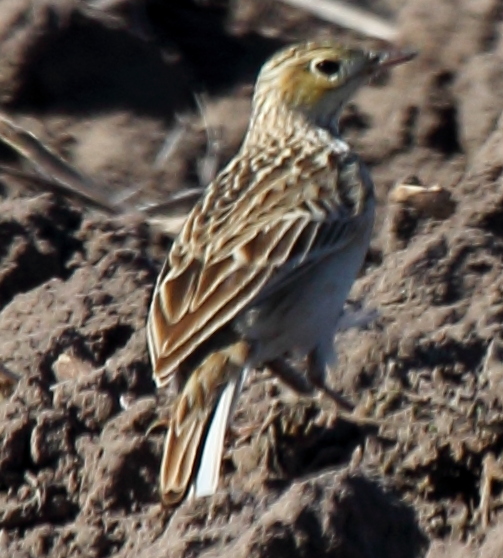
Tcheric Wagtail
Motacilla tcheric
Order: Passeriformes / Family: Motacillidae

Wikimedia Commons
About the Tcheric Wagtail
The Tcheric Wagtail (Motacilla tcheric) is a captivating member of the family Motacillidae, known for its vibrant yellow plumage and distinctive tail-wagging behavior. This species predominantly inhabits the temperate regions of Central Asia, with notable populations found in the expansive grasslands and river valleys of Mongolia and Kazakhstan. During the breeding season, the Tcheric Wagtail is a familiar sight in these areas, often seen flitting across open fields and wetlands.
The ecological significance of the Tcheric Wagtail cannot be overstated. As an insectivorous bird, it plays a crucial role in controlling insect populations, thus contributing to the balance of its ecosystem. Its presence is often a good indicator of a healthy environment, as it thrives in areas where insect life is abundant. Throughout the year, the Tcheric Wagtail undergoes various seasonal migrations, moving to lower altitudes and southern regions during the colder months. This seasonal movement ensures it remains in areas with ample food supply, demonstrating its adaptability to changing environmental conditions.
The Tcheric Wagtail's vibrant coloration and energetic behavior make it a species of interest not only to ornithologists but also to birdwatching enthusiasts around the world. Its ability to thrive in a variety of habitats, from riverbanks to agricultural fields, showcases its ecological versatility. This adaptability is essential for its survival, especially in the face of changing landscapes due to human activity. By understanding the habits and habitats of the Tcheric Wagtail, conservationists can better protect the environments that support this and other similar species.
The Tcheric Wagtail belongs to the family Motacillidae, within the order Passeriformes. These birds typically live can live up to 10 years, though the average lifespan is around 5-7 years..
How to Identify a Tcheric Wagtail
Identifying the Tcheric Wagtail involves noting several distinctive field marks. Adult Tcheric Wagtails exhibit a striking yellow plumage, particularly prominent on their underparts, contrasting with the more subdued gray or olive tones on their back and wings. The tail is long and black, with white edges that are visible in flight. This wagtail is relatively small, measuring about 18 centimeters in length.
Juvenile Tcheric Wagtails are slightly duller in coloration, with more muted yellow tones and a speckled pattern on their back and wings. Males and females are similar in appearance, though males may display slightly brighter plumage during the breeding season. In terms of similar species confusion, the Tcheric Wagtail can be mistaken for other yellow wagtails, but its distinct tail-wagging behavior and specific coloration patterns help differentiate it.
When observing the Tcheric Wagtail in flight, its long tail and rapid wingbeats are key identifiers. On the ground, it perches upright and often bobs its tail up and down, a behavior typical of wagtails. This energetic movement, paired with its striking coloration, makes it a conspicuous presence in its preferred habitats.
Having trouble telling birds apart? Upload a photo to our bird identification tool for an instant species match.
Tcheric Wagtail Habitat and Range
Preferred Habitat
The Tcheric Wagtail thrives in a variety of habitats, primarily favoring open areas such as grasslands, riverbanks, and marshes. It is commonly found at elevations ranging from lowland river valleys to upland meadows, particularly in regions like Mongolia and Kazakhstan. During the breeding season, it prefers areas with abundant water sources, where insects are plentiful.
In winter, the Tcheric Wagtail may shift to lower altitudes and more temperate regions, often inhabiting agricultural lands and urban parks where food remains accessible. Its adaptability to different environments, including both rural and urban settings, highlights its ecological versatility. The presence of this species in urban areas is increasingly noted, as it takes advantage of city parks and gardens.
Despite its adaptability, the Tcheric Wagtail shows a preference for habitats with close proximity to water, which supports its primary feeding strategy of hunting aquatic and semi-aquatic insects. This preference is particularly evident during the breeding season, when access to abundant food sources is crucial for raising young.
Geographic Range
The Tcheric Wagtail's range extends across much of Central Asia, with significant breeding populations in Mongolia, Kazakhstan, and parts of Russia. During the breeding season, it occupies vast grasslands, river valleys, and wetlands within these regions. Its breeding range is characterized by a preference for open, water-rich environments that support a robust insect population.
In winter, the Tcheric Wagtail migrates southward to escape the harsh Central Asian winters. Its wintering range includes parts of southern Asia, with notable concentrations in northern India and Southeast Asia. These migrations are facilitated by well-defined corridors that follow major river systems and lowland plains, providing necessary resources along the journey.
Population density hotspots during the breeding season are particularly high in the expansive steppes of Kazakhstan, where the abundance of insects supports large numbers of breeding pairs. In contrast, its wintering grounds in southern Asia see a more dispersed distribution, as the birds spread out to exploit varied habitats and food sources.
Want to know which birds visit your area? Browse our backyard birds by location guides for region-specific species lists.
What Does the Tcheric Wagtail Eat?
The diet of the Tcheric Wagtail primarily consists of insects, which it hunts with agility and precision. Its feeding strategy involves actively foraging on the ground, often near water, where it captures a variety of prey including beetles, flies, and aquatic larvae. This insectivorous diet is a cornerstone of its ecological role, helping to control pest populations.
Seasonal changes in diet are observed, with the Tcheric Wagtail consuming more aquatic insects during the breeding season when it frequents wetlands and riverbanks. In winter, its diet may diversify to include seeds and small fruits, supplementing its insect intake as availability fluctuates.
The Tcheric Wagtail employs a distinctive feeding technique, characterized by quick, darting movements that allow it to snatch insects from the ground or water surface. It often feeds in the early morning and late afternoon, aligning its activity with peak insect availability. Prey size typically ranges from small flies to larger beetles, reflecting its adaptability in capturing diverse insect prey.
Tcheric Wagtail Behavior and Social Structure
The Tcheric Wagtail exhibits a range of intriguing behaviors, notably its characteristic tail-wagging, which it uses both for balance and communication. This small songbird often displays territorial tendencies during the breeding season, vigorously defending its nesting area from intruders. Its courtship displays are elaborate, involving a series of aerial chases and ground displays, where the male showcases his plumage and agility to attract a mate.
Socially, the Tcheric Wagtail is generally solitary or found in pairs during the breeding season. However, it becomes more gregarious during migration and winter, forming small flocks that may number in the dozens. This flocking behavior aids in foraging efficiency and predator avoidance.
Daily activity patterns reveal that the Tcheric Wagtail is predominantly diurnal, with peak foraging occurring in the early morning and late afternoon. Its response to predators, such as birds of prey, involves a combination of alarm calls and evasive flight, often retreating to dense cover. The Tcheric Wagtail's adaptability in behavior ensures its survival across varying environments and seasons.
Tcheric Wagtail Nesting and Reproduction
The nesting habits of the Tcheric Wagtail are intriguing, with a preference for building nests close to water sources. Nests are typically constructed on the ground or in low vegetation, using a variety of materials such as grass, moss, and leaves, lined with softer materials like feathers and hair for insulation.
Clutch size ranges from 3 to 6 eggs, with the incubation period lasting approximately 12 to 14 days. Both parents share incubation duties, though the female often assumes the primary role. Once hatched, the chicks are altricial, requiring extensive parental care, which includes frequent feeding of regurgitated insects.
Fledging occurs about 14 to 16 days post-hatching, when the young birds gain the strength and agility needed for independent foraging. The Tcheric Wagtail typically raises one to two broods per year, depending on environmental conditions and food availability. This flexible reproductive strategy allows the species to maximize its reproductive success in favorable years.
Tcheric Wagtail Sounds and Vocalizations
The Tcheric Wagtail's vocalizations are a key aspect of its behavioral repertoire. Its primary song is a series of rapid, high-pitched notes that can be described as a 'tzee-tzee-tzee' pattern, often delivered from a prominent perch. The song serves both to attract mates and to establish territory boundaries.
In addition to its song, the Tcheric Wagtail produces a variety of call notes, including a sharp, metallic 'chink' sound used during flight or when alarmed. Alarm calls are typically short and repeated rapidly, signaling potential threats to nearby conspecifics.
During the dawn chorus, the Tcheric Wagtail's song is particularly prominent, adding to the vibrant soundscape of its habitat. Its vocalizations, while not as complex as some other songbirds, are nonetheless an integral part of its communication strategy and social interactions.
Interesting Facts About the Tcheric Wagtail
- 1The Tcheric Wagtail's tail-wagging behavior is not just for show; it helps flush out insects from vegetation, making them easier to catch.
- 2Despite their small size, Tcheric Wagtails can cover over 1,000 kilometers during migration, showcasing their impressive stamina.
- 3The Tcheric Wagtail's preference for habitats near water reflects its reliance on aquatic insects, which constitute a major part of its diet.
- 4In urban environments, Tcheric Wagtails have been observed using man-made structures for nesting, demonstrating their adaptability.
- 5The species' vocalizations, while not as elaborate as some songbirds, play a crucial role in mate attraction and territory defense.
- 6Tcheric Wagtails can be seen in flocks of up to 50 individuals during migration, highlighting their social nature outside the breeding season.
- 7The vibrant yellow plumage of the Tcheric Wagtail is especially pronounced in males during the breeding season, serving as a visual display for attracting mates.
Tcheric Wagtail Conservation Status
The Tcheric Wagtail is currently classified as Least Concern by the IUCN, reflecting a stable population trend across its range. Despite this status, the species faces several threats, primarily habitat loss due to agricultural expansion and wetland drainage. Climate change also poses a potential risk by altering the availability of suitable breeding and wintering habitats. Conservation efforts focus on habitat preservation, particularly in key breeding and migratory stopover sites. Establishing protected areas in regions like Central Asia and enhancing wetland management practices are crucial strategies in ensuring the long-term survival of this species. Historically, the Tcheric Wagtail has maintained stable population numbers, though localized declines have been observed in areas experiencing significant environmental change. Ongoing monitoring and habitat restoration initiatives aim to mitigate these impacts and support the species' continued resilience.