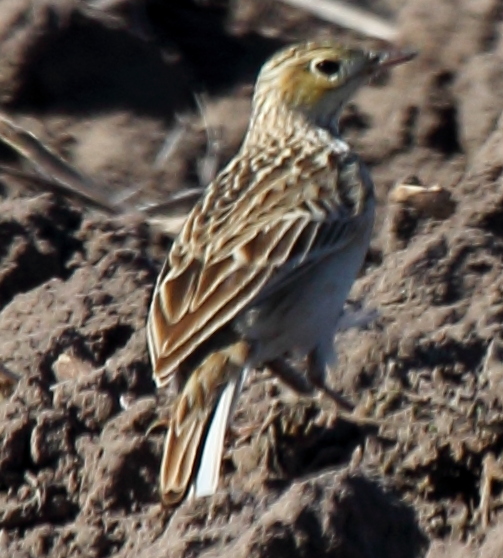
Motacilla titys
Motacilla titys
Order: Passeriformes / Family: Motacillidae

Wikimedia Commons
About the Motacilla titys
The Black-backed Wagtail, scientifically known as Motacilla titys, stands as a fascinating member of the wagtail family, Motacillidae. This bird is notable for its distinctive black and white coloration, which catches the eye of birdwatchers across its range. The Black-backed Wagtail inhabits a wide variety of environments, including meadows, streams, and agricultural landscapes in both rural and urban areas. It plays a crucial role in its ecosystem by controlling insect populations, as it primarily feeds on small invertebrates. During the breeding season, typically from March to August, this wagtail can be found across northern Europe and parts of Asia, particularly in regions like Russia and Eastern Europe. In these areas, it nests in crevices near water, often choosing man-made structures for the purpose. As autumn approaches, the Black-backed Wagtail embarks on a migratory journey to warmer climates, with wintering grounds that stretch across southern Europe, North Africa, and parts of South Asia. The bird's adaptability to various habitats and its migratory behavior make it a vital part of the avian community, contributing to the ecological balance by engaging in seed dispersal and soil aeration through its foraging activities. The Black-backed Wagtail is a symbol of avian resilience and adaptability, thriving in diverse environments and overcoming the challenges posed by habitat fragmentation and climate change. Its presence in both rural and urban landscapes highlights its flexibility and ecological significance, as it continues to maintain its population amidst an ever-changing world.
The Motacilla titys belongs to the family Motacillidae, within the order Passeriformes. These birds typically live average 3-4 years, with some individuals reaching up to 10 years..
How to Identify a Motacilla titys
Adult Black-backed Wagtails exhibit striking plumage, with their predominant black upperparts and contrasting white underparts. The head features a distinctive black crown and nape, while the face is white, creating a sharp contrast that aids in identification. Juveniles have a more subdued appearance, with grayish tones replacing the stark black and white of adults. Males and females appear similar, though males may have slightly more intense black markings during the breeding season. The Black-backed Wagtail can be confused with other wagtail species, but its unique pattern and color contrast help distinguish it. In flight, the bird showcases a characteristic undulating motion, with the tail bobbing up and down-a behavior from which wagtails derive their name. When perched, the bird maintains an upright posture, often on the ground or low branches, scanning its surroundings for insects.
Having trouble telling birds apart? Upload a photo to our bird identification tool for an instant species match.
Motacilla titys Habitat and Range
Preferred Habitat
The Black-backed Wagtail thrives in a variety of habitats, from open grasslands and wetlands to urban parks and gardens. It shows a preference for areas near water, such as riverbanks, lakeshores, and marshes, where it can find abundant food resources. In mountainous regions, it may be found up to elevations of 2000 meters, though it favors lower elevations during the breeding season. Seasonal habitat shifts occur as the bird migrates to avoid harsh winter conditions, moving to temperate coastal regions and wetlands in winter. Its presence in both urban and rural areas demonstrates its adaptability to human-altered landscapes, often seen foraging on lawns and near water bodies in city parks.
Geographic Range
The breeding range of the Black-backed Wagtail extends across northern and eastern Europe into Russia and parts of Central Asia. Notably, it breeds in countries such as Finland, Sweden, and Poland. During migration, this bird travels along various corridors, including through the Balkans and the Middle East. In winter, it settles in southern Europe, North Africa, and parts of South Asia, including countries like India and Pakistan. Population density hotspots include the river deltas and coastal wetlands of these regions, where the birds gather in significant numbers. The migratory nature of the Black-backed Wagtail allows it to exploit different ecological niches throughout the year.
Want to know which birds visit your area? Browse our backyard birds by location guides for region-specific species lists.
What Does the Motacilla titys Eat?
The Black-backed Wagtail's diet primarily consists of insects and other small invertebrates, such as beetles, flies, and caterpillars. During the breeding season, the abundance of insects near water bodies provides ample food for the adults and their young. In the winter months, the bird's diet may shift slightly to include seeds and berries, especially in urban environments where these resources are more readily available. Its foraging technique involves walking or running along the ground, deftly picking prey with its bill. The bird is diurnal, feeding actively throughout the day, with peaks in activity during the early morning and late afternoon when insect activity is highest.
Motacilla titys Behavior and Social Structure
The Black-backed Wagtail exhibits a fascinating array of behaviors, reflective of its social and territorial nature. During the breeding season, males establish and defend territories through song and display flights, often involving a series of short, rapid wing beats followed by a gliding descent. Courtship displays include tail-fanning and wing-spreading to attract females. The wagtail is generally monogamous, with pairs forming strong bonds. Outside the breeding season, these birds often join mixed-species flocks, particularly during migration and in wintering grounds, which provides protection against predators. Known for their distinctive tail-wagging behavior, Black-backed Wagtails are often seen bobbing their tails up and down as they forage. This behavior is believed to flush out insects and communicate with other birds. The wagtail's daily activity pattern includes periods of active foraging interspersed with resting and preening.
Motacilla titys Nesting and Reproduction
Black-backed Wagtails typically construct their nests in sheltered locations, often choosing crevices in rocks, riverbanks, or man-made structures like bridges and buildings. Nests are cup-shaped, built with grass, moss, and lined with feathers or hair. During the breeding season, the female lays 4-6 eggs, which she incubates for approximately 12-14 days. Both parents participate in feeding the chicks, which fledge after about 14-16 days. The species generally raises one to two broods per year, depending on the geographical location and environmental conditions. Parental roles are shared, with the male often assisting in feeding and protecting the young.
Motacilla titys Sounds and Vocalizations
The Black-backed Wagtail's song is characterized by a series of clear, sweet notes delivered in a rhythmic sequence. The pitch and quality are reminiscent of other wagtails, yet distinct through its melodic charm. Call notes include a sharp 'tslee' or 'tslik' sound, often heard during flight or when the bird is alarmed. Alarm calls are more rapid and intense, serving as warnings to others in the vicinity. During the early morning, particularly in spring, the wagtails participate in a dawn chorus, adding a lively element to the soundscape, much like the familiar songs of robins or sparrows.
Interesting Facts About the Motacilla titys
- 1Black-backed Wagtails can travel up to 5000 kilometers during migration, showcasing their endurance.
- 2These wagtails exhibit a unique tail-wagging behavior that may help to flush insects from hiding.
- 3The species is known to adapt well to urban environments, often seen foraging in city parks.
- 4Black-backed Wagtails can have two broods per year, with each brood consisting of up to six chicks.
- 5In winter, these wagtails can form flocks of hundreds, emphasizing their social behavior.
- 6The early morning song of the Black-backed Wagtail is a staple sound in many European landscapes.
- 7Their nests are often found in unexpected places, like building crevices, due to their adaptability.
Motacilla titys Conservation Status
Currently, the Black-backed Wagtail holds a conservation status of Least Concern according to the IUCN. Its population is considered stable, with no significant threats leading to a rapid decline. However, habitat destruction and climate change pose potential risks, impacting breeding and wintering grounds. Conservation efforts focus on preserving wetland habitats and promoting sustainable agricultural practices. Historically, the Black-backed Wagtail has adapted well to changing landscapes, allowing it to maintain healthy population levels across its range.