Nelicourvi Weaver
Ploceus nelicourvi
Order: Passeriformes / Family: Ploceidae
Wikimedia Commons
About the Nelicourvi Weaver
The Nelicourvi Weaver, scientifically known as Ploceus nelicourvi, is a captivating bird native to the rich biodiversity of Madagascar. This small songbird plays a significant ecological role by participating in the intricate web of life within the island's lush forests. As a member of the Ploceidae family, the Nelicourvi Weaver is renowned for its elaborate nest construction, which mirrors the complex ecosystems it inhabits. Found primarily in the eastern rainforests and the western deciduous forests, the bird exhibits a preference for habitats teeming with foliage and a diverse array of plant species.
The weaver's presence is vital for seed dispersal and insect population control, making it an active contributor to the health of its environment. Its diet, rich in insects and seeds, helps maintain the balance of various trophic levels within its habitat. The Nelicourvi Weaver's seasonal behaviors include a marked increase in activity during the breeding season, where its social and vocal nature becomes particularly pronounced.
This bird's ecological significance extends beyond its immediate environment. By maintaining healthy forest ecosystems, the Nelicourvi Weaver indirectly supports other species, including those that are endemic to Madagascar. Its role in ecosystem dynamics underscores the importance of preserving its natural habitats, which face ongoing threats from deforestation and climate change. Conservation efforts aim to protect these critical areas to ensure the continued survival of this vibrant species and the myriad of life forms it supports.
The Nelicourvi Weaver belongs to the family Ploceidae, within the order Passeriformes. These birds typically live typically 7-9 years in the wild, with some individuals recorded living up to 11 years..
How to Identify a Nelicourvi Weaver
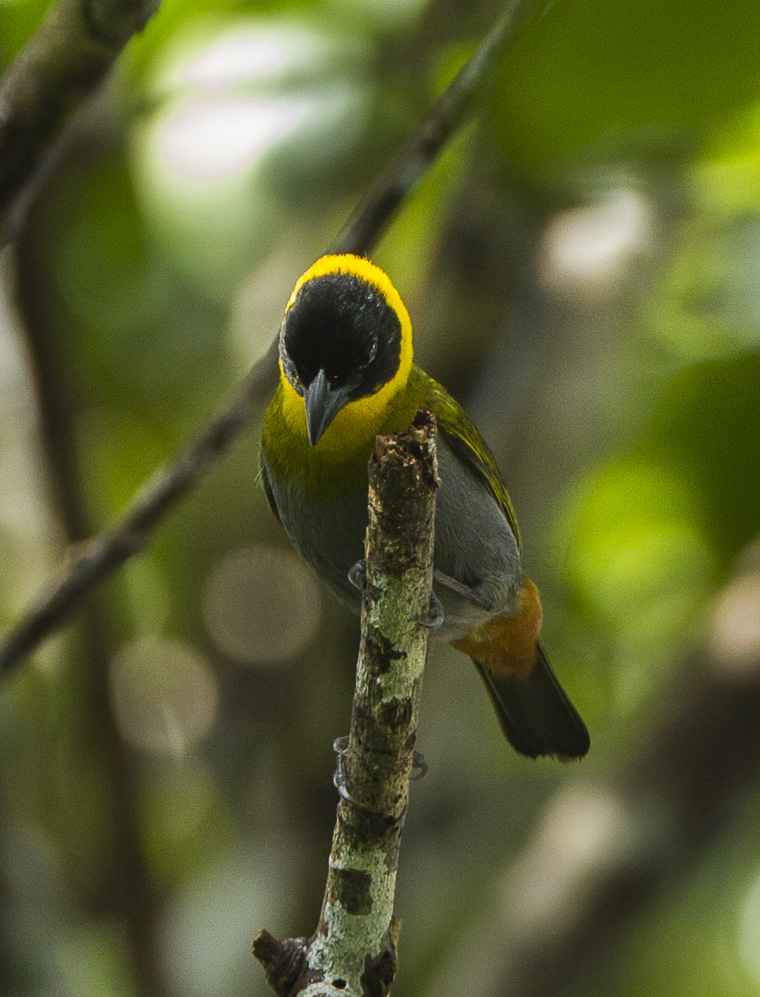
The Nelicourvi Weaver is a small bird, measuring approximately 14 cm in length. Its striking yellow plumage is a key field mark, with the male displaying more vivid coloration compared to the female. The male's bright yellow head and underparts contrast with its olive-green back, making it easily distinguishable in its forested habitat. Females and juveniles exhibit more subdued tones, with a mix of olive and yellow. This sexual dimorphism aids in quick identification during breeding seasons.
Compared to similar species, the Nelicourvi Weaver's plumage stands out. While other weaver species in Madagascar may share a general yellow coloration, the Nelicourvi's unique color pattern and vibrant hues differentiate it. When in flight, the Nelicourvi Weaver demonstrates a swift and agile silhouette, with rapid wingbeats characteristic of small passerines. Its perching posture is typically upright, often seen on branches within dense foliage, which it uses for both foraging and nest-building.
The Nelicourvi Weaver's vocalizations, often heard before the bird is seen, further aid in identification. Its calls are a series of sharp, musical notes that resonate through the forest, providing cues to its presence even when visual sightings are challenging.
Having trouble telling birds apart? Upload a photo to our bird identification tool for an instant species match.
Nelicourvi Weaver Habitat and Range
Preferred Habitat
The Nelicourvi Weaver thrives in Madagascar's tropical forests, particularly favoring the humid eastern rainforests and the dry deciduous forests in the west. These habitats offer the dense canopy and diverse plant life essential for its nesting and foraging needs. The bird typically inhabits areas with elevations ranging from sea level to about 1,000 meters, although it is most frequently observed in mid-elevation zones where forest density provides ample resources.
Seasonal shifts in habitat use are minimal, as the weaver is primarily sedentary, with its movements largely influenced by food availability. While the Nelicourvi Weaver can adapt to some degree of habitat disturbance, extensive deforestation poses a significant threat to its populations. In urban areas, the weaver is less common, preferring more pristine and established forest environments where competition and predation pressures are lower.
Geographic Range
The Nelicourvi Weaver is endemic to Madagascar, with its range largely restricted to the eastern and western regions of the island. Its breeding range is concentrated in the eastern rainforests, from the coastal lowlands to the higher elevations of the central highlands. These areas provide the nesting sites and food resources critical during the breeding season.
During the non-breeding season, the weaver's range does not significantly shift, as it is a resident species with limited migratory behavior. Population densities are highest in protected areas where forest cover is intact, such as Ranomafana and Andasibe-Mantadia National Parks. These hotspots offer ideal conditions for feeding and nesting, supporting robust populations compared to more fragmented or degraded habitats.
Want to know which birds visit your area? Browse our backyard birds by location guides for region-specific species lists.
What Does the Nelicourvi Weaver Eat?
The Nelicourvi Weaver's diet primarily consists of insects and seeds, reflecting its role as both a predator and a seed disperser within its ecosystem. During the breeding season, the bird's diet leans heavily towards protein-rich insects, such as caterpillars and beetles, which are abundant in its forest habitat. This diet supports the nutritional needs of growing chicks and active adults.
Outside the breeding season, seeds become a more prominent part of its diet, with the weaver often seen foraging in the canopy and mid-levels of trees. This shift allows the bird to exploit different food resources as seasonal availability changes. The weaver's foraging technique is characterized by agility and precision, as it adeptly navigates through foliage to capture insects or extract seeds. Feeding typically occurs throughout the day, with peaks in activity during the cooler morning and late afternoon hours when insect activity is higher.
Nelicourvi Weaver Behavior and Social Structure
The Nelicourvi Weaver exhibits a complex social structure, often forming loose colonies during the breeding season. These colonies, although not tightly knit, offer some protection against predators and enhance foraging efficiency. Territorial behavior is pronounced, with males vigorously defending nest sites through displays and vocalizations.
Courtship involves elaborate displays of plumage and song, with males showcasing their bright yellow coloration to attract females. Once paired, the birds engage in cooperative nest building, a key aspect of their reproductive strategy. The weaver's response to predators includes alarm calls and mobbing behavior, where multiple birds collectively deter potential threats.
Daily activity patterns revolve around foraging, with periods of rest interspersed. The bird remains active from dawn until dusk, with activity peaking during cooler parts of the day. Flocking patterns may vary outside the breeding season, as individuals become more solitary or form smaller, non-breeding groups.
Nelicourvi Weaver Nesting and Reproduction
Nelicourvi Weavers are renowned for their intricate nest construction. Nests are primarily woven from grasses and plant fibers, skillfully assembled into a spherical shape with a side entrance. These nests are typically suspended from branches, often over water, adding an extra layer of protection against predators.
Preferred nesting sites are in dense forest areas where foliage provides shelter and camouflage. A typical clutch consists of 2-4 eggs, with an incubation period of about 12-14 days. Both parents share incubation duties, although the female plays a more prominent role. After hatching, chicks fledge within 18-21 days, with parental care continuing for several weeks post-fledging.
The Nelicourvi Weaver often raises multiple broods per year, depending on environmental conditions and food availability. Their nesting success is closely tied to habitat quality, emphasizing the importance of preserving intact forest ecosystems for their reproductive success.
Nelicourvi Weaver Sounds and Vocalizations
The Nelicourvi Weaver's primary song is a series of melodious, high-pitched notes that create a distinctive musical sequence. These vocalizations serve both as territorial markers and as courtship displays during the breeding season. The song is often described as a rapid, cheerful twittering that can be heard resonating through the forest.
Apart from its song, the weaver produces a variety of call notes, including sharp alarm calls used to warn of predators. These calls are short and abrupt, contrasting with the more fluid and continuous song. During the dawn chorus, the Nelicourvi Weaver's vocalizations often blend with those of other forest birds, creating a rich tapestry of sound that defines the early morning hours in Madagascar's forests.
Interesting Facts About the Nelicourvi Weaver
- 1The Nelicourvi Weaver is one of over 100 species in the Ploceidae family, known for their intricate nest-building skills.
- 2Despite its small size, the Nelicourvi Weaver can build nests that weigh several times its own body weight.
- 3The weaver's nests are often suspended on thin branches, making them difficult for predators to reach.
- 4Nelicourvi Weavers are among the few bird species that use complex vocalizations to communicate during courtship.
- 5In Malagasy culture, the Nelicourvi Weaver is often admired for its industrious nature and vibrant appearance.
- 6The bird's scientific name, Ploceus nelicourvi, reflects its classification within a genus known for exceptional weaving.
- 7Nelicourvi Weavers play a crucial role in controlling insect populations, contributing to forest health.
Nelicourvi Weaver Conservation Status
The Nelicourvi Weaver is currently classified as Least Concern by the IUCN, with populations considered stable. However, the bird faces significant threats from habitat loss due to deforestation and land conversion for agriculture. Conservation efforts in Madagascar focus on protecting forest habitats and mitigating the impacts of human activity. Historical population changes reflect the broader trends of habitat degradation across the island. While some protected areas offer refuge for the Nelicourvi Weaver, continued conservation action is necessary to sustain its populations. Efforts include habitat restoration, community engagement, and research to better understand the ecological needs of this and other forest-dependent species.