
Neumann's Starling
Onychognathus neumanni
Order: Passeriformes / Family: Sturnidae
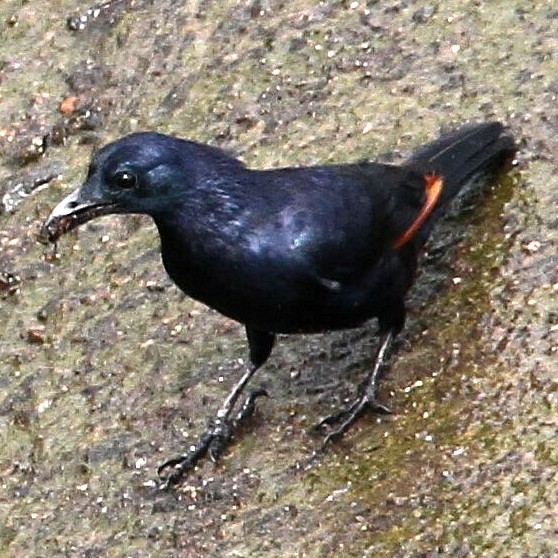
Wikimedia Commons
About the Neumann's Starling
Neumann's Starling (Onychognathus neumanni) is a striking bird known for its glossy dark plumage and vibrant orange wing patches. These starlings are a significant part of the avian biodiversity in eastern Africa, particularly in countries like Kenya, Tanzania, and Ethiopia. They inhabit open savannas, woodlands, and forest edges, often found at elevations ranging from 1,000 to 2,500 meters. Neumann's Starling plays a crucial ecological role in its habitat, acting as both predator and seed disperser. By controlling insect populations and aiding in the germination of various plant species, this bird supports the health and diversity of its ecosystem.
Throughout the year, these starlings exhibit a range of seasonal behaviors. During the breeding season, Neumann's Starling becomes more territorial and vocal, often seen in pairs or small family groups. Outside of breeding periods, they form larger flocks, which can number in the dozens, as they forage for food. Their adaptability to different habitats, including human-altered landscapes, has allowed them to maintain stable populations despite environmental changes. However, habitat destruction and climate change pose ongoing threats to their habitat, potentially impacting their numbers and distribution in the future.
The presence of Neumann's Starling in various protected areas highlights its ecological importance and the need for continued conservation efforts. These birds contribute to the ecosystem's balance by engaging in mutualistic relationships with other species, such as providing pest control for large herbivores. As an integral part of East Africa's avian community, Neumann's Starling is a species that embodies the region's rich biodiversity and the intricate connections between organisms and their environments.
The Neumann's Starling belongs to the family Sturnidae, within the order Passeriformes. These birds typically live typically around 7 years, with some individuals living up to 9 years..
How to Identify a Neumann's Starling
Neumann's Starling is a medium-sized bird, measuring about 22-24 cm in length. Adults display a glossy blackish-blue plumage that catches the light, giving them a shiny appearance. The most distinctive feature is their bright orange wing patches, visible during flight and when the wings are spread. Juveniles are similar in appearance but have duller plumage and less pronounced wing coloration. Males and females look alike, making gender differentiation in the field challenging without close observation.
In flight, Neumann's Starling exhibits a strong, direct flight pattern, with rapid wingbeats and occasional glides. Its silhouette is characterized by pointed wings and a short tail. When perched, this starling often holds its body upright, showcasing its glossy plumage and orange wing patches. The bird's sharp, slightly curved bill is adapted for capturing insects and fruit, aiding in its identification.
Confusion with other species can occur, particularly with the Red-winged Starling (Onychognathus morio), which shares a similar habitat range. However, Neumann's Starling is smaller and has more pronounced orange wing patches compared to the red of the Red-winged Starling. Observers can distinguish Neumann's Starling by its distinctive call and behavior, often seen foraging on the ground or perched prominently in open areas.
Having trouble telling birds apart? Upload a photo to our bird identification tool for an instant species match.
Neumann's Starling Habitat and Range
Preferred Habitat
Neumann's Starling primarily inhabits open savannas, woodlands, and forest edges, preferring areas with scattered trees and shrubs. These habitats provide essential resources such as food and nesting sites. The bird is often found at elevations between 1,000 and 2,500 meters, where it exploits the diverse vegetation and insect populations. Although primarily associated with natural landscapes, Neumann's Starling can also adapt to human-altered environments, such as agricultural fields and gardens, where suitable conditions exist.
Seasonal movements may occur in response to food availability, with some populations dispersing to lower elevations during periods of scarcity. While not typically found in urban centers, Neumann's Starling may venture into rural villages where food sources are accessible. This adaptability to both natural and semi-natural habitats underlines the bird's resilience and its ability to navigate changing environmental conditions.
Geographic Range
Neumann's Starling has a broad breeding range across East Africa, primarily in countries such as Kenya, Tanzania, and Ethiopia. The bird's distribution extends into parts of Uganda and Somalia, where suitable habitats are available. While Neumann's Starling is primarily a resident species, some localized movements may occur in search of food or during adverse weather conditions.
During the breeding season, populations concentrate in regions with optimal nesting sites and abundant food resources. These areas can become hotspots of activity, attracting other bird species and predators. In non-breeding months, Neumann's Starling may form larger flocks and venture into different regions, utilizing a variety of habitats. This flexibility in range and habitat use allows Neumann's Starling to maintain stable populations despite environmental pressures. Their presence across multiple protected areas highlights the importance of these regions for maintaining avian biodiversity.
Want to know which birds visit your area? Browse our backyard birds by location guides for region-specific species lists.
What Does the Neumann's Starling Eat?
The diet of Neumann's Starling is primarily insectivorous, with a preference for beetles, grasshoppers, and other arthropods. These starlings forage actively, often seen searching the ground and low vegetation for prey. Their sharp bills and keen eyesight allow them to efficiently capture moving insects. In addition to insects, Neumann's Starling consumes a variety of fruits and berries, especially during periods when insect prey is less abundant. This dietary flexibility helps sustain them through seasonal changes in food availability.
Neumann's Starling exhibits diverse foraging techniques, including ground-gleaning and aerial pursuit, adapting its strategy to the prey type and habitat. The bird often forages in small groups, increasing efficiency and reducing predation risk. Feeding usually occurs during the cooler parts of the day, such as early morning and late afternoon, when insects are most active. This opportunistic feeding behavior supports the starling's role as both predator and seed disperser within its ecosystem.
Neumann's Starling Behavior and Social Structure
Neumann's Starling displays a complex social structure, often forming small family groups or larger flocks outside the breeding season. These groups provide benefits such as increased vigilance and foraging efficiency. During the breeding season, the birds become more territorial, with pairs defending nesting sites against intruders. Courtship displays include aerial chases and vocal exchanges, strengthening pair bonds and signaling fitness.
This starling species exhibits a range of vocalizations, using calls to communicate within flocks and signal alarm in response to predators. Flocking behavior varies seasonally, with larger gatherings observed during non-breeding months, when food resources are more dispersed. Neumann's Starling is diurnal, with peak activity during the early morning and late afternoon.
In the presence of predators, Neumann's Starling relies on group defense mechanisms, such as mobbing, to deter threats. Their keen awareness and social cooperation allow them to respond effectively to environmental challenges, ensuring survival in dynamic habitats.
Neumann's Starling Nesting and Reproduction
Neumann's Starling builds its nests in tree cavities, cliffs, or man-made structures, utilizing available materials such as twigs, grass, and feathers. The nesting sites must provide protection from predators and weather, often located in secluded areas. The female primarily constructs the nest while the male assists by gathering materials. The typical clutch size ranges from 2 to 4 eggs, which the female incubates for about 14 to 18 days.
Both parents participate in feeding the chicks, which fledge approximately 20 to 25 days after hatching. Parental roles are well-defined, with males often defending the territory while females focus on brooding. Neumann's Starling can produce one to two broods per year, depending on environmental conditions and food availability. Successful nesting is crucial for maintaining population numbers, particularly in regions where suitable nesting sites are limited.
Neumann's Starling Sounds and Vocalizations
Neumann's Starling is known for its varied and melodious song, featuring a series of whistles, clicks, and trills. The primary song consists of a rhythmic sequence with high-pitched notes that can be heard over long distances. Call notes include sharp, metallic sounds used for communication within flocks and to signal alarm. During the dawn chorus, Neumann's Starling becomes particularly vocal, contributing to the vibrant soundscape of its habitat.
The bird's vocal repertoire aids in territorial defense, mate attraction, and social cohesion. While its song may resemble that of other starlings, the unique combination of notes and rhythm aids in identification. This vocal adaptability reflects the starling's ability to thrive in diverse environments.
Interesting Facts About the Neumann's Starling
- 1Neumann's Starling often forages alongside large mammals like zebras, benefiting from the insects these animals flush out.
- 2This starling species can travel up to 20 kilometers daily in search of food, showcasing its adaptability and endurance.
- 3Neumann's Starling exhibits cooperative breeding behavior, with older siblings sometimes helping to raise new chicks.
- 4Their glossy plumage is not just for show; it helps protect their feathers by making them more resilient to wear.
- 5Despite their preference for natural habitats, Neumann's Starlings have been observed nesting in urban rooftops.
- 6Neumann's Starling's strong bill allows it to crack open tough seeds, aiding in the dispersal of plant species.
- 7They participate in mixed-species flocks, enhancing foraging success and providing protection from predators.
Neumann's Starling Conservation Status
Neumann's Starling currently holds a status of Least Concern according to the IUCN Red List, with stable population trends across its range. Despite this, ongoing threats such as habitat destruction, agricultural expansion, and climate change could impact local populations. Conservation efforts focus on habitat preservation and the protection of key breeding areas within national parks and reserves. Historically, Neumann's Starling has demonstrated resilience to environmental changes, yet continued monitoring is necessary to ensure long-term stability. Community-based conservation initiatives and sustainable land management practices further support the species' future, highlighting the need for collaborative efforts to protect East Africa's avian diversity.
Other Sturnidae Species


Birds Similar to the Neumann's Starling
These species are often confused with the Neumann's Starling due to similar appearance or overlapping range.

