
Noronha Vireo
Vireo gracilirostris
Order: Passeriformes / Family: Vireonidae

Wikimedia Commons
About the Noronha Vireo
The Noronha Vireo (Vireo gracilirostris) is an endemic bird species limited to the Fernando de Noronha archipelago off the coast of Brazil. This small songbird is a member of the Vireonidae family and occupies a unique ecological niche within its limited range. The archipelago's lush forests and coastal scrub provide the ideal habitat for this species, offering a mix of dense foliage and open spaces. With a population estimated at a few thousand individuals, the Noronha Vireo has adapted well to its restricted environment. Despite its limited distribution, the bird plays a significant role in the archipelago's ecosystem, acting as both a seed disperser and insect controller. Its presence underscores the importance of conservation efforts in the region, as any ecological disturbance could have profound effects on the bird's survival. Throughout the year, the Noronha Vireo maintains a consistent presence in its island habitat, although its activity patterns may vary with the seasons. During the breeding season, which coincides with the wetter months, the vireo becomes more vocal and territorial, establishing and defending breeding territories. Outside of this period, the bird's behavior shifts slightly as it focuses more on foraging and maintaining its plumage. Despite its isolation, the Noronha Vireo faces threats from habitat degradation and invasive species. Conservationists continue to monitor the island's environment to ensure the vireo's survival. The Noronha Vireo is a testament to the evolutionary processes that occur on isolated islands, where species often adapt in unique ways due to limited competition and specialized niches.
The Noronha Vireo belongs to the family Vireonidae, within the order Passeriformes. These birds typically live average of 4-6 years in the wild..
How to Identify a Noronha Vireo
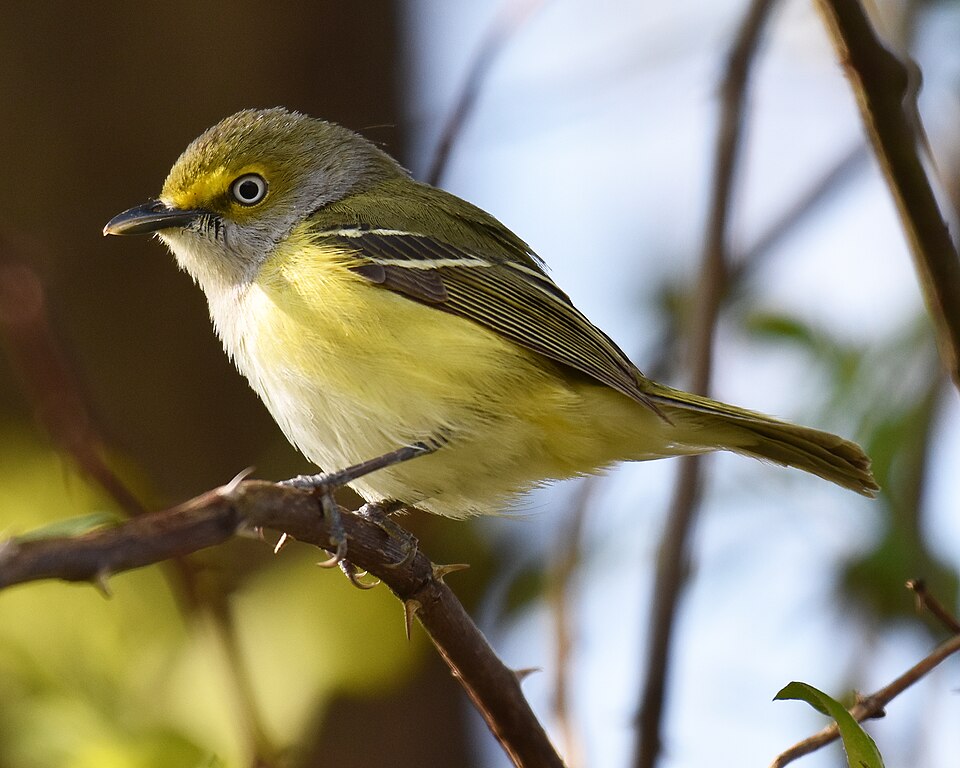
The Noronha Vireo is a small bird, measuring approximately 12 cm in length with a wingspan of around 20 cm. The adult plumage is characterized by olive-green upperparts and pale yellow underparts, which help it blend seamlessly into the foliage of its forest habitat. Its slender, slightly curved bill is a distinctive feature, adapted for gleaning insects from leaves and branches. In contrast, juvenile Noronha Vireos display a duller, more muted coloration, lacking the bright yellow hues of the adults until they reach maturity. Male and female Noronha Vireos are similar in appearance, making visual differentiation challenging without close observation. When perched, this bird adopts an upright posture, often flicking its wings and tail, a behavior that can aid in identification. The Noronha Vireo may be confused with similar species such as the Chivi Vireo found on the mainland, but its restricted range and distinctive vocalizations help to differentiate it. In flight, the vireo displays a rapid, direct flight pattern, typical of many small passerines.
Having trouble telling birds apart? Upload a photo to our bird identification tool for an instant species match.
Noronha Vireo Habitat and Range
Preferred Habitat
The Noronha Vireo inhabits a range of vegetative environments on Fernando de Noronha, from coastal scrub and secondary forest to areas of mixed woodland. The bird thrives at low elevations, typically below 200 meters, taking advantage of the island's diverse flora for food and shelter. While it prefers natural forested areas, the vireo can occasionally be found in more open, semi-urban settings where vegetation remains dense. Seasonal shifts in habitat preference are minimal, given the lack of significant environmental change on the island. However, during the wetter breeding months, the Noronha Vireo may venture into denser forested areas to find optimal nesting sites.
Geographic Range
The Noronha Vireo's range is limited to the Fernando de Noronha archipelago, a group of volcanic islands located approximately 354 km off the northeastern coast of Brazil. As an island endemic, the bird does not migrate, remaining on the archipelago year-round. Within this small geographic range, the vireo is primarily concentrated on the main island, although it can also be found on some of the smaller islets. Population density is highest in areas where the habitat remains largely undisturbed by human activity, such as in protected reserves and less accessible parts of the island. The Noronha Vireo's restricted range makes it particularly vulnerable to environmental changes and highlights the importance of preserving its natural habitat.
Want to know which birds visit your area? Browse our backyard birds by location guides for region-specific species lists.
What Does the Noronha Vireo Eat?
The Noronha Vireo primarily feeds on insects, spiders, and a variety of other small invertebrates, which it skillfully gleans from the foliage of trees and shrubs. Its diet shifts slightly with the seasons, as certain insect populations fluctuate. During the wetter months, when many insects are in abundance, the vireo takes full advantage by increasing its foraging activity. In addition to insects, the Noronha Vireo also consumes a range of fruits and berries, particularly during periods when insect prey is less available. This opportunistic feeding behavior helps the bird maintain a stable energy intake throughout the year. The vireo often forages alone or in pairs, methodically working its way through the canopy in search of food.
Noronha Vireo Behavior and Social Structure
The Noronha Vireo exhibits a largely solitary lifestyle, though it may form loose associations with other bird species during foraging. It is territorial during the breeding season, with both males and females defending their chosen nesting areas from intruders. Courtship displays involve complex songs and calls, accompanied by visual displays such as wing-flicking and short flights. The vireo is primarily active during the day, with peak activity occurring in the early morning and late afternoon when temperatures are more moderate. When faced with potential predators, the Noronha Vireo employs a variety of alarm calls to alert nearby individuals, often taking cover in dense foliage until the threat has passed. Outside of the breeding season, its social interactions are more limited, focusing on foraging and territory maintenance.
Noronha Vireo Nesting and Reproduction
The Noronha Vireo constructs cup-shaped nests, typically placed in the fork of a tree branch or shrub. The nests are composed of grass, leaves, and other plant materials, woven together with spider silk for added strength and flexibility. Preferred nesting sites are in areas with dense foliage, providing protection from predators and the elements. A typical clutch consists of two to three eggs, which both parents incubate for approximately 14 days. Once hatched, the chicks remain in the nest for another 12-15 days before fledging. Both male and female vireos share in feeding the young, bringing a steady supply of insects and small fruits. The species usually raises one brood per year, though favorable conditions may occasionally allow for a second.
Noronha Vireo Sounds and Vocalizations
The primary song of the Noronha Vireo is a series of melodious notes, delivered in a rapid, repeating sequence. Its rhythm is lively, with a slightly nasal quality that distinguishes it from similar species. The bird also produces a variety of call notes, including sharp 'chip' sounds and softer, more conversational tones. Alarm calls are more urgent, often described as a rapid series of harsh notes intended to deter predators or alert other birds. During the dawn chorus, the Noronha Vireo's song is a prominent feature of the soundscape, contributing to the overall ambience of the island's mornings.
Interesting Facts About the Noronha Vireo
- 1The Noronha Vireo is one of only a few bird species endemic to Fernando de Noronha, highlighting its unique evolutionary adaptations.
- 2Since its discovery, the Noronha Vireo has been a subject of interest for ornithologists studying island biogeography and speciation.
- 3Unlike many other vireos, the Noronha Vireo does not migrate, living its entire life within the confines of its small island range.
- 4The bird's diet includes a surprising variety of fruits, supplementing its primary insectivorous feeding habits.
- 5The distinctive song of the Noronha Vireo can be heard throughout the year, though it is most prominent during the breeding season.
- 6Conservationists have implemented measures to protect the vireo's habitat, including the creation of protected areas within its range.
- 7The Noronha Vireo's cup-shaped nests are ingeniously constructed with materials available on the island, demonstrating their resourcefulness.
Noronha Vireo Conservation Status
The Noronha Vireo is currently classified as Near Threatened by the IUCN, with a stable population trend. However, its limited range makes it vulnerable to habitat loss, invasive species, and climate change. Ongoing conservation efforts on Fernando de Noronha focus on habitat preservation and controlling introduced species such as rats and cats, which pose significant threats to the bird's nesting success. Historically, the population has fluctuated in response to environmental changes, but recent efforts have helped stabilize numbers. Continued vigilance is necessary to ensure the long-term survival of this unique island endemic.
Other Vireonidae Species


Birds Similar to the Noronha Vireo
These species are often confused with the Noronha Vireo due to similar appearance or overlapping range.

