
Olivaceous Siskin
Spinus olivaceus
Order: Passeriformes / Family: Fringillidae
Wikimedia Commons
About the Olivaceous Siskin
The Olivaceous Siskin (Spinus olivaceus) is a small, vibrant bird belonging to the family Fringillidae. It is most commonly found in the subtropical and tropical moist montane forests of the Andes, ranging from Venezuela through Colombia and Ecuador to Peru. These birds play a crucial ecological role as seed dispersers, contributing to the health and regeneration of their forest habitats. Their presence is often an indicator of forest health, as they rely on diverse plant species for food and habitat.
This siskin is a year-round resident in its montane habitats, where it can be found at elevations ranging from 1,500 to 3,000 meters. The Olivaceous Siskin prefers mixed forests with a rich understory, where it can forage for seeds and insects. Seasonal behaviors include slight altitudinal migrations, where they may move to different elevations in response to food availability. During the breeding season, which typically coincides with the onset of the rainy season, they become more territorial and vocal.
Their ecological significance extends beyond mere seed dispersal. By foraging on various plant species, they help control insect populations and maintain the balance of forest ecosystems. Their adaptability to different forest types and altitudes makes them resilient to certain environmental changes, though they remain vulnerable to large-scale deforestation and habitat fragmentation. Conservation efforts focus on preserving their natural habitats, particularly in regions where deforestation rates are high.
The Olivaceous Siskin belongs to the family Fringillidae, within the order Passeriformes. These birds typically live 5-7 years, with a maximum recorded of 9 years.
How to Identify a Olivaceous Siskin
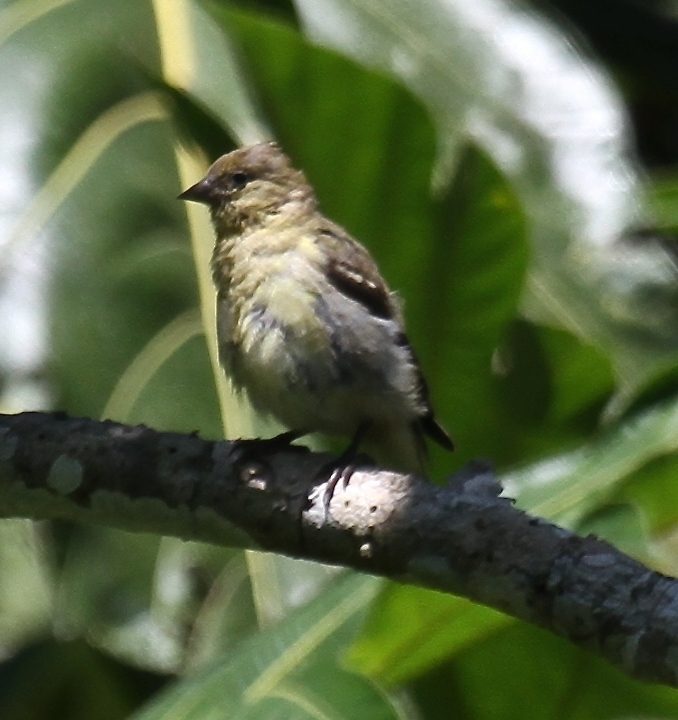
The Olivaceous Siskin is easily identifiable by its predominant olive-green plumage, which provides excellent camouflage among the foliage of its forest habitat. Adult males and females exhibit similar coloration, though the males may display slightly brighter yellow undertones on their underparts, especially during the breeding season. Their wings and tail are marked by darker, almost black, flight feathers, providing a stark contrast to their lighter body coloration.
Juveniles resemble adults but are generally duller, with a more muted olive color and less pronounced yellow. The overall structure of the Olivaceous Siskin is compact, with a short, conical bill ideal for seed consumption. In flight, their silhouette is characterized by rapid wingbeats and short glides, typical of finches, making them agile and quick in their forested environments.
While they might be confused with other siskins or greenish finches, the combination of their olive-green body, conical bill, and dark flight feathers helps to differentiate them. Observers should also note their active perching posture, where they are often seen clinging to branches or hanging upside-down while foraging, a behavior less common in other finches.
Having trouble telling birds apart? Upload a photo to our bird identification tool for an instant species match.
Olivaceous Siskin Habitat and Range
Preferred Habitat
The Olivaceous Siskin thrives in subtropical and tropical moist montane forests, particularly those in the Andes mountain range. They prefer areas with a dense canopy and a diverse understory, which provide ample food and nesting sites. These birds are typically found at elevations between 1,500 and 3,000 meters, where the climate is cool and moist, conditions that support the growth of the plant species they rely on.
While they are primarily forest-dwellers, Olivaceous Siskins can sometimes be found in more open areas, such as forest edges and clearings, where they may take advantage of new growth and increased insect activity. They show some adaptability to altered habitats, though they tend to avoid urban areas, preferring the relative seclusion and safety of forest environments. During certain seasons, they may shift slightly in elevation or move to areas with higher food availability, demonstrating their adaptability to changing environmental conditions.
Geographic Range
The Olivaceous Siskin's range is confined to the Andean regions of South America, stretching from Venezuela in the north, through Colombia and Ecuador, and reaching as far south as Peru. They inhabit the montane forests of these countries, where their presence is closely tied to the availability of suitable forest habitat.
In Venezuela, they are primarily found in the Andes and surrounding montane regions. In Colombia and Ecuador, they occupy a more continuous range along the western and central Andes, where the forests provide ideal conditions for their survival. Peru marks the southern extent of their range, where they are found in the northern and central Andean slopes.
The Olivaceous Siskin does not undertake long migrations but may exhibit local movements, particularly altitudinal migrations within their range, in response to food availability and climatic conditions. Population densities are highest in undisturbed montane forests, where the diversity of plant life supports robust communities of these birds.
Want to know which birds visit your area? Browse our backyard birds by location guides for region-specific species lists.
What Does the Olivaceous Siskin Eat?
The diet of the Olivaceous Siskin is primarily composed of seeds, which they skillfully extract from a variety of plants. They show a particular preference for the seeds of composite flowers, grasses, and small shrubs. This seed-based diet is supplemented by a variety of insects, especially during the breeding season when protein-rich food sources are crucial for chick development.
During different times of the year, the Olivaceous Siskin's diet may shift slightly to accommodate changes in food availability. In the rainy season, they consume more insects, taking advantage of the increased insect activity. When seeds are less abundant, they may turn to other plant parts, such as buds and young leaves, though this is less common.
Foraging techniques are diverse: they often hang upside-down to reach seeds on branches, a testament to their adaptability and dexterity. They are most active during the early morning and late afternoon, when they can be seen flitting through the forest in search of food, either alone or in small flocks.
Olivaceous Siskin Behavior and Social Structure
Olivaceous Siskins exhibit complex social behaviors, often forming small flocks outside the breeding season. These flocks can include other finch species, allowing them to better exploit food resources and providing increased vigilance against predators. During the breeding season, however, pairs become more territorial, with both males and females actively defending their nesting sites.
Courtship displays include a variety of vocalizations and aerial maneuvers, with males often engaging in fluttering flights accompanied by song to attract females. Once paired, they remain monogamous throughout the breeding season, with both parents taking an active role in raising the young.
In terms of predator response, Olivaceous Siskins rely on their cryptic coloration to avoid detection. When threatened, they may freeze or retreat into dense foliage. Their daily activity patterns are diurnal, with peak activity occurring during the cooler parts of the day. They spend much of their time foraging, preening, and socializing within their flocks.
Olivaceous Siskin Nesting and Reproduction
The nesting habits of the Olivaceous Siskin are typical of finches, with both sexes contributing to nest building. They construct their nests in dense foliage, often in the fork of a tree or shrub, where they are well hidden from predators. The nests are cup-shaped, made from a combination of twigs, grasses, and plant fibers, lined with softer materials like feathers or plant down.
Clutch sizes typically range from 2 to 4 eggs, which are incubated primarily by the female. The incubation period lasts about 12 to 14 days, during which the male provides food for the female. After hatching, both parents feed the chicks, which fledge approximately two weeks after hatching.
The breeding season usually aligns with the rainy season, ensuring a plentiful supply of food for the growing chicks. Olivaceous Siskins may raise two broods per year, depending on environmental conditions and food availability. Their nesting success is closely tied to the availability of suitable nesting sites and the density of predators in the area.
Olivaceous Siskin Sounds and Vocalizations
The Olivaceous Siskin's song is a lively series of trills and warbles, delivered with a rapid tempo and a cheerful quality. These songs are often used by males to establish territory and attract mates. In addition to their primary song, siskins produce a variety of call notes, including high-pitched chips and chirps, which serve as communication within flocks.
Alarm calls are sharp and urgent, designed to alert other siskins to the presence of predators. During the dawn chorus, the Olivaceous Siskin contributes to the vibrant soundscape of the forest, their songs intermingling with those of other bird species. The overall sound is reminiscent of a lively, complex symphony, with each species adding its unique notes.
Interesting Facts About the Olivaceous Siskin
- 1Olivaceous Siskins can hang upside-down like acrobats, a behavior that aids in reaching seeds.
- 2These birds are found at elevations up to 3,000 meters, showcasing their adaptability to high altitudes.
- 3Despite their bright appearance, Olivaceous Siskins are masters of camouflage among the green foliage.
- 4They form mixed-species flocks, often seen with other finches, enhancing their foraging efficiency.
- 5Their diet shifts with the seasons, demonstrating remarkable flexibility in food preferences.
- 6The Olivaceous Siskin's song is a complex series of notes that adds to the Andean dawn chorus.
- 7Breeding pairs of Olivaceous Siskins are monogamous, with both parents actively raising their young.
Olivaceous Siskin Conservation Status
The Olivaceous Siskin is currently listed as Least Concern by the IUCN, though its populations are subject to pressures from habitat loss. Deforestation in the Andes, driven by agriculture and urban expansion, poses the greatest threat to their habitats. While the species remains widespread, local populations may experience declines where forest cover is significantly reduced. Conservation efforts focus on protecting montane forest habitats through the establishment of protected areas and sustainable land management practices. Historical population data suggests that while the species has maintained stable numbers in some regions, others have seen declines correlating with increased human activity. Continued monitoring and habitat conservation are essential to ensure the long-term survival of the Olivaceous Siskin.
Other Fringillidae Species


Birds Similar to the Olivaceous Siskin
These species are often confused with the Olivaceous Siskin due to similar appearance or overlapping range.
