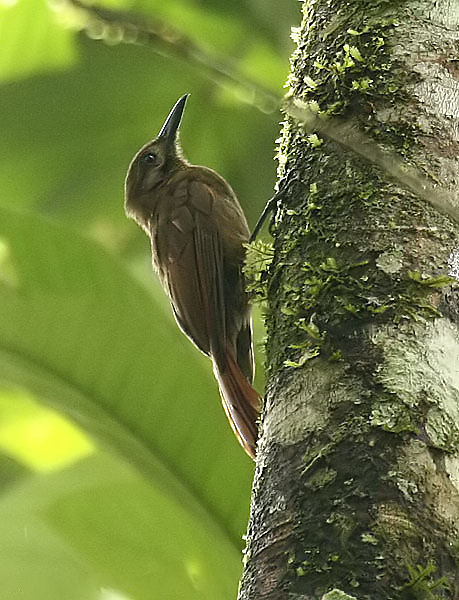
Olivaceous Woodcreeper
Sittasomus griseicapillus
Order: Passeriformes / Family: Furnariidae

Wikimedia Commons
About the Olivaceous Woodcreeper
The Olivaceous Woodcreeper, scientifically known as Sittasomus griseicapillus, is a small passerine bird native to the Neotropics. It belongs to the family Furnariidae and is widely recognized for its subtle olive-brown coloration, which provides excellent camouflage among the forested habitats it frequents. This species is predominantly found in tropical and subtropical forests spanning from southern Mexico through Central America, down to Brazil in South America. Its adaptability to various forest types, including both primary and secondary growth, highlights its ecological significance. It serves a crucial role in controlling insect populations, thereby maintaining the ecological balance of its habitat.
This woodcreeper is particularly associated with evergreen and deciduous forests, where it can often be seen methodically climbing tree trunks in search of prey. Seasonally, it might move altitudinally within its range, seeking optimal foraging conditions. During the breeding season, the Olivaceous Woodcreeper becomes more vocal, contributing to the soundscape of its forest environment with its characteristic calls. Its presence in a range of forest types underscores its adaptability and importance in various ecosystems throughout its range.
In addition to its ecological role, the Olivaceous Woodcreeper provides a fascinating subject for ornithologists due to its wide distribution and subtle variations across its range. These variations have led to the identification of several subspecies, each adapted to specific environmental conditions. The bird's population remains stable, although habitat loss poses a potential threat to its preferred environments. The Olivaceous Woodcreeper's ability to thrive in both primary and secondary forests indicates its resilience, yet continued conservation efforts are essential to ensure the preservation of its habitats.
The Olivaceous Woodcreeper belongs to the family Furnariidae, within the order Passeriformes. These birds typically live average 4-5 years with a maximum recorded of 8 years..
How to Identify a Olivaceous Woodcreeper
Identifying the Olivaceous Woodcreeper involves noting its distinct olive-brown plumage, which blends seamlessly with the tree bark it frequents. Adults exhibit a uniform brown coloration on their back, wings, and tail, with subtle streaks on their head and underparts that may appear lighter. The bird's slender, slightly curved bill is adapted for probing into crevices in search of insects. Juvenile Olivaceous Woodcreepers resemble adults but may have a slightly duller appearance with less defined streaking.
Sexual dimorphism in this species is minimal, with males and females looking remarkably similar. This can make field identification challenging, particularly in dense foliage. However, when observed closely, the Olivaceous Woodcreeper's behavior, such as its characteristic upward spiraling movements along tree trunks, aids in its identification. The bird's flight is short and direct, usually involving quick bursts between trees.
Confusion with similar species like the Plain-brown Woodcreeper can occur, but the Olivaceous Woodcreeper is generally smaller and possesses a slightly more olive hue compared to the more uniformly brown coloration of its relatives. Observing the bird's habitat and behavior in conjunction with its physical characteristics can help distinguish it from other woodcreepers.
Having trouble telling birds apart? Upload a photo to our bird identification tool for an instant species match.
Olivaceous Woodcreeper Habitat and Range
Preferred Habitat
The Olivaceous Woodcreeper inhabits a range of forested environments, primarily preferring tropical and subtropical forests. It is commonly found in lowland evergreen forests, montane forests, and occasionally in semi-deciduous forests. This species is adaptable and can thrive in both primary forests with dense canopy cover and secondary growth areas where trees have been selectively logged or disturbed. While primarily a forest species, it may occasionally venture into forest edges and nearby gardens, particularly where large trees are present.
In terms of elevation, the Olivaceous Woodcreeper is typically found from sea level up to 2,000 meters, although it is more prevalent in lower and mid-elevation forests. Seasonal habitat shifts are minimal, but it may move locally in response to food availability, particularly during the dry season when insect populations may be less abundant.
Urban presence is limited, and the species is rarely seen far from forested areas, underscoring the importance of forest conservation for its continued survival.
Geographic Range
The breeding range of the Olivaceous Woodcreeper extends from southern Mexico, through Central America, reaching as far south as Brazil, Bolivia, and Paraguay. It inhabits a wide swath of tropical South America, with populations found in countries such as Colombia, Venezuela, Peru, and Ecuador. Within these regions, the bird occupies a variety of forest types, contributing to its widespread distribution.
Though primarily a resident species, the Olivaceous Woodcreeper may exhibit local movements, particularly in response to changes in food resources or weather conditions. Migration is not a typical behavior for this species, as it generally remains within its established territories year-round.
Population density varies, with higher concentrations found in regions where forest cover remains intact and insect prey is abundant. Hotspots for this species include the Amazon Basin and the Atlantic Forest in Brazil, where diverse and dense habitats support robust populations.
Want to know which birds visit your area? Browse our backyard birds by location guides for region-specific species lists.
What Does the Olivaceous Woodcreeper Eat?
The Olivaceous Woodcreeper primarily feeds on a diet of insects and other small arthropods, which it skillfully extracts from the bark and foliage of trees. Ants, beetles, spiders, and caterpillars form the bulk of its diet. This bird employs a methodical foraging technique, climbing tree trunks and larger branches while probing into crevices with its slender bill.
Seasonal changes in its diet are minimal, although the bird may adjust its foraging strategies based on prey availability. During the rainy season, when insect populations surge, the Olivaceous Woodcreeper may focus on specific prey types that are more abundant.
Feeding typically occurs throughout the day, with peaks in activity during the early morning and late afternoon when insects are more active. The bird’s ability to exploit various microhabitats within its forest environment allows it to sustain its diet year-round.
Olivaceous Woodcreeper Behavior and Social Structure
The Olivaceous Woodcreeper exhibits territorial behavior, often defending its chosen tract of forest from other woodcreepers. It is typically solitary, though pairs may be observed during the breeding season. While not prone to flocking, it occasionally joins mixed-species flocks, benefiting from the added protection and foraging opportunities these groups provide.
Courtship displays involve mutual preening and vocalizations, strengthening pair bonds. Once paired, the birds remain monogamous for the breeding season. The Olivaceous Woodcreeper is diurnal, with peak activity during the cooler parts of the day. It exhibits a characteristic climbing behavior, spiraling up tree trunks and large branches while searching for food.
In response to predators, the Olivaceous Woodcreeper relies on its cryptic plumage to remain concealed against tree bark. When threatened, it may freeze in place, a behavior that further enhances its camouflage. Vocalizations serve as both a means of communication between mates and a method of establishing territory.
Olivaceous Woodcreeper Nesting and Reproduction
Olivaceous Woodcreepers prefer to nest in natural cavities or abandoned woodpecker holes, often choosing sites located several meters above the ground to ensure safety from ground-dwelling predators. Nests are typically lined with soft materials such as feathers, leaves, and bark strips to create a comfortable environment for the clutch.
The female typically lays 2 to 3 eggs, which are incubated for about 15 to 18 days. Both parents share incubation duties and care for the young. Upon hatching, the nestlings remain in the nest for approximately 20 days before fledging. During this time, both parents actively feed and protect the chicks, ensuring their development and growth.
The Olivaceous Woodcreeper usually has one brood per year, although in regions with abundant resources, a second brood may occur. The choice of nesting sites and the shared parental duties highlight the species' adaptability and dedication to its offspring.
Olivaceous Woodcreeper Sounds and Vocalizations
The primary song of the Olivaceous Woodcreeper is a series of high-pitched, descending whistles, often described as 'whee-whee-whee.' These notes are delivered in rapid succession, creating a melodious and slightly haunting quality. The song serves as both a territorial marker and a call to potential mates during the breeding season.
In addition to its song, the Olivaceous Woodcreeper produces several call notes used for communication between mates or as alarms. These calls are less musical and more abrupt, serving as an effective alert system. During the dawn chorus, the bird's song adds to the rich tapestry of sounds characteristic of tropical forests.
The vocalizations of the Olivaceous Woodcreeper are distinct yet subtle, often blending into the background sounds of its environment, making attentive listening essential for detection.
Interesting Facts About the Olivaceous Woodcreeper
- 1The Olivaceous Woodcreeper has at least 15 recognized subspecies, each with slight variations in size and plumage.
- 2Unlike many other woodcreepers, the Olivaceous Woodcreeper often joins mixed-species flocks, benefiting from increased foraging efficiency.
- 3Its climbing behavior, utilizing stiff tail feathers for support, is reminiscent of woodpeckers, though the species is unrelated.
- 4The Olivaceous Woodcreeper has a specialized bill that allows it to probe deep into crevices, extracting hidden insects.
- 5Though primarily insectivorous, the Olivaceous Woodcreeper occasionally consumes small fruits, especially when insect prey is scarce.
- 6The species is known for its adaptability, thriving in both pristine and disturbed habitats across its extensive range.
- 7Olivaceous Woodcreepers are excellent indicators of forest health, with their presence often signaling a robust ecosystem.
Olivaceous Woodcreeper Conservation Status
The Olivaceous Woodcreeper is currently classified as Least Concern by the IUCN, with a stable population trend. Despite this, habitat loss due to deforestation poses a significant threat to some local populations. Conservation efforts focus on preserving large tracts of forest, which are vital to the bird's survival. Historically, the species has maintained stable numbers, largely due to its adaptability to various forest types. However, ongoing deforestation in some parts of its range requires continued monitoring. Protective measures include the establishment of reserves and national parks, which safeguard critical habitats. Public awareness and sustainable forestry practices are essential components of conservation strategies to ensure the future of the Olivaceous Woodcreeper and other forest-dependent species.
Other Furnariidae Species


Birds Similar to the Olivaceous Woodcreeper
These species are often confused with the Olivaceous Woodcreeper due to similar appearance or overlapping range.