Olive-crowned Greenlet
Tunchiornis luteifrons
Order: Passeriformes / Family: Vireonidae

Wikimedia Commons
About the Olive-crowned Greenlet
The Olive-crowned Greenlet is an intriguing member of the Vireonidae family, often found thriving in the tropical and subtropical forests of Central and South America. This small passerine bird boasts a striking appearance, with its eponymous olive crown and predominantly green plumage. The species is particularly prevalent in countries such as Costa Rica, Panama, Colombia, Ecuador, and Venezuela. Its presence in these regions highlights its preference for humid forest canopies and dense woodland edges, where it plays a crucial role in seed dispersal and insect population control.
The ecological significance of the Olive-crowned Greenlet cannot be overstated. As an insectivore, it helps maintain a balance in insect populations, preventing outbreaks that could otherwise damage forest ecosystems. Furthermore, its foraging behavior aids in the dispersal of seeds, contributing to plant diversity and forest regeneration. The Olive-crowned Greenlet's diet and feeding habits are integral to the ecological health of its habitat, underscoring its importance in forest ecosystems.
Seasonally, the Olive-crowned Greenlet exhibits intriguing behaviors, particularly during the breeding season, which generally coincides with the rainy season in its native regions. During this time, the bird becomes more vocal and active, engaging in complex courtship displays and territorial disputes. These seasonal behaviors are essential for understanding the bird's life cycle and its interactions within its ecosystem. Despite its seemingly small role individually, the cumulative impact of the Olive-crowned Greenlet and its species is significant for the health and sustainability of the tropical forests it inhabits.
The Olive-crowned Greenlet belongs to the family Vireonidae, within the order Passeriformes. These birds typically live average 4-6 years with the longest recorded at 7 years..
How to Identify a Olive-crowned Greenlet
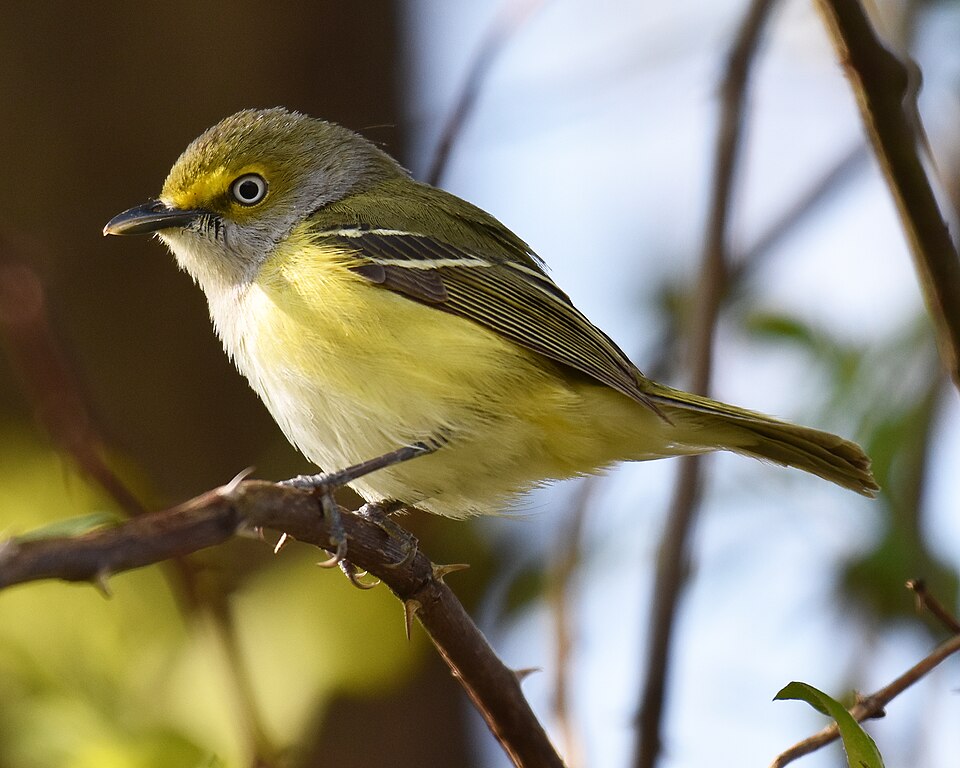
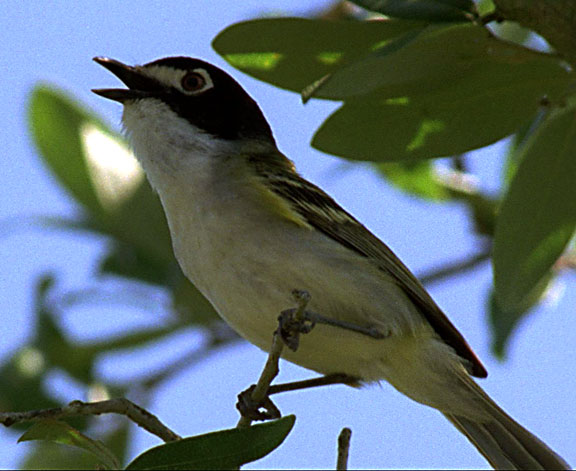
The Olive-crowned Greenlet is a small bird, measuring approximately 12 centimeters in length and weighing around 12 grams. Its most distinctive feature is its olive-toned crown, which sets it apart from other greenlets. The rest of its plumage is predominantly green, with a subtle yellowish tinge on the underparts. The wings and tail are slightly darker, providing a contrast that enhances its overall appearance.
Adult males and females are similar in appearance, making it challenging to distinguish between the sexes in the field. However, juveniles can be identified by their duller plumage and the less pronounced olive coloration on the crown. The Olive-crowned Greenlet's bill is short and stout, adapted for its insectivorous diet, and its eyes are dark, providing a striking contrast against its vibrant feathers.
Confusion with similar species, such as the Red-eyed Vireo, can occur. However, the Red-eyed Vireo lacks the characteristic olive crown and has a distinct reddish eye that the Olive-crowned Greenlet does not. In flight, the Olive-crowned Greenlet displays a fluttering pattern typical of small passerines, and when perched, it maintains an upright posture, often seen foraging methodically through foliage.
Having trouble telling birds apart? Upload a photo to our bird identification tool for an instant species match.
Olive-crowned Greenlet Habitat and Range
Preferred Habitat
The Olive-crowned Greenlet thrives in forested environments, particularly favoring tropical and subtropical lowland forests. It can also be found in secondary forests and forest edges, where it benefits from the abundance of insects and plant matter. The bird prefers elevations up to 1,500 meters but is most commonly observed below 1,000 meters.
During the breeding season, the Olive-crowned Greenlet gravitates towards dense, humid areas where canopy cover provides protection and ample foraging opportunities. In non-breeding seasons, it may venture into more open areas, though it remains closely tied to forested habitats. Unlike some other bird species, the Olive-crowned Greenlet does not frequently occur in urban settings, as it relies heavily on the resources provided by forest ecosystems.
Seasonal habitat shifts are minimal for this species, as it is largely sedentary. However, slight movements in response to food availability and breeding needs are observed, ensuring it stays within suitable forested areas throughout the year.
Geographic Range
The Olive-crowned Greenlet's range is predominantly within the tropical regions of Central and South America. It is a non-migratory bird, with populations residing year-round in countries such as Costa Rica, Panama, Colombia, Ecuador, and Venezuela. The bird's range extends into the foothills of the Andes, where it finds suitable habitat conditions.
Within these regions, the Olive-crowned Greenlet is most prevalent in lowland tropical forests, although it can also be found in montane forests at higher elevations. Its distribution is continuous throughout these areas, with no significant population gaps, indicating stable habitat conditions.
The population density of the Olive-crowned Greenlet tends to be higher in areas with extensive forest cover and less human disturbance. However, it faces potential threats from deforestation and habitat fragmentation, which could impact its range and population stability if not addressed through conservation efforts.
Want to know which birds visit your area? Browse our backyard birds by location guides for region-specific species lists.
What Does the Olive-crowned Greenlet Eat?
The Olive-crowned Greenlet primarily feeds on insects, which form the bulk of its diet. It actively forages among the foliage, gleaning insects from leaves and branches. Its diet includes a variety of insects, such as caterpillars, beetles, and spiders, which it captures through precise and agile movements.
Seasonal diet changes are minimal, though the bird may consume more fruit during periods of insect scarcity. This opportunistic feeding behavior ensures a steady food supply, even when environmental conditions fluctuate. The bird's foraging technique involves slow, deliberate movements through the canopy, using its keen eyesight to spot potential prey.
The Olive-crowned Greenlet typically feeds during daylight hours, with peak activity occurring in the early morning and late afternoon. This feeding schedule aligns with the availability of its prey, as many insects are most active during these times. Its role as an insectivore is vital for controlling insect populations, particularly in dense forest ecosystems where other natural predators may be limited.
Olive-crowned Greenlet Behavior and Social Structure
The Olive-crowned Greenlet exhibits a solitary or paired lifestyle, particularly during the breeding season. Outside of breeding periods, it may join mixed-species flocks, enhancing foraging success and predator vigilance. Its social structure is flexible, allowing it to adapt to changing environmental conditions.
Territorial behavior is prominent during the breeding season, with males defending their nesting territories through vocalizations and displays. Courtship displays are subtle, involving wing fluttering and soft calls to attract mates. These displays are crucial for pair bonding and successful reproduction.
The Olive-crowned Greenlet's response to predators involves a combination of vocal alarms and inconspicuous behavior. It remains vigilant, using its cryptic plumage to blend into the foliage. The bird's daily activity pattern is diurnal, with peak activity occurring during cooler parts of the day. These behaviors ensure its survival and reproductive success in the dynamic forest environment.
Olive-crowned Greenlet Nesting and Reproduction
The Olive-crowned Greenlet constructs a small, cup-shaped nest, which it typically places in the fork of a tree branch. The nest is made from plant fibers, leaves, and spider webs, providing a sturdy yet camouflaged structure. Its location preference is within dense foliage, offering protection from predators and environmental elements.
Clutch size ranges from two to three eggs, which are white with subtle speckling. The incubation period lasts approximately 14 days, with both parents sharing incubation duties. This shared responsibility extends to feeding the hatchlings, ensuring their growth and development.
Fledging occurs about 12 to 14 days after hatching, with young birds gaining independence shortly after. The Olive-crowned Greenlet typically has one brood per year, though favorable conditions may lead to a second brood in some populations. This reproductive strategy aligns with its stable forest habitat, allowing for consistent population maintenance.
Olive-crowned Greenlet Sounds and Vocalizations
The Olive-crowned Greenlet's primary song is a series of clear, melodious notes delivered in a rhythmic pattern. The song is often described as a rising and falling sequence of whistles, used mainly for territory defense and mate attraction. The quality of the song is sweet and musical, easily distinguishable from the harsher calls of other vireo species.
In addition to its song, the Olive-crowned Greenlet produces a variety of call notes, including short chips and trills. These calls serve as contact signals between mates and alarm calls when predators are nearby. During the dawn chorus, its song contributes to the symphony of sounds that fill the forest, announcing its presence to other birds.
The bird's vocal repertoire is a vital aspect of its behavior, facilitating communication and enhancing its ability to navigate the complex social landscape of the forest ecosystem.
Interesting Facts About the Olive-crowned Greenlet
- 1The Olive-crowned Greenlet's nest construction often incorporates spider webs, adding flexibility and strength to the structure.
- 2Despite being primarily insectivorous, the Olive-crowned Greenlet occasionally consumes small fruits, especially during scarce insect periods.
- 3Its song, a series of melodious notes, plays a crucial role in territorial and courtship behaviors, distinct among forest songbirds.
- 4The Olive-crowned Greenlet is known for its ability to blend into the foliage, an effective strategy against predators.
- 5This greenlet species often joins mixed-species flocks, benefiting from shared vigilance and foraging success.
- 6Unlike many songbirds, the Olive-crowned Greenlet is largely sedentary, maintaining its territory throughout the year.
- 7Its role in seed dispersal and insect population control highlights its ecological importance in tropical forest ecosystems.
Olive-crowned Greenlet Conservation Status
The Olive-crowned Greenlet is currently listed as Least Concern by the IUCN, with a stable population trend. While it faces threats from habitat loss due to deforestation and land conversion, its broad distribution and adaptability to secondary forests have helped mitigate severe population declines. Conservation efforts focus on preserving forest habitats and promoting sustainable land use practices. Protected areas and national parks within its range play a crucial role in safeguarding its habitat. Local conservation initiatives also aim to raise awareness about the importance of maintaining healthy forest ecosystems. Historically, the Olive-crowned Greenlet has maintained a stable population, benefiting from its adaptability and the relatively intact forest areas within its range. Continued conservation efforts are essential to ensure its long-term survival and the health of the ecosystems it inhabits.