
Oriole Blackbird
Gymnomystax mexicanus
Order: Passeriformes / Family: Icteridae
Wikimedia Commons
About the Oriole Blackbird
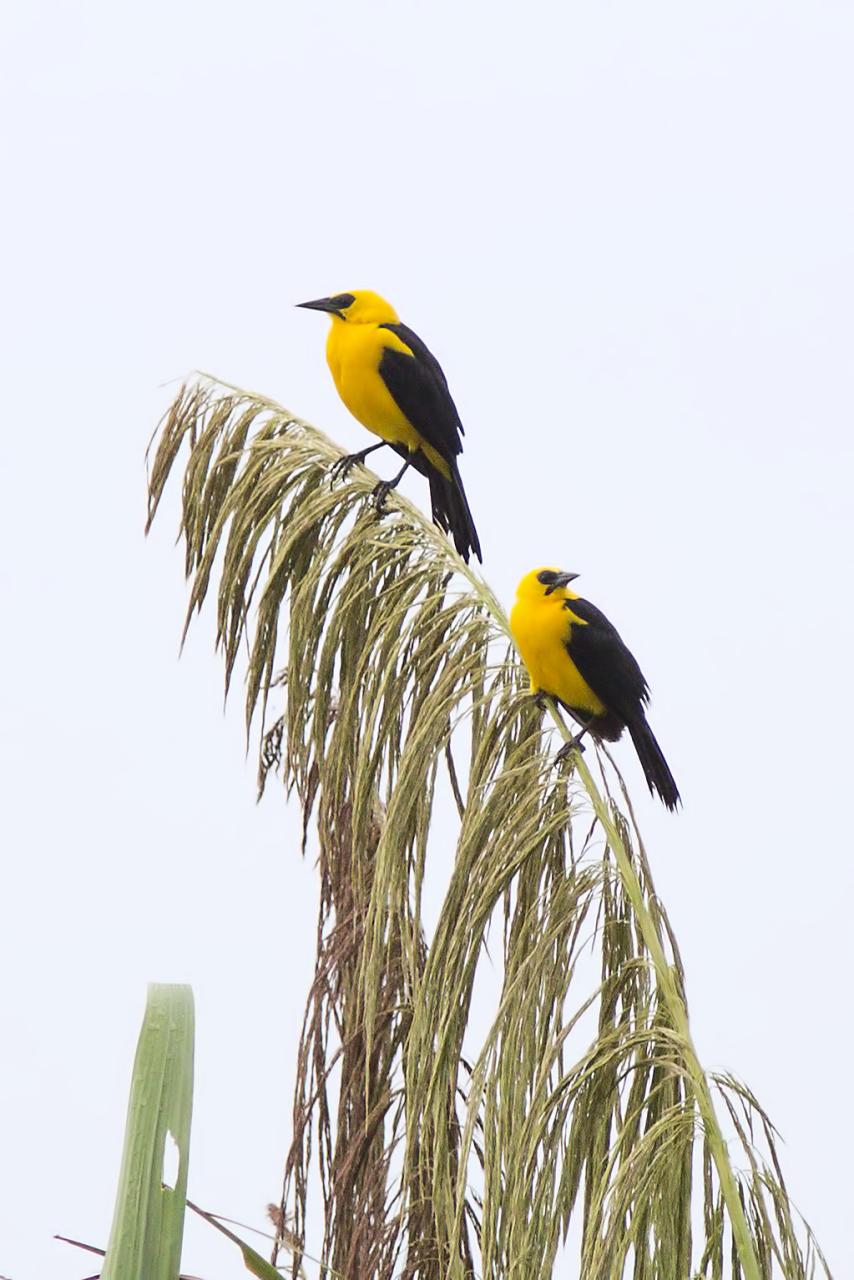
The Oriole Blackbird, scientifically known as Gymnomystax mexicanus, is a captivating species belonging to the Icteridae family. This bird is primarily found in the lush environments of South America, with a strong presence in countries like Brazil, Colombia, and Venezuela. It is notably associated with riverine environments, particularly favoring areas with dense vegetation near water bodies. Its vibrant appearance, featuring a striking yellow body contrasted by a black head and wings, renders it unmistakable among the avian fauna of the region. Beyond its aesthetic appeal, the Oriole Blackbird plays a vital role in seed dispersal and insect population control, contributing to the ecological balance of its habitat.
This species exhibits a strong affinity for habitats that offer both water and ample foliage. It thrives in tropical and subtropical environments, often seen flitting through the canopy as it forages for food. The Oriole Blackbird is also known for its seasonal movements, particularly during breeding times when it seeks out optimal nesting sites. These seasonal shifts are crucial for their reproductive success, as they ensure access to abundant food resources and safe nesting locations.
Ecologically, the Oriole Blackbird is a key player in its ecosystem. It helps in maintaining insect populations, often feeding on a variety of insects and small invertebrates. This feeding behavior not only aids in pest control but also supports the bird's energetic requirements, especially during the breeding season. As a seed disperser, the bird also contributes to the propagation of various plant species, ensuring the continued health of its habitat. Its presence is indicative of a healthy, biodiverse environment, making it an important species for conservation efforts in South America.
The Oriole Blackbird belongs to the family Icteridae, within the order Passeriformes. These birds typically live average 8-10 years with a max recorded of 12 years.
How to Identify a Oriole Blackbird
Adult Oriole Blackbirds are easily recognizable by their vivid yellow plumage contrasted with a stark black head and wings. This striking color combination is one of the most distinguishing features of the species. Males tend to have slightly more intense coloration compared to females, though both sexes exhibit the same basic color pattern. Juveniles, on the other hand, display a more muted version of the adult plumage, often appearing slightly duller with less defined black markings, which gradually intensify as they mature.
The Oriole Blackbird's size is another aid to identification. It falls into the medium category, typically measuring around 25 cm in length. Its flight silhouette is characterized by broad wings and a relatively short tail, providing a distinctive profile against the sky. When perched, the bird maintains a confident, upright posture, often visible as it perches on branches near water.
While some might confuse the Oriole Blackbird with other members of the Icteridae family, such as the Yellow-rumped Cacique, the distinct black head and robust build of the Oriole Blackbird serve as clear differentiators. Its vocalizations, a series of melodic whistles and calls, also aid in distinguishing it from similar species, providing an auditory cue to its presence.
Having trouble telling birds apart? Upload a photo to our bird identification tool for an instant species match.
Oriole Blackbird Habitat and Range
Preferred Habitat
The Oriole Blackbird is predominantly found in tropical and subtropical regions, with a strong preference for habitats near water. Riverbanks, flooded forests, and areas adjacent to large bodies of water serve as ideal environments for this species. These locations offer both the dense vegetation required for nesting and the aquatic and terrestrial food sources essential for their diet.
Elevationally, the Oriole Blackbird is more commonly found at lower elevations, typically below 1,000 meters, where the conditions align with its ecological preferences. During the breeding season, these birds show a marked preference for areas with abundant foliage, providing both cover and nesting opportunities.
In urban settings, the Oriole Blackbird is less commonly observed, as it favors more secluded, natural environments. However, in some regions with ample green spaces and water access, they may occasionally venture into suburban areas in search of food or nesting sites.
Geographic Range
The geographical range of the Oriole Blackbird extends across several countries in northern South America. It is primarily present in Brazil, Guyana, Suriname, French Guiana, Venezuela, and Colombia. This range encompasses a variety of tropical habitats, supporting the bird's ecological needs throughout its life cycle.
During the breeding season, the Oriole Blackbird establishes territories in areas with abundant water and vegetation, often leading to more concentrated populations along major river systems like the Amazon and Orinoco. While not strictly migratory, these birds may exhibit local movements in response to seasonal changes in food availability and habitat conditions.
Population density can be particularly high in regions where their preferred habitats are extensive and undisturbed. Such areas provide the necessary resources for feeding and reproduction, ensuring the viability of local populations. In contrast, those areas experiencing habitat degradation may see reduced numbers of Oriole Blackbirds, highlighting the importance of habitat preservation for this species.
Want to know which birds visit your area? Browse our backyard birds by location guides for region-specific species lists.
What Does the Oriole Blackbird Eat?
The diet of the Oriole Blackbird primarily consists of insects and other small invertebrates, which they actively forage from foliage and ground cover. This insectivorous diet is supplemented by a variety of fruits, making them important seed dispersers within their ecosystem. Seasonal variations can significantly influence their dietary habits, with a greater reliance on fruit when insect availability declines.
Foraging techniques of the Oriole Blackbird are dynamic and adaptable. They exhibit a mix of gleaning and probing behaviors, often seen hopping through vegetation in search of hidden prey. Their bill is well-suited for handling a range of food sizes, allowing them to exploit different food sources effectively.
Feeding activity peaks in the early morning and late afternoon, coinciding with times when insects are most active. This schedule allows the Oriole Blackbird to maximize its energy intake while minimizing the risks of predation during foraging excursions.
Oriole Blackbird Behavior and Social Structure
Oriole Blackbirds are social and often observed in small flocks, especially outside the breeding season. Their social structure is flexible, with group sizes varying based on food availability and habitat conditions. Territorial behavior becomes more pronounced during the breeding season, with pairs establishing and defending nesting territories against intruders.
Courtship displays of the Oriole Blackbird are both visual and auditory. Males perform elaborate displays that include vocalizations and physical posturing to attract females. These displays are crucial for pair bonding and successful mating.
Flocking patterns change with the seasons, with larger groups forming during non-breeding periods. In response to predators, Oriole Blackbirds exhibit mobbing behavior, where several individuals collectively harass potential threats to protect themselves and their young. Daily activity patterns show peak activity during cooler parts of the day, with birds resting during the hottest midday hours.
Oriole Blackbird Nesting and Reproduction
The nesting habits of the Oriole Blackbird are closely tied to their habitat preferences. They construct cup-shaped nests with materials such as twigs, leaves, and grasses, often situated in trees or shrubs near water. Nest location is strategic, providing both concealment and proximity to food sources.
A typical clutch consists of 2 to 3 eggs, which are incubated primarily by the female for about 14 to 16 days. The male plays a supportive role, assisting with feeding and territory defense. After hatching, the fledging period lasts approximately 15 to 18 days, during which both parents actively feed and protect the young.
Oriole Blackbirds generally produce one brood per year, though in optimal conditions with plentiful resources, a second brood may be attempted. Parental investment is high, with both adults contributing to the rearing of their offspring, ensuring high survival rates for the young.
Oriole Blackbird Sounds and Vocalizations
The Oriole Blackbird's song is a series of clear, melodic whistles, often described as flute-like in quality. These songs vary in rhythm and pitch, serving both to establish territory and attract mates. Call notes are shorter, consisting of sharp 'chip' sounds used for communication within flocks.
Alarm calls are distinct and more strident, alerting others to potential threats. During the dawn chorus, male Oriole Blackbirds are particularly vocal, filling the air with their characteristic songs as they assert their presence in the early hours.
These vocalizations are an integral part of their behavioral repertoire, playing key roles in both social interactions and predator avoidance.
Interesting Facts About the Oriole Blackbird
- 1The Oriole Blackbird's striking plumage can be seen from considerable distances, often catching the eye of birdwatchers and predators alike.
- 2Unlike many songbirds, the Oriole Blackbird often nests in colonies, creating a bustling community atmosphere during the breeding season.
- 3The species' bright yellow feathers contain carotenoids, pigments they acquire through their diet of fruits and insects.
- 4Oriole Blackbirds sometimes feed in the company of other bird species, forming mixed-species foraging flocks for increased efficiency.
- 5Their nests are often built near water to capitalize on the abundant insect life, ensuring a constant food supply for their young.
- 6Oriole Blackbirds engage in a behavior known as 'anting,' where they use ants to help rid their feathers of parasites.
- 7The Oriole Blackbird's song repertoire includes a variety of calls, each serving a unique purpose within their social structure.
Oriole Blackbird Conservation Status
The Oriole Blackbird currently holds a status of Least Concern on the IUCN Red List, indicating a stable population trend. However, habitat loss due to deforestation and land use changes poses a significant threat to their long-term viability. Conservation efforts are focused on habitat protection, particularly in regions where their natural environments are at risk. Initiatives include preserving riverine forests and promoting sustainable land management practices. While historical population changes have not been drastic, continued monitoring is essential to ensure that the Oriole Blackbird does not face future declines. Conservation strategies emphasize the importance of maintaining healthy ecosystems to support this and other species within their range.
Other Icteridae Species


Birds Similar to the Oriole Blackbird
These species are often confused with the Oriole Blackbird due to similar appearance or overlapping range.

