Cracraft's Barn Owl
Palaeobyas cracrafti
Order: Strigiformes / Family: Tytonidae
About the Cracraft's Barn Owl
Cracraft's Barn Owl, scientifically known as Palaeobyas cracrafti, is an enigmatic bird whose discovery has intrigued ornithologists and bird enthusiasts. This species, belonging to the family Tytonidae, is primarily known from fossil records, yet its ecological significance and evolutionary insights continue to unfold. Found in prehistoric regions now part of modern New Zealand, this owl likely occupied a niche similar to contemporary barn owls. As a nocturnal raptor, Cracraft's Barn Owl would have played a crucial role in controlling small mammal populations, thus maintaining ecological balance in its habitat. The bird's presence in regions such as the North Island suggests it preferred a variety of landscapes, from open grasslands to the edges of dense forests. Seasonal behaviors of Cracraft's Barn Owl remain speculative; however, parallels with extant barn owls suggest adaptability to varying environmental conditions and potential shifts in prey availability. Its existence during a period of significant climatic and ecological change highlights its resilience and offers a window into the evolutionary pressures faced by avian predators. As a member of the order Strigiformes, this owl's adaptations for nocturnal hunting, including exceptional hearing and silent flight, underscore its specialization in exploiting nighttime ecological niches.
The Cracraft's Barn Owl belongs to the family Tytonidae, within the order Strigiformes. These birds typically live N/A for extinct species..
How to Identify a Cracraft's Barn Owl
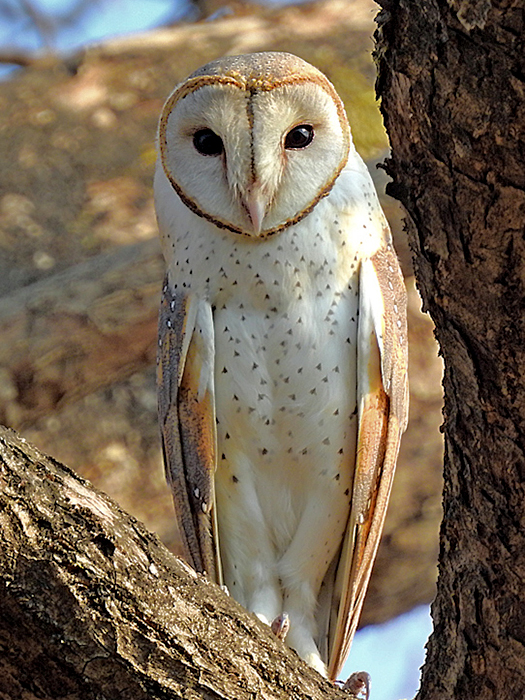
The identification of Cracraft's Barn Owl relies heavily on fossil interpretations, as no living specimens exist. However, comparisons with the extant barn owl, Tyto alba, provide insights into its likely appearance. The distinctive heart-shaped facial disc, a hallmark of the Tytonidae family, would have been a prominent feature. This facial structure aids in directing sound to the owl's ears, enhancing its hunting efficiency. While specific plumage details remain unknown, it is reasonable to speculate that Cracraft's Barn Owl exhibited a similar mottled white and brown coloration, providing camouflage in its natural habitat. Sexual dimorphism is typically subtle in barn owls, possibly reflected in slight size differences between males and females of Palaeobyas cracrafti. Juvenile differentiation remains speculative, though young barn owls generally exhibit softer, fluffier plumage. In flight, Cracraft's Barn Owl would have displayed broad, rounded wings and a short tail, contributing to its silent flight capabilities. When perched, a slightly forward-leaning posture and upright stance would have been characteristic, optimizing its field of vision for detecting movement.
Having trouble telling birds apart? Upload a photo to our bird identification tool for an instant species match.
Cracraft's Barn Owl Habitat and Range
Preferred Habitat
Cracraft's Barn Owl likely thrived in diverse habitats, mirroring the adaptability seen in its modern relatives. Fossil evidence suggests it inhabited regions now part of New Zealand's North Island, which would have offered a variety of environments, including open grasslands, forest edges, and perhaps even wetland areas. Such habitats provide ample hunting grounds for barn owls, which rely on open spaces to detect and capture prey. The elevation range of these habitats likely extended from lowland areas to moderate altitudes, accommodating seasonal shifts in prey abundance and habitat conditions. While urban environments did not exist during its time, Cracraft's Barn Owl's modern counterparts demonstrate an impressive ability to coexist with human-altered landscapes, suggesting potential adaptability to changing environments.
Geographic Range
The geographic range of Cracraft's Barn Owl is inferred from paleontological findings, primarily from New Zealand's North Island. During its existence, the island's ecosystems would have been characterized by a mix of open plains, forested areas, and wetland regions, offering diverse ecological niches. Unlike its migratory relatives, Palaeobyas cracrafti likely exhibited a more sedentary lifestyle, with its range confined to local habitats where prey was abundant. The absence of evidence for long-distance migration corridors further supports the notion of a resident or localized distribution. However, as climates and landscapes evolved, this bird's range may have shifted in response to ecological pressures, leading to potential range contractions or expansions based on prey availability and habitat suitability.
Want to know which birds visit your area? Browse our backyard birds by location guides for region-specific species lists.
What Does the Cracraft's Barn Owl Eat?
Cracraft's Barn Owl, like modern barn owls, would have been a formidable predator of small mammals, primarily feeding on rodents. Its diet likely included a variety of small mammals, which are abundant in the grassy and forested regions it inhabited. Seasonal changes in prey availability might have prompted shifts in diet composition, with the owl exploiting alternative food sources such as birds, insects, or small reptiles when necessary. The owl's hunting technique, characterized by silent flight and acute hearing, enabled it to locate and capture prey with remarkable precision. Cracraft's Barn Owl's feeding schedule probably followed a nocturnal pattern, taking advantage of the cover of darkness to surprise unsuspecting prey.
Cracraft's Barn Owl Behavior and Social Structure
The behavioral ecology of Cracraft's Barn Owl can be inferred from its closest relatives. As a nocturnal predator, it likely engaged in solitary hunting expeditions, relying on its exceptional auditory and visual capabilities to locate prey. Territorial behavior may have been exhibited, with individuals or pairs defending hunting grounds from conspecifics. Courtship displays in modern barn owls involve vocalizations and aerial acrobatics, suggesting similar behaviors might have been present in Palaeobyas cracrafti. These displays serve to strengthen pair bonds and signal readiness for breeding. The owl's response to predators would have included utilizing its cryptic plumage for concealment and silent takeoffs to evade threats. Daily activity patterns likely revolved around dusk and dawn, optimizing hunting efficiency during crepuscular hours.
Cracraft's Barn Owl Nesting and Reproduction
Nesting habits of Cracraft's Barn Owl are largely speculative, though parallels with extant barn owls offer insights. It likely nested in sheltered locations such as tree cavities, rock crevices, or ledges, providing protection from predators and harsh weather. The clutch size might have varied from three to six eggs, reflecting similar reproductive strategies in the Tytonidae family. Incubation, primarily undertaken by the female, would have lasted around 30 to 34 days. Fledging times for the young owls would range from 50 to 60 days post-hatching, with both parents participating in feeding and protecting the offspring. The number of broods per year likely depended on environmental conditions, with favorable years potentially allowing for multiple reproductive cycles.
Cracraft's Barn Owl Sounds and Vocalizations
While the vocal repertoire of Cracraft's Barn Owl is unknown, we can infer characteristics based on its family. The primary song of a barn owl is a piercing, drawn-out screech, unlike the hoots associated with true owls. This sound serves as a territorial and mating call. Alarm calls might have consisted of short, sharp barks or hisses, used to deter potential intruders or predators. The dawn chorus, if present, would involve sporadic vocalizations as the owl settles into its daytime roost. These vocalizations, distinct and eerie, evoke the haunting sounds typical of the barn owl family.
Interesting Facts About the Cracraft's Barn Owl
- 1Cracraft's Barn Owl is named after Joel Cracraft, a notable ornithologist who contributed significantly to avian evolutionary studies.
- 2The heart-shaped facial disc of barn owls enhances their hearing, allowing them to locate prey solely by sound.
- 3Like other barn owls, Cracraft's Barn Owl would have had asymmetrical ears, a trait that aids in pinpointing the direction of sound.
- 4Barn owls have special feathers that enable silent flight, allowing them to approach prey undetected at night.
- 5The Tytonidae family, to which Cracraft's Barn Owl belongs, is distinct from true owls with unique anatomical and behavioral traits.
Cracraft's Barn Owl Conservation Status
Cracraft's Barn Owl is known only from fossil records, thus it holds no IUCN status. However, understanding its role in prehistoric ecosystems aids in appreciating the evolutionary history of Tytonidae. The primary threats to its existence likely included habitat changes and climate fluctuations, which could have reduced prey availability. Conservation efforts, though not applicable to an extinct species, emphasize the importance of preserving existing barn owl habitats to maintain ecological balance. Historically, shifts in global climates and landscapes would have influenced population dynamics, leading to adaptation or extinction.
Other Tytonidae Species


Birds Similar to the Cracraft's Barn Owl
These species are often confused with the Cracraft's Barn Owl due to similar appearance or overlapping range.