Pale-bellied Mourner
Rhytipterna immunda
Order: Passeriformes / Family: Tyrannidae

Wikimedia Commons
About the Pale-bellied Mourner
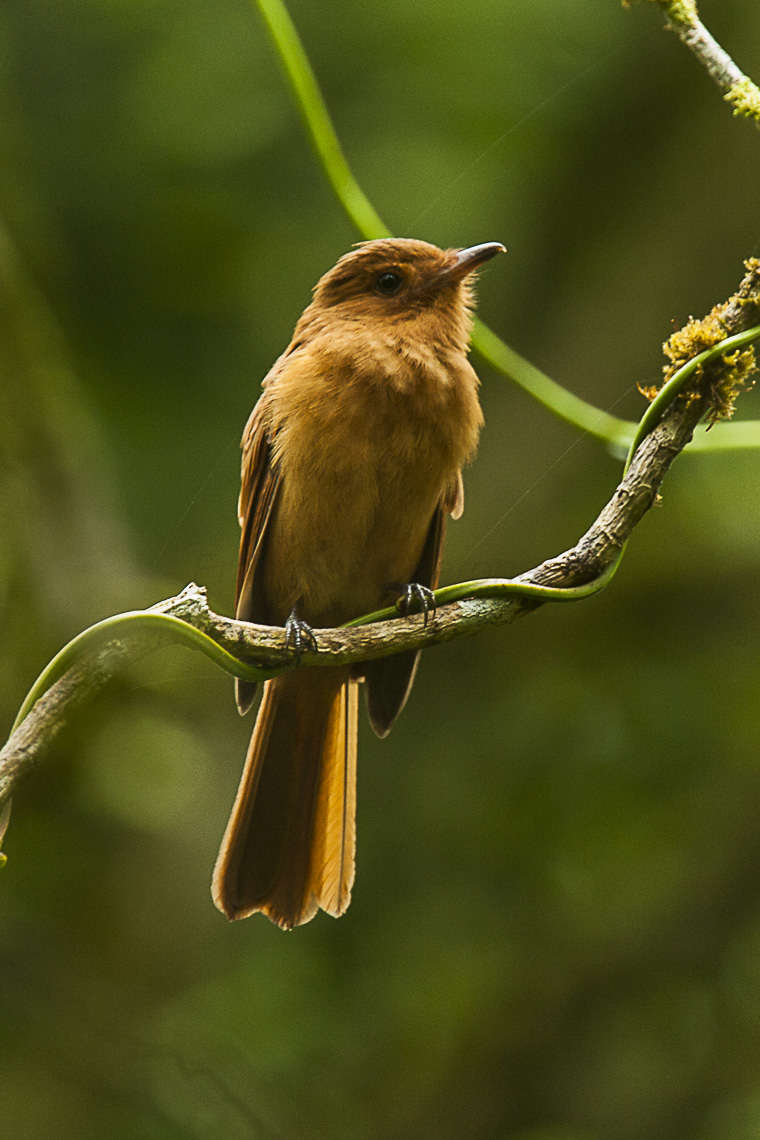
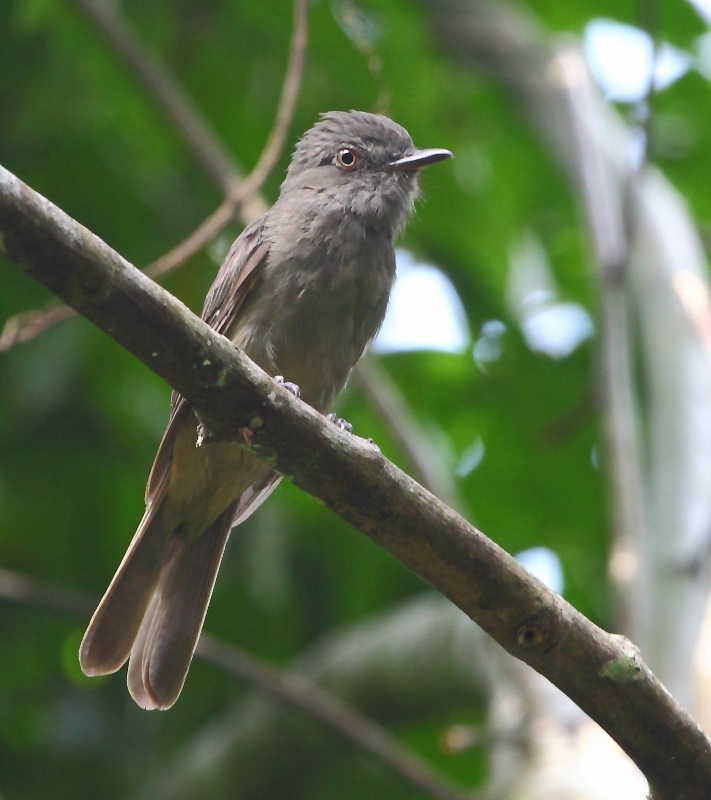
The Pale-bellied Mourner (Rhytipterna immunda) belongs to the Tyrannidae family and is a notable inhabitant of the Neotropics. This bird features prominently in the forested landscapes of South America, particularly thriving in regions such as the Amazon Basin. Its ecological niche is significant due to its role as both predator and prey within the tropical ecosystems it inhabits. The bird's presence is a strong indicator of healthy forest ecosystems, as it relies on dense, undisturbed forests for breeding and foraging. Known for its pale underparts and relatively inconspicuous plumage, the Pale-bellied Mourner blends into its environment, making it a challenge to spot for even seasoned birders. The species prefers the canopy and sub-canopy layers of forests, where it can expertly navigate through the complex foliage. During the breeding season, the Pale-bellied Mourner becomes more vocal, its mournful, plaintive calls echoing through the forest as it establishes territory and attracts mates. This vocalization is particularly prominent during the early morning and late afternoon, when the forest is alive with the sounds of other species. The Pale-bellied Mourner plays a vital role in its ecosystem by controlling insect populations, as it primarily feeds on a variety of arthropods. Additionally, this species contributes to seed dispersal through its occasional consumption of fruits. Its presence in the forest supports the intricate web of life, ensuring that both plant and animal communities remain balanced. While the Pale-bellied Mourner is not currently endangered, deforestation poses a significant threat to its habitat, making conservation efforts critical to its continued survival. Researchers and conservationists focus on protecting large swathes of rainforest to secure the future of this and many other species reliant on such environments.
The Pale-bellied Mourner belongs to the family Tyrannidae, within the order Passeriformes. These birds typically live 5-8 years, with maximum recorded up to 10 years..
How to Identify a Pale-bellied Mourner
The Pale-bellied Mourner presents a subtle yet distinct profile that challenges identification in its dense forest habitat. Adult plumage includes a predominantly olive-brown upper body, which contrasts with its pale, almost whitish, underparts that give the bird its common name. The bird's head features a slightly lighter crown and a faint, barely noticeable eye ring that can aid identification in good light. Juvenile birds resemble adults but may exhibit a slightly more rufous tone in their plumage. Sexual dimorphism is minimal, with males and females appearing similar in size and coloration. Observers may confuse the Pale-bellied Mourner with similar species such as the Dusky-capped Flycatcher. However, the Mourner's distinctive call and lighter belly help distinguish it from its relatives. In flight, the Mourner displays a straightforward silhouette, with its medium size and rounded wings aiding in maneuverability through forest canopies. When perched, it often adopts an upright stance, frequently found on exposed branches where it can survey for prey.
Having trouble telling birds apart? Upload a photo to our bird identification tool for an instant species match.
Pale-bellied Mourner Habitat and Range
Preferred Habitat
The Pale-bellied Mourner predominantly inhabits tropical moist lowland forests, thriving in the rich biodiversity of the Amazon Basin. It prefers elevations ranging from sea level to about 1,000 meters, rarely venturing higher. This species tends to favor primary forests, where the dense canopy and sub-canopy provide ample foraging opportunities and nesting sites. While it can tolerate some forest degradation, it is less frequently found in secondary growth or heavily logged areas. Seasonal habitat shifts are minimal, as the Pale-bellied Mourner tends to remain within its preferred forest environment year-round. Though it primarily resides in rural and forested areas, occasional sightings in urban parks suggest some level of adaptability, albeit limited.
Geographic Range
The Pale-bellied Mourner's range primarily covers northern South America, with significant populations in Brazil, Venezuela, Colombia, and Peru. This bird inhabits the vast expanses of the Amazon rainforest, where it remains a resident throughout the year. Unlike some migratory species, the Pale-bellied Mourner does not undertake long-distance migrations, although it may move locally within its range in response to food availability. Population density is greatest in untouched primary forests, where the species can rely on stable food resources and suitable nesting sites. While rarer in the southern and western edges of the Amazon Basin, its presence in countries like Bolivia and Ecuador remains consistent within forested regions.
Want to know which birds visit your area? Browse our backyard birds by location guides for region-specific species lists.
What Does the Pale-bellied Mourner Eat?
The Pale-bellied Mourner primarily feeds on a diet of insects and other small arthropods, making it an essential player in controlling insect populations within its habitat. Its feeding strategy involves sallying from a perch to snatch prey mid-air, a technique that showcases its agility in flight. During the rainy season, when insects are abundant, the Mourner's diet consists largely of beetles, ants, and caterpillars. In drier months, it may supplement its diet with small fruits and berries, although insects remain its primary food source. This dietary flexibility allows the bird to maintain energy levels and support its breeding activities.
Pale-bellied Mourner Behavior and Social Structure
The Pale-bellied Mourner exhibits solitary or paired behavior, seldom forming large flocks. It maintains well-defined territories during the breeding season, with males vocalizing frequently to ward off intruders and attract females. Courtship involves a series of aerial displays and vocalizations, where the male showcases its agility and singing prowess. Once paired, the birds exhibit strong pair bonds, with both partners involved in nest building and chick rearing. The Pale-bellied Mourner is diurnal, most active during the cooler hours of the morning and late afternoon. In response to predators, it relies on its cryptic plumage for camouflage and employs evasive flight tactics to escape. Daily activities include foraging, preening, and maintaining territory boundaries.
Pale-bellied Mourner Nesting and Reproduction
The Pale-bellied Mourner constructs its nest in the dense foliage of the forest canopy, often choosing well-concealed locations to deter predators. Nests are generally cup-shaped, crafted from twigs, leaves, and fibrous materials, providing a sturdy structure for the eggs. The typical clutch size ranges from two to three eggs, which the female incubates over a period of about two weeks. During this time, the male may assist by providing food and guarding the nest. Once hatched, the chicks remain in the nest for approximately two to three weeks, during which both parents are actively involved in feeding and protecting the young. The species generally raises one to two broods per year, depending on food availability and environmental conditions.
Pale-bellied Mourner Sounds and Vocalizations
The Pale-bellied Mourner's vocal repertoire includes a primary song characterized by a series of melodious, mournful whistles that rise and fall in pitch. This song, often described as plaintive and haunting, serves to establish territory and attract mates. In addition to its primary song, the Mourner produces sharp call notes that serve as communication between paired birds, as well as alarm calls to signal the presence of predators. During the dawn chorus, the Mourner's song stands out amidst the cacophony of other forest dwellers, providing an auditory clue to its presence in the dense canopy.
Interesting Facts About the Pale-bellied Mourner
- 1The Pale-bellied Mourner's song can be heard over a kilometer away in dense forest, a testament to its vocal power.
- 2Unlike many tropical birds, the Pale-bellied Mourner does not migrate, remaining in its territory year-round.
- 3This species was first described in 1859 by the English ornithologist Philip Sclater.
- 4The Pale-bellied Mourner plays a role in seed dispersal, although it primarily feeds on insects.
- 5Its preference for high, dense canopies makes it a challenge to spot, even for experienced birders.
- 6Despite its name, the Pale-bellied Mourner's mournful call is rarely associated with sadness by local cultures.
- 7The bird's scientific name, Rhytipterna immunda, reflects its historical classification changes, having been reclassified several times.
Pale-bellied Mourner Conservation Status
Currently listed as Least Concern by the IUCN, the Pale-bellied Mourner remains relatively stable, though it faces challenges from habitat destruction. Deforestation for agriculture and logging poses the most significant threat to its survival, as it relies heavily on intact forests. Conservation efforts focus on preserving large areas of rainforest, which provide essential habitat for this and many other species. Changes in land use and global climate could impact its population trends, necessitating ongoing monitoring and habitat protection initiatives to ensure its continued presence in the Neotropics.
Other Tyrannidae Species


Birds Similar to the Pale-bellied Mourner
These species are often confused with the Pale-bellied Mourner due to similar appearance or overlapping range.