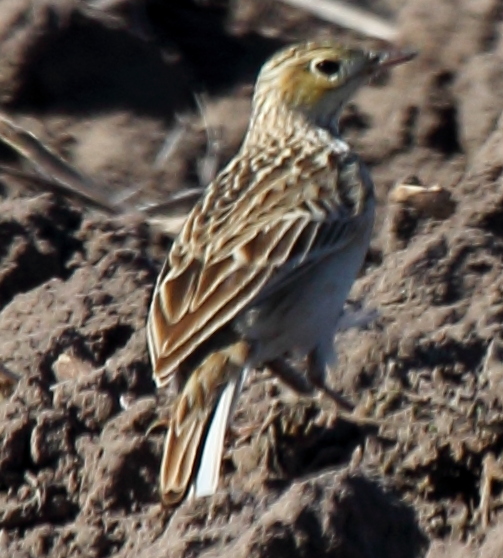
Pampas Pipit
Anthus chacoensis
Order: Passeriformes / Family: Motacillidae

Wikimedia Commons
About the Pampas Pipit
The Pampas Pipit, Anthus chacoensis, is a relatively understated member of the Motacillidae family, often overlooked due to its cryptic plumage and ground-level existence. Native to the expansive grasslands of South America, this species finds its home primarily within the Pampas and Chaco regions, spanning countries such as Argentina, Uruguay, and parts of Brazil. The Pampas Pipit thrives in open, grassy plains where it can skillfully navigate through its environment while remaining largely concealed from predators. These birds play a crucial role in the ecosystem as insectivores, helping to control populations of small invertebrates, thereby maintaining the ecological balance. Their presence also serves as an indicator of healthy grassland environments, making them significant for ecological monitoring. During the breeding season, which typically occurs in the austral spring and summer, the Pampas Pipit engages in elaborate courtship displays characterized by aerial song flights, a behavior that not only strengthens pair bonds but also establishes territories. Outside of the breeding season, the Pampas Pipit is less conspicuous, often blending seamlessly into the landscape. These birds contribute to the biodiversity of the grasslands and serve as prey for larger predators, thus supporting the intricate food web of their habitat. The Pampas Pipit's seasonal behaviors are closely tied to the availability of food resources and climatic conditions. In times of drought or habitat alteration, they may exhibit slight migratory movements in search of favorable conditions, although they are largely sedentary. Their adaptability to different grassland conditions underscores their resilience, yet also highlights the importance of preserving these habitats amid increasing agricultural expansion and land-use changes.
The Pampas Pipit belongs to the family Motacillidae, within the order Passeriformes. These birds typically live average 4 years with a maximum recorded of 6 years.
How to Identify a Pampas Pipit
Distinguishing the Pampas Pipit, Anthus chacoensis, requires a keen eye due to its subtle coloration and similarity to other pipit species. Adults display a primarily brownish-gray plumage with faint streaking on the back, providing excellent camouflage against the grassy backdrop of their habitat. The underparts are pale, with a slight buff wash on the breast and flanks. Juvenile Pampas Pipits tend to exhibit a more pronounced streaking pattern, particularly on the breast, which fades as they mature. Sexual dimorphism is minimal, with males and females appearing quite similar in plumage. In flight, the Pampas Pipit is identifiable by its slender body and long tail, which is often jerked up and down as the bird moves. This tail movement, combined with its characteristic undulating flight pattern, aids in identification. When perched, the Pampas Pipit maintains an erect posture, often standing on the ground or low vegetation, remaining vigilant for predators. Confusion may arise with other pipit species such as the Correndera Pipit or the Paramo Pipit, but careful observation of its habitat preferences and subtle plumage differences can aid in accurate identification.
Having trouble telling birds apart? Upload a photo to our bird identification tool for an instant species match.
Pampas Pipit Habitat and Range
Preferred Habitat
The Pampas Pipit predominantly inhabits the vast grasslands of South America, with a strong affinity for the open, flat plains of the Pampas and Chaco regions. These areas provide the ideal environment, characterized by short grass and sparse vegetation, allowing the bird to forage effectively. The bird is found at low elevations, typically below 1000 meters, where the grasslands stretch uninterrupted. Seasonal habitat shifts may occur, particularly during the breeding season, when the Pampas Pipit seeks out areas with taller grass for nesting. While it generally avoids densely forested or urban areas, occasional sightings in rural farmlands suggest some adaptability to modified landscapes, provided sufficient grass cover remains.
Geographic Range
The Pampas Pipit is primarily found in the southern regions of South America, with a distribution that encompasses parts of Argentina, Uruguay, and southern Brazil. Within these countries, the bird is most commonly associated with the Pampas and Chaco regions, where it is a resident breeder. During the non-breeding season, some populations may exhibit short-distance movements, particularly in response to environmental changes such as drought or habitat destruction, but these are not considered long migratory flights. Key population density hotspots include the Argentinian Pampas, where expansive grasslands support a substantial number of individuals. The stability of these regions is crucial for the bird's continued survival and population health.
Want to know which birds visit your area? Browse our backyard birds by location guides for region-specific species lists.
What Does the Pampas Pipit Eat?
The Pampas Pipit's diet consists primarily of small invertebrates, making it an important insectivore within its ecosystem. Beetles, ants, and grasshoppers form the bulk of its diet, with the bird employing a foraging technique that involves ground gleaning and short sprints to capture prey. Seasonal variations in food availability may lead the Pampas Pipit to supplement its diet with seeds and plant material, especially during the winter months when insect abundance declines. The bird typically forages during daylight hours, capitalizing on the warm temperatures that bring insects to the surface.
Pampas Pipit Behavior and Social Structure
The Pampas Pipit exhibits a range of behaviors that reflect its ground-dwelling lifestyle and ecological niche. Socially, they are often solitary or found in pairs during the breeding season, with a strong emphasis on territorial behavior. Males perform aerial displays and vocalizations to attract mates and establish territory boundaries. These displays involve a combination of song flights and intricate aerial maneuvers. Outside the breeding season, the Pampas Pipit may form loose flocks, especially when foraging in areas with abundant food resources. In the presence of predators, the bird relies on its cryptic plumage for camouflage, often freezing in place until the threat passes. Daily activity patterns are diurnal, with increased activity during the cooler parts of the day when foraging is most efficient.
Pampas Pipit Nesting and Reproduction
The nesting habits of the Pampas Pipit involve the construction of a ground nest, often well concealed within tufts of grass. The nest is a simple cup made from grasses and lined with finer materials to provide insulation and comfort for the eggs. Preferred locations include areas with dense grass cover to protect against predators and environmental elements. Clutch size typically ranges from 2 to 4 eggs, with both parents playing a role in incubation and chick rearing. The incubation period lasts approximately 14 days, followed by a fledging period of about 12 to 14 days after hatching. The Pampas Pipit usually raises one brood per year, although favorable conditions may allow for a second.
Pampas Pipit Sounds and Vocalizations
The Pampas Pipit's primary song is a melodious series of trills and warbles, delivered in flight during the breeding season. The song is characterized by a rhythmic cadence and moderately high pitch, carrying well over the open grasslands. Call notes are softer and less complex, typically consisting of short, sharp 'tseet' sounds used for communication between mates or signaling alarm. The bird's vocalizations are most prominent during the dawn chorus, when territorial and courtship activities peak. Comparatively, the Pampas Pipit's song shares similarities with other pipit species, though with subtle differences in rhythm and tone.
Interesting Facts About the Pampas Pipit
- 1The Pampas Pipit performs elaborate aerial displays during courtship, showcasing its agility and vocal prowess.
- 2Unlike many birds, the Pampas Pipit builds its nest directly on the ground, relying on camouflage for protection.
- 3The Pampas Pipit has a distinctive undulating flight pattern, a key feature for identification in the field.
- 4This species is predominantly sedentary, with only minor movements in response to environmental changes.
- 5The Pampas Pipit's cryptic plumage provides excellent camouflage, making it challenging to spot in its grassland habitat.
- 6The bird's diet primarily consists of insects, playing a vital role in controlling pest populations in grasslands.
- 7The Pampas Pipit's song is a defining characteristic, often heard as a series of melodious trills over its territory.
Pampas Pipit Conservation Status
The Pampas Pipit is currently classified as Least Concern by the IUCN, with population trends considered stable. However, the primary threats facing this species include habitat loss due to agricultural expansion and land-use changes that reduce the extent of available grasslands. Conservation efforts focus on preserving these critical habitats through sustainable land management practices and the establishment of protected areas. Historical population changes have been minimal, but continued monitoring is essential to ensure the species does not face increased pressures.