
Yellow-browed Tit
Parus superciliosus
Order: Passeriformes / Family: Paridae
Wikimedia Commons
About the Yellow-browed Tit
The Yellow-browed Tit, scientifically known as Parus superciliosus, is a small passerine bird belonging to the family Paridae. It predominantly inhabits the montane forests of Asia, with a range that extends across the Himalayan region through parts of northern India, Nepal, Bhutan, and into southwestern China. This bird is a vital component of its ecosystem, playing a significant role in controlling insect populations and aiding in seed dispersal. The Yellow-browed Tit is most often found in mixed coniferous and broadleaf forests, thriving at elevations between 1,500 and 3,500 meters. Its presence in these forests signifies a healthy, biodiverse environment, as it depends on a variety of insect prey and plant resources. During the breeding season, which typically spans from late March to July, these birds become more conspicuous as they engage in courtship displays and vocalizations. They are known for their energetic and acrobatic foraging behavior, which involves gleaning insects from foliage and small branches. Outside the breeding season, the Yellow-browed Tit often joins mixed-species foraging flocks, which enhances its foraging efficiency and provides some protection against predators. This seasonal shift in behavior illustrates the bird's adaptability and its capacity to integrate into different social structures within its habitat. The Yellow-browed Tit's ecological role extends beyond its immediate environment. As a member of the Paridae family, it shares the characteristic of being a cavity nester, often utilizing natural tree cavities or abandoned woodpecker holes. This nesting choice helps to maintain the health of forest ecosystems by promoting the cycling of organic material and enabling nutrient flow. The bird's foraging habits also help in the control of forest pest populations, indirectly benefiting forestry and agricultural practices in the regions it inhabits. In summary, the Yellow-browed Tit is an integral part of its natural habitat, contributing to both the biological richness and ecological balance of the Asian montane forests.
The Yellow-browed Tit belongs to the family Paridae, within the order Passeriformes. These birds typically live average 2-3 years, with a maximum recorded of 5 years..
How to Identify a Yellow-browed Tit
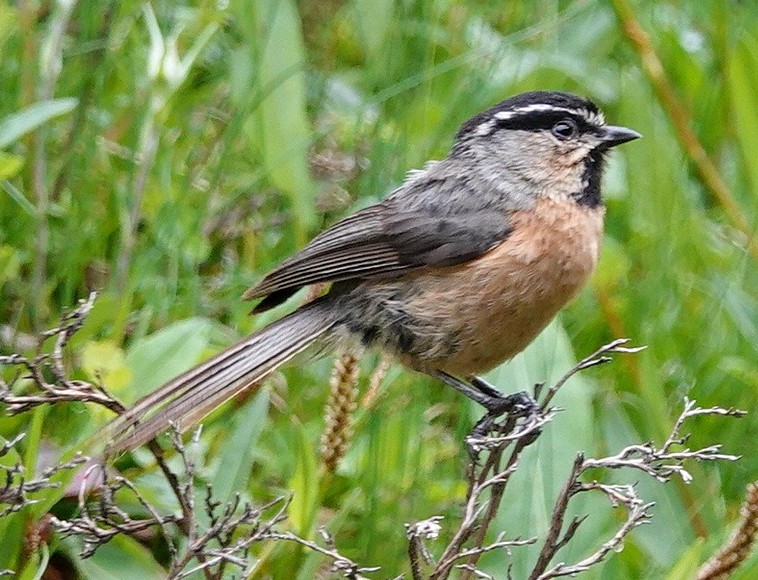
The Yellow-browed Tit is a small bird, measuring approximately 11 centimeters in length and weighing around 8 to 10 grams. Its most distinguishing feature is the bright yellow stripe above its eye, which gives the bird its name. The rest of its plumage is primarily olive-green on the upperparts, with a paler, yellowish wash on the underparts. Adults have a black cap and nape, adding contrast to their vibrant eyebrow stripe, while juveniles display a more subdued coloration with less distinct markings. Males and females appear similar, making gender differentiation challenging in the field. However, during the breeding season, males may exhibit slightly brighter plumage and more pronounced behavioral displays. The Yellow-browed Tit's flight is agile and direct, characterized by rapid wing beats and short bursts of movement as it navigates through the forest canopy. When perched, it often adopts an upright posture, flicking its tail and wings as it forages. This active demeanor, coupled with its distinctive calls, aids in identification despite its small size. Care should be taken to differentiate this species from similar small forest birds, such as the Black-throated Tit or other Paridae family members, which may share overlapping habitats.
Having trouble telling birds apart? Upload a photo to our bird identification tool for an instant species match.
Yellow-browed Tit Habitat and Range
Preferred Habitat
The Yellow-browed Tit inhabits montane forests, favoring mixed coniferous and broadleaf woodlands. It typically resides at elevations ranging from 1,500 to 3,500 meters, thriving in areas with dense foliage and abundant insect life. This bird is adapted to living in regions with high humidity and cooler temperatures, often found in the Himalayas and extending into southwestern China. Seasonal habitat changes are minimal, as the Yellow-browed Tit maintains a relatively stable presence in the montane forests throughout the year. While it primarily occupies rural and less disturbed forested regions, it can occasionally be observed in mountainous urban areas where suitable habitat exists.
Geographic Range
The Yellow-browed Tit breeds across a wide range within the montane regions of the Himalayas, extending from northern India and Nepal through Bhutan and into southwestern China. Its distribution spans several thousand kilometers, with population density hotspots often occurring in areas with optimal forest cover and elevation. During the winter months, some populations may move slightly lower in elevation, although the species generally remains within its breeding range year-round. As a non-migratory bird, the Yellow-browed Tit does not undertake long-distance migrations, instead relying on the rich resources available within its montane habitat to sustain it through the seasons.
Want to know which birds visit your area? Browse our backyard birds by location guides for region-specific species lists.
What Does the Yellow-browed Tit Eat?
The diet of the Yellow-browed Tit predominantly consists of insects and other small invertebrates, which it actively seeks out among the foliage and branches of trees. It is known to consume caterpillars, beetles, and spiders, employing a gleaning technique to pick prey off leaves and bark. This bird's foraging activity is most intense during the early morning and late afternoon when insect activity peaks. Although insects form the bulk of its diet, the Yellow-browed Tit may supplement its intake with seeds and berries, particularly during the non-breeding season when insect availability decreases. Its ability to adapt its diet according to seasonal resource availability demonstrates its ecological flexibility and resilience.
Yellow-browed Tit Behavior and Social Structure
The Yellow-browed Tit is a social and active bird, often seen flitting through the forest canopy in small groups or as part of mixed-species flocks. These flocks provide increased foraging efficiency and predator vigilance. The species exhibits territorial behavior during the breeding season, with males defending their nesting areas through song and display. Courtship involves elaborate displays, including wing flicking and vocalizations, to attract females. Outside of the breeding season, the Yellow-browed Tit becomes more communal, joining larger flocks that traverse the forest in search of food. Its daily activity pattern includes alternating periods of foraging and rest, with peak activity occurring in the cooler hours of the day. When threatened by predators, such as raptors or snakes, the Yellow-browed Tit may engage in mobbing behavior, using alarm calls to alert nearby birds and deter the threat.
Yellow-browed Tit Nesting and Reproduction
The Yellow-browed Tit typically nests in tree cavities, utilizing natural holes or abandoned woodpecker nests. It constructs a cup-shaped nest from moss, feathers, and plant fibers, creating a well-insulated environment for its clutch. The typical clutch size ranges from four to six eggs, which are incubated by the female for approximately 14 days. Once hatched, both parents participate in feeding the chicks, which fledge about 18 days after hatching. The species usually raises one brood per year, although favorable conditions may allow for a second. Parental roles are well-defined, with the female primarily responsible for incubation and both parents sharing the task of provisioning the young.
Yellow-browed Tit Sounds and Vocalizations
The Yellow-browed Tit's song is a series of high-pitched, rapid notes that can be described as a clear, tinkling trill. This vocalization is often used by males during the breeding season to establish territory and attract mates. In addition to its song, the bird produces a variety of calls, including a sharp 'tsit-tsit' note used for communication within flocks. Alarm calls are more urgent in tone, serving to alert others to potential danger. During the dawn chorus, the Yellow-browed Tit contributes its distinctive voice, adding to the harmonious cacophony of the forest.
Interesting Facts About the Yellow-browed Tit
- 1The Yellow-browed Tit can join flocks with up to 20 different bird species, enhancing its foraging success.
- 2Despite its small size, the Yellow-browed Tit plays a crucial role in pest control by consuming large quantities of insects.
- 3The bird's distinctive yellow eyebrow stripe is a key feature that helps birders identify it quickly in the dense forest.
- 4During the breeding season, males use complex songs to defend territory and attract mates, showcasing their vocal prowess.
- 5In the wild, Yellow-browed Tits can live up to 7 years, assuming they avoid predation and environmental hazards.
- 6These birds are highly adaptable and can sometimes be found in gardens and parks adjacent to their forest habitats.
- 7The Yellow-browed Tit's ability to thrive at high altitudes showcases its adaptability to cooler, oxygen-scarce environments.
Yellow-browed Tit Conservation Status
The Yellow-browed Tit is currently classified as Least Concern by the IUCN, with populations considered stable throughout its range. Despite its stable status, the species faces threats from habitat loss due to deforestation and human encroachment. Conservation efforts focus on preserving the montane forest habitats it relies on, including protected areas and sustainable forestry practices. Historical population fluctuations have been linked to changes in forest management and land use, underscoring the importance of continued habitat conservation.


