
Plain Bush-hen
Amaurornis olivacea
Order: Gruiformes / Family: Rallidae
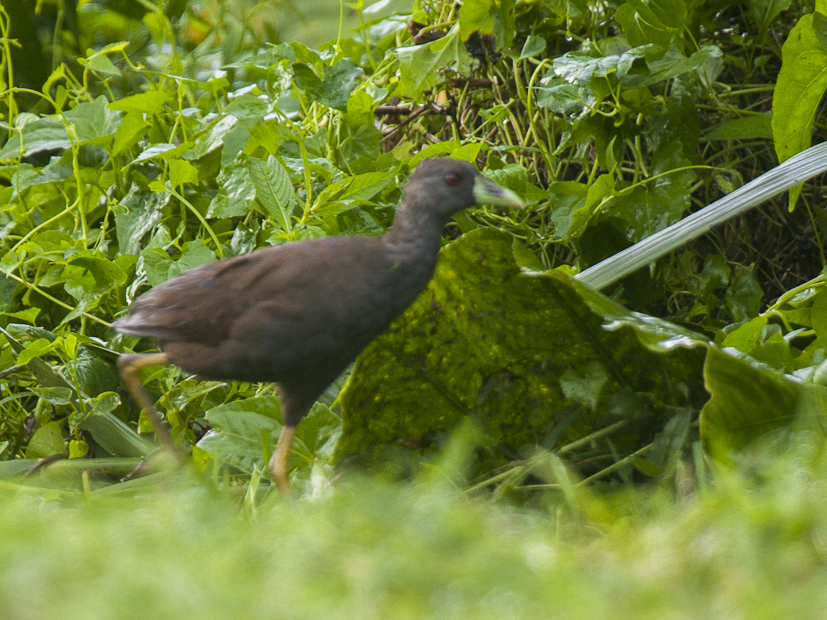
Wikimedia Commons
About the Plain Bush-hen
The Plain Bush-hen, Amaurornis olivacea, is a shy and elusive bird belonging to the family Rallidae. This species is endemic to the Philippines, where it occupies a variety of wetland and forested habitats. The bird's significance in its ecosystem stems from its role as both a predator and prey, contributing to the biological diversity of its habitat. Its presence is a strong indicator of healthy wetland ecosystems, which are crucial for maintaining the region's biodiversity. The Plain Bush-hen displays a preference for dense undergrowth and marshy areas, often inhabiting the edges of freshwater and coastal wetlands. Its plumage, a muted olive-brown, allows it to blend seamlessly into its environment, making it challenging to spot. This camouflage is essential for its survival, as it helps avoid predators while foraging for food. Seasonal behaviors of the Plain Bush-hen include slight shifts in habitat preference, moving closer to water bodies during dry periods to maintain access to food and cover. The bird's ecological role is further defined by its diet, which includes a variety of invertebrates and plant matter, thus controlling insect populations and dispersing seeds. As a non-migratory species, the Plain Bush-hen remains within its range year-round, adapting to seasonal changes in food availability and habitat conditions. Its adaptability to various wetland types underscores its importance in maintaining the ecological balance within its native range.
The Plain Bush-hen belongs to the family Rallidae, within the order Gruiformes. These birds typically live average 5-7 years with a maximum recorded of 9 years..
How to Identify a Plain Bush-hen
The adult Plain Bush-hen is recognizable by its overall olive-brown plumage, which provides excellent camouflage in its preferred habitats. Adults exhibit a uniform coloring that ranges from olive to brown, with a slightly paler underbelly. The bird's eye is dark, providing little contrast against its feathers. In contrast, juveniles differ slightly, displaying a more mottled appearance with lighter edges on their feathers. This helps young birds remain hidden from predators until they mature. Male and female Plain Bush-hens are similar in appearance, making it difficult to distinguish between the sexes in the field. However, females may be marginally smaller, a trait observed in many rail species. When comparing the Plain Bush-hen to similar species, such as the Barred Rail, birders should note the absence of barring on the Plain Bush-hen's plumage. In flight, the Plain Bush-hen exhibits a distinctive profile with its short wings and rapid wingbeats, typical of the Rallidae family. On the ground, it maintains a low posture, often moving through dense vegetation with stealthy precision. It favors walking or running over flying, reserving flight for quick escapes.
Having trouble telling birds apart? Upload a photo to our bird identification tool for an instant species match.
Plain Bush-hen Habitat and Range
Preferred Habitat
The Plain Bush-hen thrives in a variety of wetland habitats, including freshwater marshes, swamps, and forested wetlands. It is particularly fond of areas with dense undergrowth and ample cover. In the Philippines, it is often found in lowland areas, though it can inhabit elevations up to 1,200 meters. The bird's habitat preferences may shift seasonally, with individuals moving towards water bodies during dry seasons. While predominantly found in rural settings, the Plain Bush-hen can occasionally be spotted in more urbanized areas, provided there is sufficient vegetative cover. This adaptability to different wetland types allows it to exploit a range of environments, though it remains most common in areas with thick vegetation.
Geographic Range
The range of the Plain Bush-hen is confined to the Philippines, where it is considered endemic. Within this archipelago, the bird is widespread across major islands such as Luzon, Mindanao, and Visayas. It does not undertake long-distance migrations, staying within its established range throughout the year. However, the bird may undertake local movements in response to seasonal changes in habitat conditions, such as the availability of water and food resources. Population density is highest in regions with extensive wetland systems, particularly those that remain relatively undisturbed by human activity. Despite its limited geographic range, the Plain Bush-hen remains an important component of local biodiversity in the Philippines.
Want to know which birds visit your area? Browse our backyard birds by location guides for region-specific species lists.
What Does the Plain Bush-hen Eat?
The diet of the Plain Bush-hen is diverse, consisting mainly of invertebrates such as insects, worms, and small mollusks. In addition to these protein-rich foods, the bird also consumes a variety of plant matter, including seeds and berries. Seasonal changes can influence its diet, with a higher reliance on plant material during periods when invertebrate prey is scarce. The Plain Bush-hen employs a foraging technique that involves probing into soft soil and mud with its beak to uncover hidden prey. This method is particularly effective in the moist environments it inhabits, allowing it to exploit the rich invertebrate populations found there. Prey size typically ranges from small insects to larger invertebrates like snails, which the bird can handle due to its relatively robust beak. Feeding predominantly occurs during the early morning and late afternoon, aligning with periods of higher prey activity and reduced heat.
Plain Bush-hen Behavior and Social Structure
The social structure of the Plain Bush-hen is characterized by its largely solitary nature, though it may occasionally be seen in pairs or small family groups. Territorial behavior is evident during the breeding season when individuals or pairs defend their chosen nesting sites from intruders. Courtship displays are subtle, involving mutual preening and soft calls between potential mates. Unlike some other rail species, the Plain Bush-hen does not form large flocks, maintaining its preference for solitary or paired life. When faced with predators, the bird relies on its camouflage and stealth to avoid detection, often retreating into dense vegetation if threatened. It exhibits a crepuscular activity pattern, being most active during dawn and dusk when it forages for food. This behavior helps it avoid the heat of the day and potential predators.
Plain Bush-hen Nesting and Reproduction
The Plain Bush-hen constructs its nest in dense vegetation, often near water. The nest itself is a simple structure made from grasses and reeds, providing both support and camouflage. Typical locations include marsh edges or thickets close to water bodies. The clutch size ranges from 3 to 5 eggs, which are incubated by both parents for about 18 to 21 days. After hatching, the young are precocial, leaving the nest shortly after birth but remaining under parental care. Both parents participate in feeding and protecting the chicks, ensuring their survival during the vulnerable early stages of life. The fledging period lasts approximately 30 days, after which the young gain independence. The Plain Bush-hen typically raises one to two broods per year, depending on environmental conditions.
Plain Bush-hen Sounds and Vocalizations
The Plain Bush-hen's primary song consists of a series of low-pitched, repetitive calls that resemble a soft 'kak-kak-kak' sound. These calls serve to communicate territory and attract mates. Call notes are softer and less structured, often used between mates or family members to maintain contact. Alarm calls are sharper and more abrupt, intended to warn of potential threats. The bird participates in a dawn chorus, contributing its distinct calls to the symphony of early morning bird sounds. Its vocalizations, though subtle, are an essential aspect of its communication and social interactions.
Interesting Facts About the Plain Bush-hen
- 1The Plain Bush-hen's olive-brown plumage helps it blend into the dense undergrowth, making it difficult to spot.
- 2Despite its elusive nature, the Plain Bush-hen can be heard more often than seen, thanks to its distinctive calls.
- 3The species is endemic to the Philippines, meaning it is found nowhere else in the world.
- 4The Plain Bush-hen's diet changes seasonally, with more plant matter consumed when invertebrates are scarce.
- 5It constructs its nest near water, using grasses and reeds to build a well-camouflaged structure.
- 6The bird's preference for dawn and dusk activity helps it avoid the heat and potential predators.
- 7Both parents participate in rearing the young, with chicks leaving the nest shortly after hatching.
Plain Bush-hen Conservation Status
The IUCN currently lists the Plain Bush-hen as a species of Least Concern, indicating a stable population trend. However, habitat destruction, particularly the drainage and conversion of wetlands for agriculture and urban development, poses a significant threat. Conservation efforts focus on preserving wetland habitats and promoting sustainable land-use practices in the Philippines. Historically, the population has remained stable, bolstered by the bird's adaptability to various wetland environments. Continued conservation actions are necessary to ensure the long-term survival of the species, given its restricted range and specific habitat requirements.
Other Rallidae Species


Birds Similar to the Plain Bush-hen
These species are often confused with the Plain Bush-hen due to similar appearance or overlapping range.
