
Plum-faced Lorikeet
Oreopsittacus arfaki
Order: Psittaciformes / Family: Psittacidae
Wikimedia Commons
About the Plum-faced Lorikeet
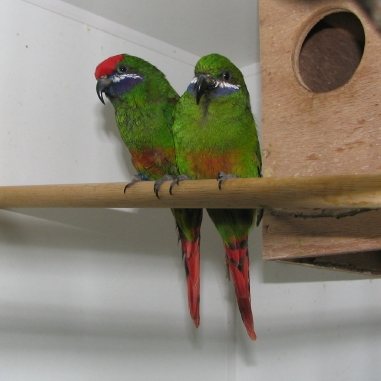
The Plum-faced Lorikeet, known scientifically as Oreopsittacus arfaki, is a small and vividly colored parrot endemic to the mountainous regions of New Guinea. This lorikeet is an integral part of the avian community within its habitat due to its role as a pollinator and seed disperser. With its striking plum-colored face contrasting against its green body, the Plum-faced Lorikeet is a captivating presence in the montane forests where it resides. These high-altitude forests, often surrounded by mist and towering tree ferns, provide an ideal environment for this species. The lorikeet's preference for elevations ranging from 1,500 to 2,500 meters allows it to exploit niche habitats that few other parrots inhabit.
The ecological significance of the Plum-faced Lorikeet extends beyond its aesthetic appeal. As a nectar feeder, it plays a crucial role in pollinating various native plant species, including those unique to the New Guinean highlands. The bird's seasonal movements within these montane forests are primarily driven by the flowering cycles of its preferred food plants. During certain times of the year, when nectar is less abundant, the lorikeet may descend to lower elevations in search of alternative food sources, thereby maintaining the ecological balance within its range.
The Plum-faced Lorikeet's presence is often a reliable indicator of a healthy, biodiverse ecosystem. Its role as a pollinator is vital for the reproductive success of many forest plants, and its colorful plumage adds to the rich tapestry of life in these highland environments. Conservationists have noted the importance of preserving the unique montane habitats of New Guinea to ensure the continued survival of this and other endemic species. The Plum-faced Lorikeet's ability to adapt to seasonal changes in food availability underscores its resilience and importance within its ecological niche.
The Plum-faced Lorikeet belongs to the family Psittacidae, within the order Psittaciformes. These birds typically live average 8-10 years, with a max recorded of 12 years..
How to Identify a Plum-faced Lorikeet
Identifying the Plum-faced Lorikeet in the wild involves noting several distinct features. Adult lorikeets display a vibrant plum-colored face, which gives the species its common name. This coloration covers much of the head and is complemented by a predominantly green body, which aids in camouflage among the dense foliage of the forest canopy. Juveniles, however, lack the full intensity of this plum coloration, displaying more muted tones until they mature.
In terms of sexual dimorphism, there is little difference between male and female Plum-faced Lorikeets, making visual identification based on sex challenging in the field. Both sexes share the same brilliant coloring and small size, measuring approximately 15 cm in length. The lorikeet's flight silhouette is characterized by rapid wingbeats and a slightly arched tail, typical of many small parrot species.
When perched, the Plum-faced Lorikeet exhibits a posture that is slightly hunched, with its plum-colored head contrasting sharply against the green of its body. This, along with its sociable nature, often leads to it being found in small flocks, making it easier to spot in its natural habitat. Confusion with other lorikeets is less likely due to its distinctive face coloration, though care must be taken to distinguish it from other similarly sized green parrots.
Having trouble telling birds apart? Upload a photo to our bird identification tool for an instant species match.
Plum-faced Lorikeet Habitat and Range
Preferred Habitat
The Plum-faced Lorikeet inhabits the montane forests of New Guinea, thriving at elevations between 1,500 and 2,500 meters. These highland forests are characterized by a rich diversity of flora, including tree ferns, epiphytes, and various flowering plants that the lorikeet relies on for nectar. The dense canopy and cool climate create a unique environment that supports the lorikeet's lifestyle.
While primarily a forest dweller, the bird occasionally ventures into adjacent subalpine and alpine zones, especially during periods when its preferred food sources are scarce. This adaptability highlights its ability to exploit a range of high-altitude habitats. Unlike some parrot species, the Plum-faced Lorikeet is rarely found in urban or heavily altered landscapes, preferring the undisturbed tracts of montane forest that provide both food and nesting sites.
Seasonal habitat shifts are minimal but may occur in response to changes in food availability. During times when specific plants are in bloom at lower elevations, the lorikeet might temporarily relocate to take advantage of these feeding opportunities. Nonetheless, its core habitat remains within the cooler, mist-shrouded uplands of New Guinea.
Geographic Range
The Plum-faced Lorikeet is found exclusively in New Guinea, where it occupies a relatively restricted range within the island's central and eastern highlands. The bird's distribution is closely tied to the montane forests that span this region, with populations thriving in areas such as the Owen Stanley Range and the Central Highlands.
Unlike some migratory bird species, the Plum-faced Lorikeet is largely sedentary, with no significant long-distance movements documented. However, its local movements are influenced by the availability of food sources, prompting short-range shifts in altitude rather than broad changes in geographic location.
Population density varies across its range, with certain areas, like the Finisterre and Saruwaged mountain ranges, acting as hotspots due to their extensive tracts of suitable forest habitat. These areas support stable populations, although the overall distribution is patchy, reflecting the fragmented nature of suitable habitats within New Guinea's rugged terrain.
Want to know which birds visit your area? Browse our backyard birds by location guides for region-specific species lists.
What Does the Plum-faced Lorikeet Eat?
Nectar forms the primary component of the Plum-faced Lorikeet's diet. This bird is highly adapted for feeding on the nectar of various flowering plants found within the montane forests of New Guinea. Its specialized brush-tipped tongue allows it to efficiently extract nectar from flowers, making it an important pollinator in this ecosystem.
In addition to nectar, the lorikeet consumes pollen, fruits, and occasionally small insects. This varied diet provides essential nutrients and energy, particularly during times when nectar is less readily available. Seasonal changes in food availability may prompt the lorikeet to expand its diet, taking advantage of ripe fruits and opportunistically feeding on available arthropods.
Foraging typically occurs during daylight hours, with peak activity in the early morning and late afternoon when flowers are most productive with nectar. The lorikeet moves quickly through the forest canopy, using its agile flight to access food sources that are often scattered across a large area.
Plum-faced Lorikeet Behavior and Social Structure
The Plum-faced Lorikeet exhibits a social and active lifestyle, often seen in small flocks that range from five to twenty individuals. These birds communicate through a series of high-pitched calls, which help maintain cohesion within the group. Flocking behavior provides increased security against predators and enhances foraging efficiency in the dense forest canopy.
Territorial behavior is minimal, as these lorikeets prioritize access to food over defending specific territories. However, aggressive interactions may occur when food resources are scarce, leading to brief scuffles with other birds.
Courtship displays involve a combination of vocalizations and physical gestures, such as wing fluttering and mutual preening. These behaviors strengthen pair bonds, which are typically monogamous. In response to predators, the lorikeets rely on their agility and speed, often taking to the air with rapid, erratic flight patterns designed to confuse would-be attackers. Their daily activity patterns are closely tied to the availability of food, with periods of rest interspersed between intensive foraging bouts.
Plum-faced Lorikeet Nesting and Reproduction
Plum-faced Lorikeets prefer to nest in tree cavities, often selecting sites high above the ground to avoid ground-dwelling predators. They utilize natural hollows in trees or sometimes excavate their own nesting site in softer wood. The nest is lined with wood chips and other plant materials to provide a soft, insulating layer for the eggs.
The typical clutch size ranges from two to three eggs, which the female incubates for approximately 23 days. During this time, the male provides food for the female, ensuring she can remain on the nest for extended periods. Once hatched, both parents participate in feeding the chicks, regurgitating a nutrient-rich mixture of nectar and pollen.
Fledging occurs after about 8 to 10 weeks, with young birds remaining dependent on their parents for several more weeks as they learn to forage independently. The Plum-faced Lorikeet generally raises one brood per year, although conditions of abundant food may occasionally permit a second brood.
Plum-faced Lorikeet Sounds and Vocalizations
The vocalizations of the Plum-faced Lorikeet are characterized by a series of high-pitched, chattering notes that are both sharp and rapid. These sounds serve multiple purposes, from maintaining contact between flock members to signaling alarm in response to potential threats.
The primary song consists of a rhythmic series of whistles and chirps, often delivered in a repetitive pattern. Call notes are generally shorter and used more frequently during flight or when engaging in social interactions.
In the early morning hours, the lorikeets participate in a dawn chorus, their lively calls filling the forest canopy as they set out to forage. These sounds, while distinct, can be reminiscent of the calls of smaller passerine birds, though they have a unique resonance that identifies them as a member of the lorikeet family.
Interesting Facts About the Plum-faced Lorikeet
- 1The Plum-faced Lorikeet's diet primarily consists of nectar, which it extracts using a specialized brush-tipped tongue.
- 2This species is endemic to New Guinea, meaning it is found nowhere else in the world, highlighting its unique ecological niche.
- 3Plum-faced Lorikeets often nest in tree cavities high above the ground, a strategy that helps protect their young from predators.
- 4Despite their vibrant appearance, these lorikeets are adept at blending into the green foliage of their forest home, aiding in camouflage.
- 5Their role as pollinators is crucial for the reproductive success of many montane forest plant species in New Guinea.
- 6The Plum-faced Lorikeet can adapt its diet to include fruits and small insects when nectar sources are scarce.
- 7Both male and female lorikeets participate in feeding their chicks, a behavior that reinforces their monogamous pair bonds.
Plum-faced Lorikeet Conservation Status
The IUCN currently classifies the Plum-faced Lorikeet as a species of Least Concern, indicating that its population is stable overall. However, localized threats such as habitat loss due to logging and land conversion pose challenges to its continued well-being. Conservation efforts focus on preserving the montane forest ecosystems of New Guinea, which are critical not only for the lorikeet but for many other endemic species. Protected areas and community-led conservation initiatives contribute to safeguarding these habitats. Historically, the population of the Plum-faced Lorikeet has shown resilience to environmental changes, though ongoing monitoring is essential to ensure that any potential threats do not lead to significant declines in the future.
Other Psittacidae Species


Birds Similar to the Plum-faced Lorikeet
These species are often confused with the Plum-faced Lorikeet due to similar appearance or overlapping range.
