
Pomatorhinus gravivox
Pomatorhinus gravivox
Order: Passeriformes / Family: Timaliidae
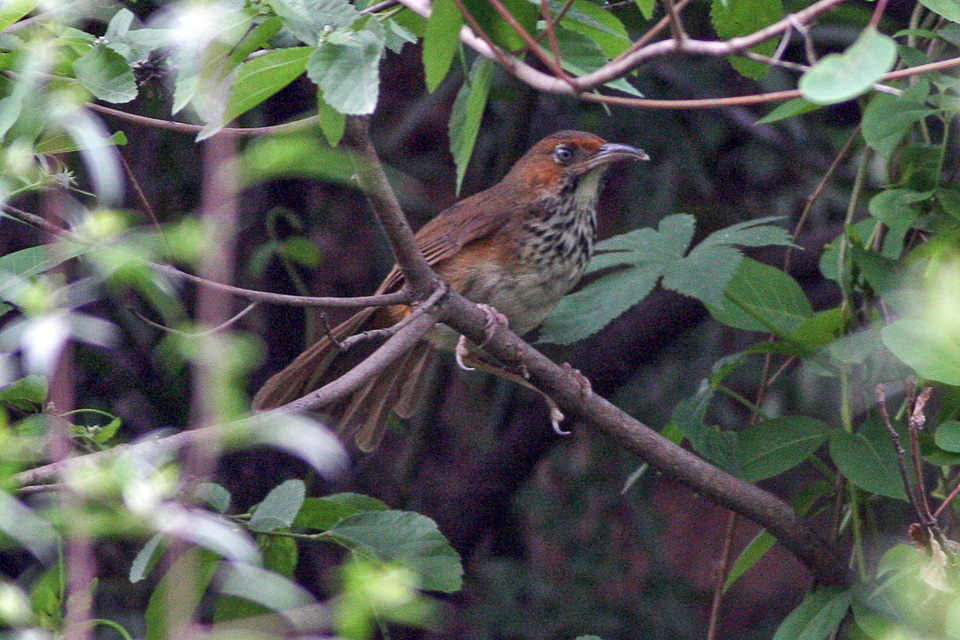
Wikimedia Commons
About the Pomatorhinus gravivox
The Pomatorhinus gravivox, commonly referred to as the Large Scimitar Babbler, is a fascinating species within the Timaliidae family. It is predominantly found in the subtropical and temperate regions of Asia, including countries such as China, India, Myanmar, and Thailand. These birds are an integral part of the dense forest ecosystems they inhabit, playing a significant role in insect population control. They are especially prominent in the lush, montane forests of the Himalayas, where they contribute to the region's biodiversity. The Large Scimitar Babbler is an important seed disperser, aiding in the propagation of various plant species. During the breeding season, which typically spans from April to July, these birds become more vocal and conspicuous as they establish territories and attract mates. Outside the breeding season, they often join mixed-species flocks, especially in the winter months, to forage more efficiently. Their contribution to the ecosystem extends beyond their immediate environment, as they influence the avian community dynamics within their range. The Pomatorhinus gravivox is an indicator species for habitat health, reflecting the ecological integrity of their forested habitats. Observing these babblers provides insights into the underlying health of the ecosystems they inhabit, making them a focal point for conservation efforts in their native regions. With a preference for understory thickets and bamboo groves, the Large Scimitar Babbler adapts well to various forest types, from evergreen to deciduous, demonstrating its ecological versatility. This adaptability, however, is being tested by habitat loss and fragmentation, which pose ongoing challenges to its survival. Despite these threats, the species remains relatively widespread, though localized declines demand attention from conservationists and researchers alike.
The Pomatorhinus gravivox belongs to the family Timaliidae, within the order Passeriformes. These birds typically live average 5-8 years with a max recorded of 10 years..
How to Identify a Pomatorhinus gravivox
Identifying the Large Scimitar Babbler involves noting several key features. Adult Pomatorhinus gravivox birds are characterized by their large size, measuring approximately 25-28 centimeters in length. Their most distinctive feature is the long, downward-curving bill, which is typically yellow or orange. The plumage is primarily brown, with a grayish-brown crown and nape, and a white throat and upper breast that contrast sharply with the rest of the body. The flanks and belly are a warmer, rufous-brown color. Juveniles resemble adults but may display slightly duller plumage and a less pronounced bill curve. Males and females are similar in appearance, making visual gender differentiation challenging in the field. When comparing the Large Scimitar Babbler to similar species, such as the Black-throated Babbler or the Streak-breasted Scimitar Babbler, the lack of streaking on the breast and the distinctively curved bill are reliable distinguishing features. In flight, these babblers have a rather slow, undulating motion, but they are more often observed hopping through dense undergrowth or perching with a characteristic upright posture. This posture, combined with their vocal activity, often aids in their detection despite their preference for dense cover.
Having trouble telling birds apart? Upload a photo to our bird identification tool for an instant species match.
Pomatorhinus gravivox Habitat and Range
Preferred Habitat
The primary habitat of the Pomatorhinus gravivox includes dense, humid forests, where it favors the understory and thickets. These birds are commonly found in subtropical and montane forests, thriving at elevations ranging from 300 to 2,500 meters. In the Himalayas, they are particularly prevalent in the lower altitudes, where they inhabit mixed deciduous and evergreen forests. Bamboo groves and forest edges also serve as suitable habitats for these babblers. During the non-breeding season, they may venture into secondary growth and more disturbed areas, although they generally avoid open landscapes and urban settings. Seasonal habitat shifts are minimal, as the species is largely sedentary, maintaining a presence in its preferred forested environments year-round. While the Large Scimitar Babbler can adapt to some degree of habitat alteration, extensive deforestation and land conversion pose significant threats to their natural habitats.
Geographic Range
The Large Scimitar Babbler's range covers a broad swath of Asia, primarily found in China, India, Myanmar, and parts of northern Thailand. In China, the species is widespread, occurring from the southern provinces such as Yunnan and Sichuan, extending up to the eastern fringes of the Himalayas. In India, the bird is present in the northeastern states, particularly in Assam and Arunachal Pradesh. While the Pomatorhinus gravivox does not migrate extensively, local movements may occur in response to food availability and climatic conditions. Population densities are generally higher in regions with dense forest cover, such as the Eastern Himalayas and the subtropical forests of southern China. The species is less common in heavily urbanized or agricultural areas, where suitable habitats are fragmented. Conservation efforts in these regions focus on protecting large tracts of continuous forest to support stable populations of this and other forest-dependent species.
Want to know which birds visit your area? Browse our backyard birds by location guides for region-specific species lists.
What Does the Pomatorhinus gravivox Eat?
The diet of the Pomatorhinus gravivox consists primarily of insects and other small invertebrates, making them adept insectivores. They actively forage in the forest undergrowth, using their long, curved bills to probe into leaf litter and crevices in search of prey. Ants, beetles, and spiders form the bulk of their diet, with occasional consumption of small fruits and seeds supplementing their nutritional intake. Seasonal changes in diet are observed, with an increased reliance on fruits during periods of lower insect abundance, particularly in the winter months. The Large Scimitar Babbler employs a methodical foraging technique, often working in pairs or small family groups to cover more ground. This cooperative foraging behavior enhances their efficiency in locating food and reduces competition among individuals. While primarily diurnal feeders, they exhibit peak feeding activity during the early morning and late afternoon, when temperatures are cooler and insects are more active.
Pomatorhinus gravivox Behavior and Social Structure
The Large Scimitar Babbler displays a complex social structure, often forming small family groups that maintain territories throughout the year. These groups engage in frequent vocal exchanges to assert dominance and communicate within their territory. Territorial disputes with neighboring groups can involve aggressive displays and vocal duels. During the breeding season, males perform elaborate courtship displays, which include singing and wing-flapping to attract females. The species is known for its cooperative breeding behavior, where non-breeding individuals may assist in raising the young. Flocking patterns outside the breeding season are flexible, with babblers joining mixed-species flocks to increase foraging success and predator vigilance. In response to predators, the Pomatorhinus gravivox relies on dense vegetation for cover and uses alarm calls to alert group members. Their daily activity pattern revolves around foraging during daylight hours, with periods of rest and preening interspersed throughout the day.
Pomatorhinus gravivox Nesting and Reproduction
The nesting behavior of Pomatorhinus gravivox is marked by the construction of domed nests using a variety of plant materials. These nests are typically built close to the ground, concealed within dense vegetation or thickets. Preferred nesting materials include leaves, twigs, and grass, woven together to form a secure structure. The clutch size ranges from 3 to 5 eggs, with both parents participating in incubation, which lasts approximately 14 to 16 days. Once hatched, the chicks are altricial and require extensive parental care. Both parents, and sometimes additional group members, are involved in feeding and protecting the young. Fledging occurs around 12 to 14 days post-hatching, although the fledglings remain dependent on the adults for several weeks thereafter. The species typically produces one to two broods per year, depending on environmental conditions and resource availability.
Pomatorhinus gravivox Sounds and Vocalizations
The vocal repertoire of the Large Scimitar Babbler is diverse, with a primary song consisting of a series of loud, melodious whistles that rise and fall in pitch. This song is often delivered in a rhythmic pattern, resembling a series of clear, flute-like notes. Call notes include harsh, chattering sounds used for communication within groups. Alarm calls are sharp and piercing, designed to alert other birds of potential threats. During the dawn chorus, the Pomatorhinus gravivox is a prominent participant, its song melding with those of other forest inhabitants. The babbler's vocalizations are distinctive and serve as a key tool for identifying the species in the dense habitats they occupy.
Interesting Facts About the Pomatorhinus gravivox
- 1The Large Scimitar Babbler is known for its long, curved bill, which is uniquely adapted for probing into crevices and leaf litter.
- 2These birds often participate in mixed-species flocks, which can include over ten different bird species at a time.
- 3Pomatorhinus gravivox can be heard singing at dawn and dusk, contributing to the forest's rich auditory landscape.
- 4Despite their size and vocal nature, these babblers are often difficult to spot due to their preference for dense undergrowth.
- 5The species plays an important ecological role as a seed disperser, aiding in forest regeneration.
- 6Both male and female Large Scimitar Babblers participate in building the nest, showcasing a strong pair bond.
- 7Their vocalizations are so distinct that they can be used to differentiate between individual birds within a population.
Pomatorhinus gravivox Conservation Status
The Pomatorhinus gravivox is currently classified as Least Concern by the IUCN, with a relatively stable population trend. However, habitat destruction due to deforestation and land conversion for agriculture poses significant threats to its long-term survival. Conservation efforts focus on protecting vital forest habitats and implementing sustainable land-use practices. Historical records indicate that the species' range has contracted in regions where forest cover has been significantly reduced. Continued monitoring and habitat preservation are crucial for maintaining healthy populations of the Large Scimitar Babbler across its range.


