
Purple-collared Woodstar
Myrtis fanny
Order: Apodiformes / Family: Trochilidae
Wikimedia Commons
About the Purple-collared Woodstar
The Purple-collared Woodstar, scientifically named Myrtis fanny, is a captivating bird belonging to the family Trochilidae and order Apodiformes. This small hummingbird, native to the Andean regions of South America, thrives in a variety of habitats, showcasing the rich biodiversity of these mountainous ecosystems. Found primarily in Peru and Ecuador, the Purple-collared Woodstar inhabits montane forests, scrublands, and even gardens, depending on the availability of flowering plants. This bird plays a critical role in its ecosystem as a pollinator, transferring pollen between flowers while feeding on nectar. The vibrant colors and agile flight of the Purple-collared Woodstar make it a favorite among birdwatchers and naturalists alike, who are drawn to its dynamic presence and ecological significance. As a pollinator, the Purple-collared Woodstar contributes to the reproductive success of many plant species, which in turn supports a diverse array of wildlife. The species exhibits seasonal behaviors, with movements influenced by the availability of food resources rather than long-distance migrations. During the breeding season, males are often seen performing elaborate courtship displays, while females are busy constructing nests and caring for the young. This species is particularly adapted to high elevations, often found up to 3,000 meters above sea level, where its specialized feeding habits and efficient flight enable it to thrive. The Purple-collared Woodstar is an excellent example of the intricate connections within ecosystems, demonstrating how a single species can impact the biodiversity and health of its environment. Its presence in gardens and urban areas also highlights the bird's adaptability, allowing humans a glimpse into the delicate balance of nature that sustains these vibrant creatures.
The Purple-collared Woodstar belongs to the family Trochilidae, within the order Apodiformes. These birds typically live average 5 years with a maximum recorded of 8 years.
How to Identify a Purple-collared Woodstar
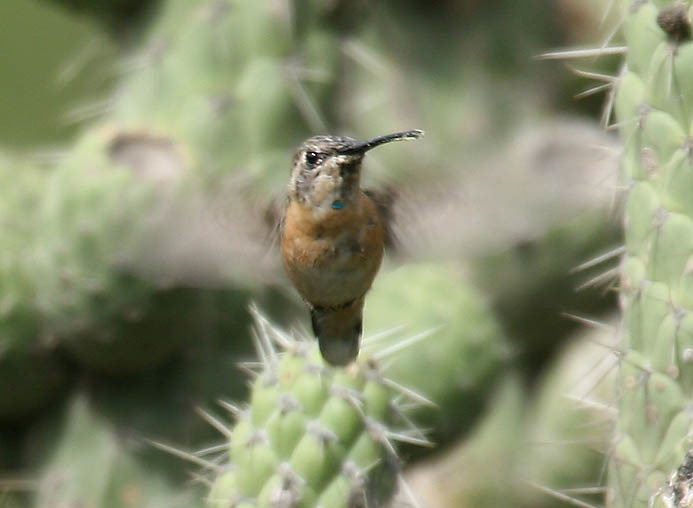
The adult male Purple-collared Woodstar is notable for its striking violet collar, which contrasts beautifully with its otherwise greenish plumage. The head and upperparts are predominantly green, while the underparts are white, providing a stark contrast that aids in identification. Females lack the vivid purple collar but exhibit a more subdued version, with a hint of violet on their throats. Juveniles resemble females but may have slightly duller colors until they mature. In flight, the Purple-collared Woodstar is a blur of motion, with rapid wingbeats that create a humming sound typical of hummingbirds. Its small size, around 8-10 cm in length, and slender build contribute to its agile maneuvers while foraging. When perched, the bird's posture is upright, often on thin branches or wires, allowing it to survey its surroundings. Confusion with other species may occur, particularly with similar small hummingbirds in its range, but the distinctive purple collar of the male is a reliable field mark. Observers should note the bird's size and energetic behavior when differentiating it from other hummingbirds.
Having trouble telling birds apart? Upload a photo to our bird identification tool for an instant species match.
Purple-collared Woodstar Habitat and Range
Preferred Habitat
The Purple-collared Woodstar thrives in a variety of habitats, often found in montane forests and open scrublands. It is well-adapted to high elevations, typically residing between 1,500 and 3,000 meters above sea level. This bird is common in regions where flowering plants are abundant, as it relies heavily on nectar as a primary food source. The species also frequents gardens and urban areas, where cultivated flowers provide ample foraging opportunities. Seasonal shifts in habitat usage are influenced by the availability of floral resources rather than temperature changes. During certain times of the year, the Purple-collared Woodstar may descend to lower elevations or move to more open areas in search of food, demonstrating its adaptability and resilience.
Geographic Range
The Purple-collared Woodstar's range primarily encompasses the Andean regions of Peru and Ecuador. It is a resident species in these countries, with a distribution that covers both the eastern and western slopes of the Andes. The bird is non-migratory, but it exhibits altitudinal movements within its range in response to the blooming cycles of its preferred food plants. While not considered a migratory bird, the Purple-collared Woodstar may travel short distances to find suitable feeding grounds. Population densities tend to be higher in areas with abundant flowering plants, making certain regions hotspots for observing these birds. Despite its limited geographic range, the species remains relatively common within its preferred habitats.
Want to know which birds visit your area? Browse our backyard birds by location guides for region-specific species lists.
What Does the Purple-collared Woodstar Eat?
The diet of the Purple-collared Woodstar primarily consists of nectar from a variety of flowering plants, including those in the genera Salvia and Passiflora. This hummingbird's feeding schedule is dictated by the availability of blooms, with peak activity occurring during the early morning and late afternoon. In addition to nectar, the Purple-collared Woodstar occasionally consumes small insects and spiders, which provide essential proteins and nutrients. Its foraging technique is highly specialized, involving precision hovering and rapid wingbeats that allow it to extract nectar while remaining aloft. The bird's long, slender bill is perfectly adapted for reaching into tubular flowers. Seasonal changes in plant availability can lead to shifts in diet composition, but nectar remains the primary food source year-round.
Want to attract Purple-collared Woodstars to your yard? See our recommended feeders and seed types for the best results.
Purple-collared Woodstar Behavior and Social Structure
The Purple-collared Woodstar exhibits a solitary and territorial behavior, particularly during the breeding season when males aggressively defend their feeding territories. Courtship displays are a prominent feature of the male's behavior, involving aerial maneuvers and vocalizations to attract females. These displays often involve the male hovering in front of a female, showcasing his vibrant throat patch. The species is diurnal, with peak activity occurring in the early morning and late afternoon, coinciding with periods of high nectar availability. The bird's response to predators includes rapid retreat and evasive flight patterns, leveraging its speed and agility. While generally solitary, the Purple-collared Woodstar may join mixed-species flocks when foraging, especially in areas with abundant food resources.
Purple-collared Woodstar Nesting and Reproduction
The Purple-collared Woodstar constructs a small, cup-shaped nest, typically situated on thin branches or in shrubbery. The nest is made from plant fibers, soft down, and is often camouflaged with lichen to blend into its surroundings. Females are solely responsible for nest building and caring for the young, laying a clutch of two white eggs. The incubation period lasts approximately 14-16 days, after which the chicks hatch and are fed by the female. Fledging occurs around 20-25 days after hatching, with the fledglings remaining dependent on the female for a short period before becoming independent. The species typically raises one to two broods per year, depending on food availability and environmental conditions.
Purple-collared Woodstar Sounds and Vocalizations
The Purple-collared Woodstar produces a series of high-pitched, tinkling notes that form its primary song. This song, often described as thin and metallic, carries well through its montane habitat. Call notes are sharp and distinct, used primarily for communication between individuals. Alarm calls are more abrupt and urgent, signaling the presence of potential threats. Unlike some other hummingbirds, the species does not participate extensively in dawn chorus behavior, but males may sing sporadically throughout the day, especially during the breeding season when attracting mates.
Interesting Facts About the Purple-collared Woodstar
- 1The Purple-collared Woodstar can beat its wings up to 80 times per second, allowing it to hover with remarkable precision.
- 2Males perform elaborate aerial displays during courtship, sometimes flying in U-shaped patterns to attract a mate.
- 3Despite its small size, the Purple-collared Woodstar is an important pollinator for several plant species in the Andean region.
- 4This hummingbird's metabolism is extremely high, requiring it to consume up to twice its body weight in nectar each day.
- 5Its heart rate can reach over 1,200 beats per minute during active flight, one of the fastest among birds.
- 6The species' ability to enter torpor at night helps conserve energy during colder periods in its high elevation habitats.
- 7Purple-collared Woodstars are often seen in urban gardens, providing birdwatchers with easy opportunities to observe their behavior.
Purple-collared Woodstar Conservation Status
The IUCN currently lists the Purple-collared Woodstar as a species of Least Concern, with a stable population trend. Despite its restricted range, the bird's adaptability to various habitats has aided in its survival. Primary threats include habitat destruction due to agriculture and urban expansion, which can reduce the availability of flowering plants. Conservation efforts focus on habitat preservation and restoration, ensuring that montane forests and scrublands remain viable for the species. Historical data suggests that while some local populations have experienced fluctuations, the overall population remains resilient.
Attracting Purple-collared Woodstars to Your Feeder
The Purple-collared Woodstar is a regular visitor to backyard bird feeders across its range. At the Eye On The Fly feeding station, we observe Purple-collared Woodstars regularly and capture footage with our feeder cameras.
Other Trochilidae Species


Birds Similar to the Purple-collared Woodstar
These species are often confused with the Purple-collared Woodstar due to similar appearance or overlapping range.

