Red-breasted Chat
Granatellus venustus
Order: Passeriformes / Family: Cardinalidae
Wikimedia Commons
About the Red-breasted Chat
The Red-breasted Chat (Granatellus venustus) is a vibrant songbird endemic to Mexico, particularly thriving in lowland forests and scrubby habitats. This species plays a critical role in its ecosystem, primarily as an insectivore, helping to control insect populations. Its presence is also a strong indicator of a healthy forest ecosystem. The bird's striking appearance, with its vivid red breast and contrasting dark upperparts, makes it a favorite among birdwatchers. Often found in the subtropical and tropical dry forests of western and southwestern Mexico, the Red-breasted Chat is a resident species, showing little to no migratory behavior. In these regions, particularly in states such as Guerrero, Oaxaca, and Michoacán, the bird is frequently observed engaging in its characteristic foraging behavior among the dense underbrush. The Red-breasted Chat contributes to the ecological balance by participating in seed dispersal, thus aiding in plant regeneration. While it is primarily a terrestrial forager, it also plays a role in the mid-canopy level of forests, moving through the dense foliage with agility and purpose. Seasonally, the Red-breasted Chat may adjust its activity patterns based on food availability, but its territorial and behavioral habits remain consistent throughout the year. This adaptability ensures its survival in varied environmental conditions, from the dry season to the lush, rainy months. The species’ vibrant plumage and engaging song add to the biodiversity of the regions it inhabits, making it a valuable part of Mexico's avian landscape.
The Red-breasted Chat belongs to the family Cardinalidae, within the order Passeriformes. These birds typically live average 5 years, with individuals living up to 7 years..
How to Identify a Red-breasted Chat
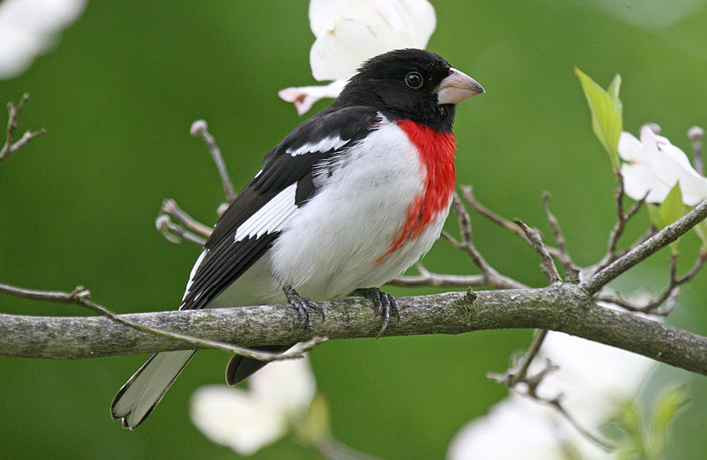
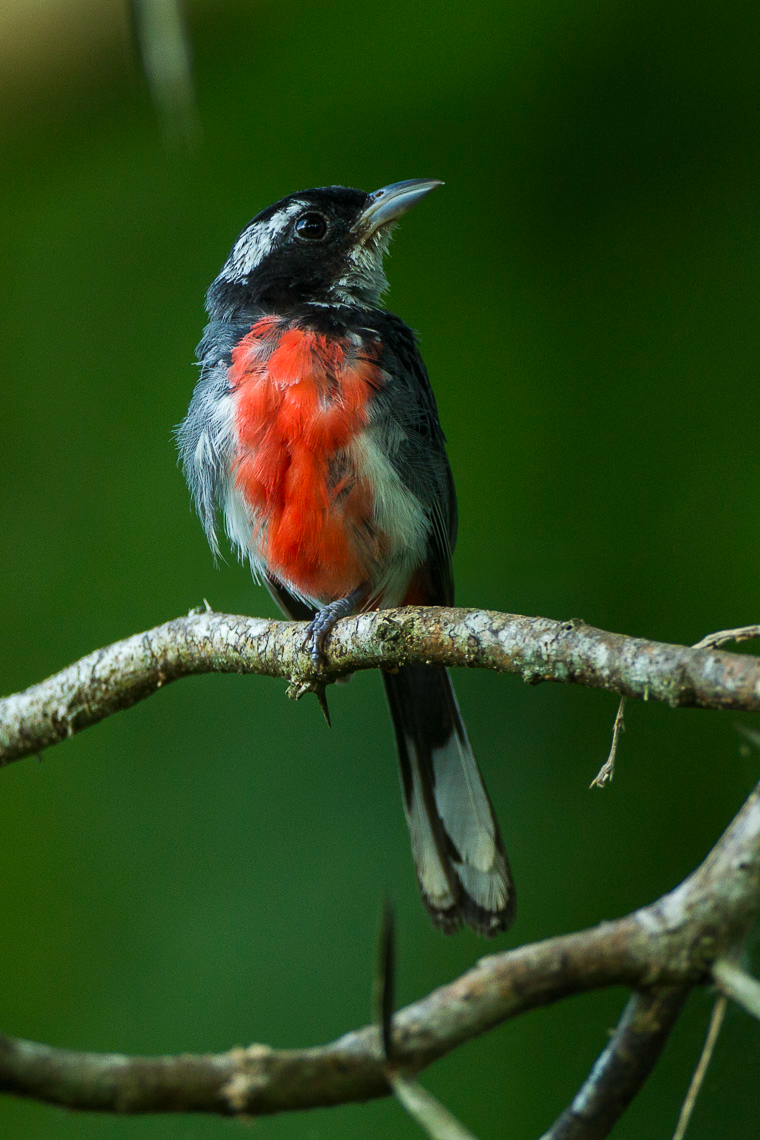
The Red-breasted Chat is a small, robust songbird with a distinctive appearance. Adult males are easily identified by their bright red breast and belly, which starkly contrasts with their slate-gray upperparts. The throat and sides of the head are also red, which can be a useful field mark when the bird is partially obscured by foliage. Females and juveniles, however, present a more subdued palette, with grayish-brown upperparts and paler underparts that may show a faint red wash. This sexual dimorphism is common among birds in the Cardinalidae family. The Red-breasted Chat also shares some characteristics with similar species, such as the Rose-breasted Grosbeak, but can be distinguished by size and habitat preference. In flight, the Red-breasted Chat displays a rounded wing silhouette and a short, slightly notched tail. Its perching posture is often upright, giving it a vigilant appearance as it scans for insects. Observers should note the black mask and white wing bars, which add to its distinctive look and help differentiate it from related species. The Red-breasted Chat's bright plumage and melodic calls make it a captivating subject for birdwatchers and researchers alike.
Having trouble telling birds apart? Upload a photo to our bird identification tool for an instant species match.
Red-breasted Chat Habitat and Range
Preferred Habitat
The Red-breasted Chat is a denizen of lowland subtropical and tropical dry forests, often found in areas with dense underbrush and scrubby vegetation. These habitats provide the bird with ample cover and foraging opportunities. It favors elevations ranging from sea level to about 1,200 meters, primarily in the coastal regions of western Mexico. While it is not commonly found in urban areas, the Red-breasted Chat can occasionally be seen in rural gardens and plantations adjacent to forested regions. Seasonal habitat shifts are minimal, though the bird may move slightly to find optimal food sources during different times of the year. This species showcases a preference for undisturbed habitats, thriving in regions where human activity is limited.
Geographic Range
The Red-breasted Chat has a relatively restricted range, primarily confined to the coastal regions of western and southwestern Mexico. Its breeding and resident range includes states such as Guerrero, Oaxaca, Colima, and Michoacán. Unlike many other songbirds, the Red-breasted Chat does not engage in long-distance migration, remaining in its established range year-round. The species is most densely populated in areas where lowland forests meet scrublands, providing the ideal conditions for feeding and breeding. While not migratory, the Red-breasted Chat may exhibit local movements influenced by food availability and climatic conditions. Conservationists continue to monitor its range to ensure that habitat loss does not significantly impact its population.
Want to know which birds visit your area? Browse our backyard birds by location guides for region-specific species lists.
What Does the Red-breasted Chat Eat?
The diet of the Red-breasted Chat predominantly consists of insects and other invertebrates. It forages by gleaning insects from leaves and branches, often seen hopping energetically through the underbrush. During the dry season, when insect activity may diminish, the bird may supplement its diet with seeds and small fruits, reflecting its adaptability. The Red-breasted Chat employs a methodical approach to foraging, using its keen eyesight to detect prey. Its prey size typically ranges from small to medium-sized insects, such as beetles and caterpillars. Feeding occurs throughout the day, with peaks in activity during the early morning and late afternoon, aligning with periods of high insect activity.
Red-breasted Chat Behavior and Social Structure
Red-breasted Chats are generally solitary, maintaining territories that they defend vigorously from intruders. Males use their melodic songs to establish territory boundaries and attract mates, often perching conspicuously while singing. During the breeding season, courtship displays involve males showcasing their brightly colored plumage and performing aerial displays. The species exhibits a strong territorial instinct, particularly during the breeding period when both males and females may aggressively chase away competitors. Although primarily solitary, Red-breasted Chats may form loose associations with other insect-eating birds during the non-breeding season, participating in mixed-species foraging flocks. This behavior enhances foraging efficiency and provides safety in numbers against predators.
Red-breasted Chat Nesting and Reproduction
The Red-breasted Chat builds cup-shaped nests, typically situated low in dense vegetation or thorny shrubs, providing a measure of protection from predators. The nest construction involves weaving grasses, leaves, and spider webs, offering both stability and camouflage. A typical clutch comprises two to three eggs, with an incubation period lasting approximately 12 to 14 days. Both parents share incubation duties, although the female often assumes the primary role. Once hatched, the chicks fledge within 10 to 12 days, with both parents involved in feeding and caring for the young. The species generally produces one brood per year, although favorable conditions may occasionally permit a second.
Red-breasted Chat Sounds and Vocalizations
The Red-breasted Chat is known for its melodious song, which consists of a series of clear, fluty notes delivered in a rhythmic sequence. The pitch is generally high, with a sweet quality that carries well through the forest. Call notes include sharp 'chip' sounds, used for communication between mates and to signal alarm. During the dawn chorus, the male's song is particularly vibrant and prolonged, serving both as a territorial declaration and a courtship invitation. The song's quality and rhythm are reminiscent of the Northern Cardinal, though delivered at a higher pitch.
Interesting Facts About the Red-breasted Chat
- 1The Red-breasted Chat can be heard singing almost year-round, a behavior not typical of many songbirds.
- 2Despite its vibrant colors, the Red-breasted Chat's dense habitat makes it surprisingly elusive and challenging to spot.
- 3The Red-breasted Chat's song has been compared to that of a flute, characterized by its clear and melodious notes.
- 4Unlike many other birds in the Cardinalidae family, the Red-breasted Chat is non-migratory, residing year-round in its range.
- 5This species exhibits monogamous pair bonds, often returning to the same partner in subsequent breeding seasons.
- 6The Red-breasted Chat's preferred nesting sites in thorny shrubs help protect it from predators and offer camouflage.
- 7Its diet shifts seasonally, showcasing adaptability by including seeds and fruits when insects are scarce.
Red-breasted Chat Conservation Status
The Red-breasted Chat is currently listed as Least Concern by the IUCN, with stable population trends. However, habitat degradation due to agricultural expansion and deforestation poses ongoing threats. Conservation efforts focus on habitat preservation and monitoring population trends to ensure stability. While historically there have been fluctuations in population density due to habitat changes, targeted conservation initiatives have helped maintain stable numbers. Continued efforts to protect the bird's natural habitat are crucial for its long-term survival.
Other Cardinalidae Species


Birds Similar to the Red-breasted Chat
These species are often confused with the Red-breasted Chat due to similar appearance or overlapping range.