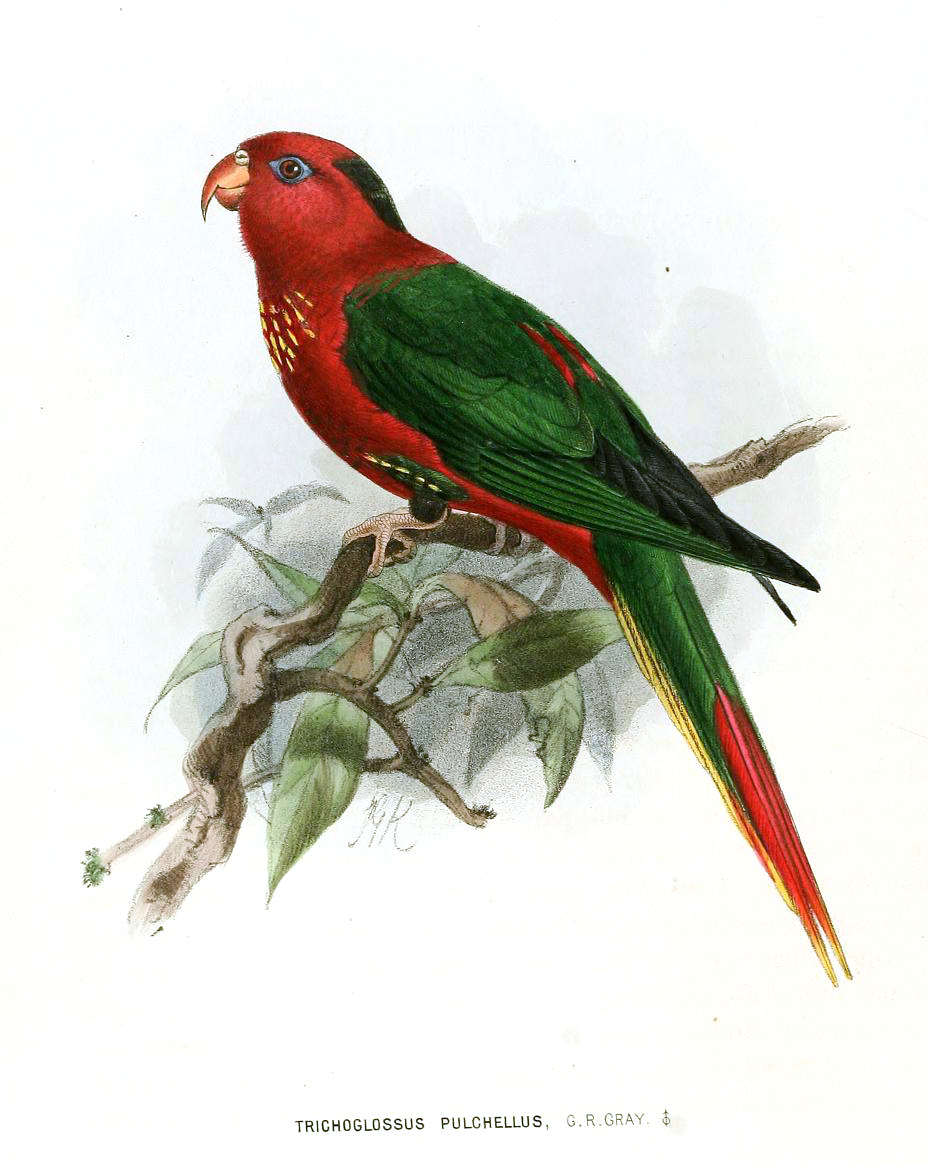
Red-fronted Lorikeet
Hypocharmosyna rubronotata
Order: Psittaciformes / Family: Psittaculidae

Wikimedia Commons
About the Red-fronted Lorikeet
The Red-fronted Lorikeet (Hypocharmosyna rubronotata) is an eye-catching bird known for its vivid plumage and dynamic presence in the dense forests of the Pacific region. This lorikeet belongs to the family Psittaculidae and is found primarily in the islands of Papua New Guinea and nearby areas, where it thrives in the lush tropical and subtropical forests. Its ecological role is significant, as it acts as a key pollinator for various native plant species. By feeding on nectar from flowers, the Red-fronted Lorikeet helps to facilitate cross-pollination, contributing to the health and diversity of its habitat. In addition to its ecological contributions, this lorikeet also plays a cultural role for indigenous communities, often appearing in local folklore and art.
Red-fronted Lorikeets are highly social birds, typically seen in small flocks, although they sometimes gather in larger numbers, especially when feeding. Their presence is marked by their loud calls and vibrant colorations that flash through the greenery. These lorikeets are primarily residents of lowland and montane forests, where they can be found year-round. They are particularly abundant in rainforests but can also be seen in secondary growth forests and forest edges. Their adaptability to different forest types helps them maintain stable populations despite environmental changes.
Seasonally, the Red-fronted Lorikeet does not migrate long distances, but it may shift its range slightly in search of food, especially during the breeding season when nutritional demands increase. During this time, they become more conspicuous as they engage in active foraging and courtship displays. Although not currently endangered, the Red-fronted Lorikeet faces pressures from habitat loss due to deforestation and human encroachment. Conservation efforts focus on preserving their natural habitats and ensuring sustainable forest management.
The Red-fronted Lorikeet belongs to the family Psittaculidae, within the order Psittaciformes. These birds typically live around 8-12 years in the wild; up to 15 years in captivity..
How to Identify a Red-fronted Lorikeet
Identifying the Red-fronted Lorikeet involves noting its striking coloration and distinctive features. Adult birds display a predominantly green plumage, but their most characteristic feature is the bright red patch on the forehead that gives them their name. This red marking is framed by blue and purple hues around the face, adding to their vibrant appearance. The rest of the body is a rich green, with some yellowish shades on the underparts, particularly around the belly and vent. In flight, the wings show a more intense green with blue undersides, making them easily visible.
Juvenile Red-fronted Lorikeets may be distinguished from adults by their less pronounced red forehead, which can appear more orange or muted in young birds. Both sexes are similar in appearance, though males might exhibit a slightly more vivid and extensive red patch compared to females. This subtle sexual dimorphism requires close observation to discern.
The lorikeet's flight silhouette is characterized by rapid wingbeats and a slightly undulating flight pattern, typical of many lorikeet species. When perched, they often adopt an upright posture, and their inquisitive nature leads them to be quite active, frequently moving through the canopy in search of food. Their colorful appearance can sometimes cause confusion with other similarly sized parrot species in the region, but the distinctive red forehead is a reliable identifying feature.
Having trouble telling birds apart? Upload a photo to our bird identification tool for an instant species match.
Red-fronted Lorikeet Habitat and Range
Preferred Habitat
The Red-fronted Lorikeet inhabits a variety of forest types across its range, primarily favoring tropical and subtropical rainforests. These birds are most commonly found in lowland and montane forests, thriving in areas with abundant flowering plants. Their preferred elevation ranges from sea level up to 1,500 meters, although they can occasionally be seen at higher altitudes.
Within these forests, the lorikeets show a preference for areas with dense canopy cover, where flowering trees are plentiful. They are often observed in forest edges and secondary growth areas, where regeneration provides a rich source of nectar. While they are predominantly forest dwellers, Red-fronted Lorikeets occasionally venture into nearby agricultural lands, particularly if flowering fruit trees are present.
Unlike some other parrot species, the Red-fronted Lorikeet is not commonly found in urban areas, as it requires the specific resources provided by natural forest habitats. Seasonal habitat shifts are minimal for this species, as they are generally non-migratory and remain within their established territories year-round.
Geographic Range
The Red-fronted Lorikeet primarily resides in the islands of Papua New Guinea, with its range extending to nearby islands such as the Bismarck Archipelago and the Solomon Islands. This distribution places the lorikeet squarely within the tropical Pacific region, where it benefits from the rich floral diversity of these environments.
Breeding populations are stable throughout this range, with no significant migratory movements noted. Instead, the lorikeets maintain a resident status, utilizing the same general areas year-round. While they do not migrate in the traditional sense, their movements within the forest can be influenced by food availability, particularly during breeding seasons.
Population density tends to be higher in areas with expansive, undisturbed forest tracts. These hotspots of activity are crucial for maintaining genetic diversity and stability within the species. Conservation efforts in these regions aim to protect critical habitats from deforestation and habitat fragmentation, ensuring that the Red-fronted Lorikeet can continue to thrive in its native range.
Want to know which birds visit your area? Browse our backyard birds by location guides for region-specific species lists.
What Does the Red-fronted Lorikeet Eat?
The primary diet of the Red-fronted Lorikeet consists of nectar from a variety of flowering plants, which they access using their specialized brush-tipped tongues. This adaptation allows them to efficiently collect and consume nectar from flowers, playing a crucial role in pollination. In addition to nectar, they also consume pollen and soft fruits, supplementing their diet with these rich sources of nutrients.
Seasonal changes in flowering patterns influence the lorikeet's diet, with certain plant species becoming more dominant food sources at different times of the year. During the wet season, when flowers are abundant, nectar forms the bulk of their diet. In contrast, during drier periods, they may rely more heavily on fruits and seeds.
Foraging behavior is active and social, with lorikeets often feeding in noisy flocks. They are most active at dawn and dusk when the cooler temperatures and increased floral activity provide optimal feeding conditions. Their feeding schedule is also influenced by the availability of food resources, leading them to be highly adaptable in their search for sustenance.
Red-fronted Lorikeet Behavior and Social Structure
Red-fronted Lorikeets are social and active birds, often found in small flocks that engage in constant chatter and interaction. Their social structure is fluid, with group sizes ranging from a few individuals to larger congregations, especially in areas with abundant food sources. These flocks are typically composed of pairs and family groups, but they can also include unrelated individuals.
Territorial behavior is minimal, as these lorikeets are more focused on resource availability than defending specific territories. During the breeding season, however, pairs may become more protective of nesting sites. Courtship displays involve vocalizations and synchronized movements, showcasing their vibrant plumage to potential mates.
In response to predators, the Red-fronted Lorikeet relies on its agility and speed, often taking to the air in a flurry of activity. Flocking behavior provides additional safety, as large groups can deter predators through sheer numbers and collective vigilance. Daily activity patterns include periods of intense foraging interspersed with rest and social interaction, maintaining a balance between energy expenditure and food intake.
Red-fronted Lorikeet Nesting and Reproduction
The nesting behavior of the Red-fronted Lorikeet involves selecting natural cavities in trees as nesting sites. These cavities, often found in mature trees, provide the security and protection needed for rearing young. The lorikeets do not typically construct their own nests, instead relying on existing tree holes.
Clutch size typically ranges from two to four eggs, with both parents involved in incubation. The incubation period lasts approximately 22 to 25 days, during which the parents take turns keeping the eggs warm. After hatching, the chicks remain in the nest for about six to eight weeks before fledging.
Parental roles are shared, with both the male and female contributing to feeding and caring for the young. This cooperative approach ensures higher survival rates for the chicks. The Red-fronted Lorikeet may raise one to two broods per year, depending on environmental conditions and food availability.
Red-fronted Lorikeet Sounds and Vocalizations
The vocalizations of the Red-fronted Lorikeet are a key aspect of its behavior, characterized by high-pitched, chattering calls that can be heard throughout its forest habitat. These calls serve various purposes, including communication within flocks and attracting mates. The primary song consists of rapid, repeated notes that rise and fall in pitch, creating a vibrant chorus that resonates through the canopy.
In addition to their melodic songs, Red-fronted Lorikeets emit sharp call notes when alarmed or disturbed. These alarm calls are typically louder and more urgent, serving as a warning to other members of the flock. During the dawn chorus, their vocal activity increases, coinciding with peak foraging times and social interactions.
The vocal repertoire of the Red-fronted Lorikeet, while distinct, shares similarities with other lorikeet species, making it a challenge for novice birders to distinguish by sound alone. However, the combination of their vocalizations with visual identification aids in accurate recognition.
Interesting Facts About the Red-fronted Lorikeet
- 1The Red-fronted Lorikeet has a unique tongue with brush-like tips, perfect for extracting nectar from flowers.
- 2With a wingspan of approximately 15 centimeters, this lorikeet is a nimble and agile flyer in its forest habitat.
- 3Despite their bright colors, Red-fronted Lorikeets can be surprisingly difficult to spot when perched among dense foliage.
- 4This species is known to visit over 30 different flower species, making them important pollinators in their ecosystem.
- 5Red-fronted Lorikeets can live up to 15 years in the wild, a testament to their adaptability and resilience.
- 6During courtship, pairs engage in synchronized flying displays, showcasing their agility and strong pair bonds.
- 7These lorikeets have been observed using their feet to hold food, exhibiting dexterity similar to that of parrots.
Red-fronted Lorikeet Conservation Status
The Red-fronted Lorikeet currently holds a status of Least Concern on the IUCN Red List, indicating a stable population trend. However, ongoing threats such as habitat destruction and deforestation pose significant risks to their habitat. The expansion of agriculture and logging activities in their native range leads to habitat fragmentation, which can impact their ability to find suitable nesting and feeding sites. Conservation efforts center around habitat protection and sustainable land-use practices. Initiatives to establish protected areas and promote reforestation help mitigate these threats. Historical population changes have shown resilience, but continuous monitoring and conservation measures are essential to ensure the long-term survival of the species. Public education and community involvement in conservation programs are also vital, as they foster local stewardship and awareness of the lorikeet's ecological importance. Collaborative efforts between governments, NGOs, and local communities aim to create a sustainable future for the Red-fronted Lorikeet.