
Reeves's Pheasant
Syrmaticus reevesii
Order: Galliformes / Family: Phasianidae
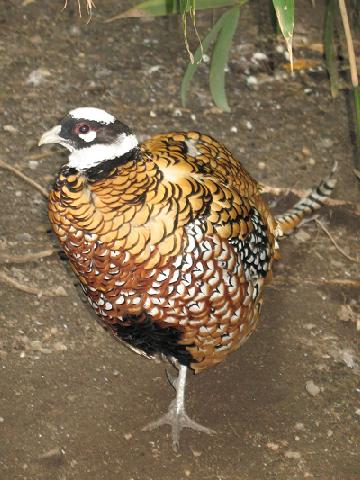
Wikimedia Commons
About the Reeves's Pheasant
The Reeves's Pheasant (Syrmaticus reevesii) is a magnificent bird native to evergreen and deciduous forests in central and eastern China, particularly in the provinces of Henan, Shaanxi, and Gansu. This species plays a significant role in its ecosystem by acting as both a seed disperser and a consumer of various insects, contributing to the balance of its habitat. Its preference for lush forest environments means it often inhabits areas that provide abundant cover and abundant food resources.
Recognized for its remarkable length, the male Reeves's Pheasant sports tail feathers that can measure up to 2.4 meters, making it one of the longest in the avian world. These feathers are a critical identification feature and serve as a display mechanism during courtship rituals. The pheasant's ecological role extends to its interactions with other forest-dwelling species. By feeding on seeds and insects, it aids in controlling insect populations and facilitating plant reproduction through seed dispersion.
As a ground-dwelling bird, the Reeves's Pheasant prefers dense underbrush and mixed woodlands where it can forage for food while remaining concealed from predators. Seasonal behaviors include breeding in late spring when males display their extravagant plumage to attract females. Outside the breeding season, these pheasants are more reclusive, blending into the forest understory and moving in small flocks or pairs. This behavior helps them maintain their presence in the landscape while avoiding threats from natural predators and human encroachment.
The Reeves's Pheasant belongs to the family Phasianidae, within the order Galliformes. These birds typically live 5-8 years, up to 10 years in captivity.
How to Identify a Reeves's Pheasant
The Reeves's Pheasant is easily identifiable by the male's spectacularly long tail feathers, predominantly white with black barring. The body plumage of the male is a striking combination of golden-yellow, white, and black, creating a striking contrast. Males also possess a distinctively bright red face with a bare patch around the eye, adding to their striking appearance. Females, on the other hand, are more subdued in coloration, displaying mottled brown and tan plumage that offers excellent camouflage within their forested environment.
Juvenile Reeves's Pheasants resemble females but can be distinguished by their developing tail feathers and less defined coloration. In flight, the male's long tail feathers create a distinct silhouette, while their strong, direct flight pattern can help distinguish them from other pheasant species. Perching posture often features a horizontal body alignment, with the long tail trailing behind.
Similar species include other pheasants like the Golden Pheasant, but the Reeves's Pheasant's unique tail length and coloration make it unmistakable. Observers are encouraged to look for the characteristic tail and listen for their calls, which can also aid in accurate identification.
Having trouble telling birds apart? Upload a photo to our bird identification tool for an instant species match.
Reeves's Pheasant Habitat and Range
Preferred Habitat
Reeves's Pheasants are predominantly found in dense forests, including both evergreen and deciduous types. They prefer habitats that provide ample cover and food resources, such as understory plants and forest edges. In central China, they inhabit mountainous regions at elevations ranging from 200 to 2600 meters, which offer a mix of open spaces and dense foliage.
During different seasons, Reeves's Pheasants may shift habitats slightly within their range to access food or optimal breeding sites. They are generally more common in rural areas where natural forests remain intact, as opposed to urban environments where habitat disruption is prevalent. Despite this preference, they occasionally venture into more open areas for feeding.
These birds thrive in environments that support a rich understory, which provides protection from predators while facilitating their ground-foraging lifestyle. Conservation efforts focus on preserving these habitats to ensure the continued survival of the species.
Geographic Range
The Reeves's Pheasant is native to central and eastern China, with its range primarily concentrated in the provinces of Henan, Shaanxi, and Gansu. This region provides the diverse forested habitats necessary for their survival. While these pheasants do not undertake long migrations, they may exhibit local movements influenced by seasonal changes in food availability and breeding conditions.
As a species endemic to China, the Reeves's Pheasant's distribution does not extend naturally beyond this country, although it has been introduced to other regions for ornamental purposes. In their native range, population density varies, with higher concentrations found in protected areas where human impact is minimized.
Conservation efforts aim to maintain and restore forest habitats within their natural range, which is vital for supporting healthy populations. These efforts are crucial given that the species faces threats from habitat loss and hunting in some regions.
Want to know which birds visit your area? Browse our backyard birds by location guides for region-specific species lists.
What Does the Reeves's Pheasant Eat?
The diet of the Reeves's Pheasant primarily consists of seeds, berries, and insects, making them opportunistic feeders. During the spring and summer months, when insects are abundant, these birds consume a variety of beetles, caterpillars, and other invertebrates, which provide essential protein for breeding and raising young.
In the autumn and winter, their diet shifts more towards plant matter, including seeds and berries from native shrubs and trees. They forage by scratching at the leaf litter on the forest floor, using their strong legs to uncover hidden food sources. This foraging technique helps them access a range of food items, including roots and tubers when available.
Reeves's Pheasants generally feed during the early morning and late afternoon, taking advantage of the cooler parts of the day. This schedule also reduces their exposure to potential predators while ensuring they meet their dietary needs.
Reeves's Pheasant Behavior and Social Structure
Reeves's Pheasants exhibit a variety of interesting behaviors, particularly during the breeding season. Males are highly territorial and engage in elaborate courtship displays to attract females. These displays include inflating their bright red facial wattles and fanning their spectacular tail feathers while emitting a series of calls to draw attention.
Outside the breeding season, Reeves's Pheasants tend to be more solitary or form small, loose flocks. They are generally ground-dwelling but will take to the trees when threatened or to roost at night. Their strong, direct flight is typically low to the ground, allowing them to quickly navigate through dense forest underbrush.
In terms of social structure, these pheasants maintain a loose hierarchy, with dominant males often occupying the best territories. Their response to predators includes quick flights to nearby cover and alert calls to warn others of danger. Daily activity patterns are largely influenced by the need to forage while avoiding the hottest parts of the day.
Reeves's Pheasant Nesting and Reproduction
Reeves's Pheasants typically nest on the ground, often choosing well-concealed sites within dense vegetation to protect against predators. The nest itself is a simple scrape in the ground, lined with leaves and grasses to provide some insulation and camouflage.
Clutch sizes generally range from 6 to 12 eggs, with the female solely responsible for incubation, which lasts approximately 24 to 26 days. Males do not participate in the incubation process but may help defend the territory from potential threats.
After hatching, chicks are precocial, meaning they are relatively mature and mobile, leaving the nest shortly after to follow the female and begin foraging. The fledging period is typically around three weeks, during which the young grow rapidly and learn vital survival skills. In favorable conditions, Reeves's Pheasants may raise one to two broods per year.
Reeves's Pheasant Sounds and Vocalizations
The primary vocalization of the Reeves's Pheasant is a series of loud, sharp calls that can be heard echoing through the forest. Males emit a distinctive 'chee-whit' sound during courtship displays, often in conjunction with their visual displays.
Alarm calls are shorter and more abrupt, designed to alert other pheasants of potential danger. These calls are similar to short, sharp whistles and are usually repeated in quick succession.
During the dawn chorus, males are particularly vocal, using their calls to establish territory and attract mates. Compared to other birds, the Reeves's Pheasant's calls are less melodious but carry well through dense forest environments, making them a key feature in identifying these birds in the wild.
Interesting Facts About the Reeves's Pheasant
- 1The Reeves's Pheasant's tail can grow up to 2.4 meters long, making it one of the longest in the bird kingdom.
- 2This species was named after John Reeves, a British naturalist who introduced the pheasant to Europe in the 19th century.
- 3Reeves's Pheasants are known for their strong, direct flight, which helps them navigate dense forest canopies.
- 4Despite their striking appearance, females are well-camouflaged, allowing them to blend seamlessly into their forest habitats.
- 5The pheasant's diet includes a variety of insects, seeds, and berries, showcasing its adaptability to seasonal food availability.
- 6Reeves's Pheasants are primarily ground dwellers but will roost in trees to avoid nocturnal predators.
- 7In some cultures, the long tail feathers of the Reeves's Pheasant are considered symbols of good fortune and used in traditional costumes.
Reeves's Pheasant Conservation Status
The Reeves's Pheasant is currently listed as Near Threatened on the IUCN Red List, with populations facing pressures from habitat loss and hunting. Deforestation and land conversion for agriculture have contributed significantly to habitat fragmentation, which poses a substantial threat to the species. Conservation efforts include habitat preservation and legal protection against hunting in some areas. These measures aim to stabilize and increase the population, which has seen declines in recent decades due to human activities. Continued monitoring and the establishment of protected areas are crucial for the survival of the Reeves's Pheasant, as they help ensure that viable habitats remain available for this unique species.


