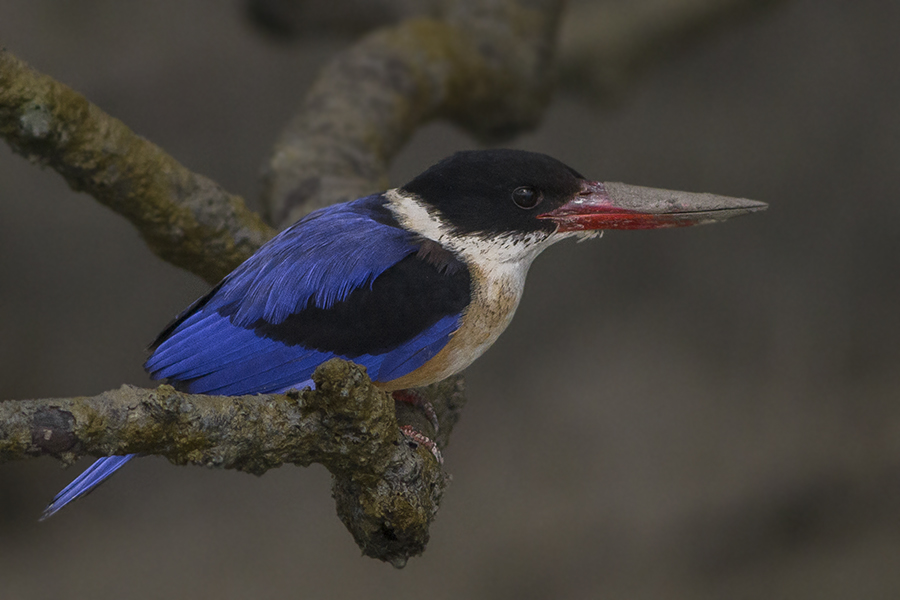
Ruddy Kingfisher
Halcyon coromanda
Order: Coraciiformes / Family: Alcedinidae

Wikimedia Commons
About the Ruddy Kingfisher
The Ruddy Kingfisher, scientifically known as Halcyon coromanda, is a striking bird belonging to the family Alcedinidae. This bird is renowned for its vivid red and orange plumage, a feature that makes it one of the most colorful members of the kingfisher family. It is found primarily in Southeast Asia, with its range extending from the Indian subcontinent to Japan and the Philippines. The Ruddy Kingfisher inhabits dense forests, particularly favoring mangroves and wetland areas. Its presence in these habitats plays a crucial ecological role as a predator of small aquatic and terrestrial prey. The bird's seasonal behaviors are as fascinating as its appearance. During the breeding season, which usually aligns with the wet season in its tropical habitats, the Ruddy Kingfisher engages in elaborate courtship displays. These displays often involve the male showcasing its plumage and engaging in a series of vocalizations to attract a mate. Post-breeding season, some populations exhibit migratory behavior. For instance, birds from Japan migrate to Southeast Asia as winter approaches. This migration is not only a survival strategy but also aids in the dispersal of seeds and small aquatic organisms, thereby contributing to ecological balance in the regions they inhabit. The significance of the Ruddy Kingfisher extends beyond its ecological role. In several cultures within its range, this bird is considered a symbol of beauty and grace, often featured in local folklore and art. Its presence in biodiversity-rich areas also makes it a flagship species for conservation efforts, highlighting the need to preserve its habitat. As forests face threats from deforestation and habitat degradation, the Ruddy Kingfisher serves as a reminder of the delicate balance that needs to be maintained in tropical ecosystems.
The Ruddy Kingfisher belongs to the family Alcedinidae, within the order Coraciiformes. These birds typically live average 10 years, with a maximum recorded of 15 years..
How to Identify a Ruddy Kingfisher
The Ruddy Kingfisher is easily distinguished by its overall reddish-orange plumage. Adults exhibit a vibrant maroon-red color on their heads, wings, and tails, while their backs and underparts display a slightly paler orange hue. Their large, coral-red bills are unmistakable, aiding in their identification even from a distance. In flight, their broad wings and short, slightly forked tail are notable. Juveniles resemble adults but with duller, less vibrant colors, and often possess a more speckled appearance due to immature feathering. Unlike many birds, the Ruddy Kingfisher displays little sexual dimorphism; males and females appear similar, though males might have slightly brighter plumage. The bird's size, typically around 24-25 cm in length, puts it in the medium category for kingfishers. When perched, it often maintains a horizontal posture with its head slightly raised, providing a clue to its identity. While observing them in the field, one might confuse the Ruddy Kingfisher with the Brown-winged Kingfisher (Pelargopsis amauroptera), especially in overlapping habitats. However, the Brown-winged Kingfisher lacks the Ruddy's vivid red coloration, instead displaying browner tones. In flight, the Ruddy Kingfisher's coloration and unique silhouette make it relatively easy to distinguish from other species.
Having trouble telling birds apart? Upload a photo to our bird identification tool for an instant species match.
Ruddy Kingfisher Habitat and Range
Preferred Habitat
The Ruddy Kingfisher predominantly inhabits dense tropical forests, often found in mangroves and areas with abundant water sources such as rivers and estuaries. These birds prefer lowland forests but can also be found at elevations up to 1200 meters in some regions. In areas like the Sundarbans of India and Bangladesh, they thrive in mangrove ecosystems, which provide ample feeding opportunities and nesting sites. Seasonally, they may shift habitats slightly, moving towards more inland forests during the breeding season to take advantage of the increased insect activity that accompanies the rains. While they are primarily forest dwellers, the Ruddy Kingfisher occasionally ventures into rural gardens and plantations, especially where these areas border their preferred forest habitats. Unlike some other kingfisher species, they are rarely found in urban settings, preferring the dense cover and rich biodiversity of undeveloped areas.
Geographic Range
The Ruddy Kingfisher has a broad range across Asia, with distinct breeding and non-breeding territories. During the breeding season, they are found in countries such as Japan, Korea, and the eastern parts of China. Post-breeding, many populations migrate southward to winter in Southeast Asia, including the Philippines, Indonesia, and parts of Malaysia. These migration corridors are critical, as they connect breeding and wintering habitats, allowing the birds to exploit seasonal food resources. Population density tends to be higher in regions with extensive forest cover and minimal human disturbance. Notable hotspots include the mangroves of the Sundarbans and the forests of Borneo, where their numbers are most concentrated. While the species is considered widespread, local population sizes can vary significantly based on habitat quality and availability.
Want to know which birds visit your area? Browse our backyard birds by location guides for region-specific species lists.
What Does the Ruddy Kingfisher Eat?
The Ruddy Kingfisher's diet primarily consists of small invertebrates and vertebrates. Fish and crustaceans form the bulk of their diet, particularly in mangrove and wetland habitats. They are also known to consume insects, small reptiles, and amphibians. Seasonal changes in food availability influence their diet; during the rainy season, the abundance of insects provides an additional food source. The kingfisher's feeding technique is an enthralling display of precision and patience. It often perches quietly, scanning its surroundings before executing a swift dive to capture prey. The bird's powerful bill is adapted for grasping slippery prey, allowing it to consume items up to 10 cm in length. Feeding activity peaks during the early morning and late afternoon, correlating with the times when prey is most active. The Ruddy Kingfisher's diet reflects its adaptability and the rich biodiversity of its habitat, underscoring its role as an important predator in these ecosystems.
Ruddy Kingfisher Behavior and Social Structure
The Ruddy Kingfisher is primarily a solitary bird, maintaining territories that it defends vigorously against intruders. During the breeding season, territorial displays become more pronounced, with males engaging in vocalizations and flight displays to assert dominance. Courtship involves a series of calls and physical displays, with males often presenting food to potential mates. Outside the breeding period, these kingfishers exhibit less territorial aggression, although they continue to maintain solitary habits. They are diurnal, with activity concentrated in the morning and late afternoon. The bird's response to predators is to remain motionless, relying on its camouflage to avoid detection. In the face of direct threats, they may emit alarm calls, retreating to dense cover if necessary. Despite their solitary nature, Ruddy Kingfishers occasionally join mixed-species flocks, particularly during migration periods, benefiting from the collective vigilance against predators.
Ruddy Kingfisher Nesting and Reproduction
The Ruddy Kingfisher nests in cavities, often excavated in riverbanks, termite mounds, or decaying trees. The nesting site preference for moist environments ensures a steady supply of food for the chicks. Each clutch typically contains three to five eggs, with both parents sharing incubation duties, which last approximately 18-21 days. After hatching, the chicks remain in the nest for about 25-30 days before fledging. Parental roles are well-defined; both male and female participate in feeding the young, though the female often takes a more active role in guarding the nest. The pair generally raises one brood per year, although in particularly favorable conditions, a second brood may occur. Nesting success is closely tied to environmental conditions, with nests in undisturbed habitats showing higher success rates.
Ruddy Kingfisher Sounds and Vocalizations
The Ruddy Kingfisher's vocalizations are distinctive, comprising a series of melodious whistles and trills. The primary song, often heard during the breeding season, is a clear, repetitive "kee-kee-kee" that echoes through the forest. These calls serve both to establish territory and attract mates. In addition to their primary song, Ruddy Kingfishers emit sharp, piercing calls when alarmed. The dawn chorus, a symphony of whistles, marks their peak vocal activity, providing a soundscape that is both beautiful and functional in delineating territory. Compared to other bird species, the Ruddy Kingfisher's calls are less varied but carry a unique quality that is both penetrating and melodic.
Interesting Facts About the Ruddy Kingfisher
- 1The Ruddy Kingfisher can migrate over 2,000 kilometers from its breeding grounds in Japan to wintering sites in Southeast Asia.
- 2Despite its vibrant colors, the Ruddy Kingfisher is adept at remaining undetected due to its preference for dense, shadowy habitats.
- 3The Ruddy Kingfisher's call, a repetitive "kee-kee-kee," can carry over long distances, often heard before the bird is seen.
- 4Unlike many birds, the Ruddy Kingfisher excavates its nesting burrow, often choosing soft, termite-riddled wood.
- 5During courtship, male Ruddy Kingfishers present food to females, a behavior critical for pair bonding.
- 6The Ruddy Kingfisher holds cultural significance in Japan, where it is often depicted in traditional art as a symbol of beauty.
Ruddy Kingfisher Conservation Status
Currently listed as Least Concern by the IUCN, the Ruddy Kingfisher's population appears stable. However, habitat loss due to deforestation and wetland drainage poses significant threats. Conservation efforts focus on preserving key habitats, such as mangroves and tropical forests. Protected areas in countries like Indonesia and the Philippines play a crucial role in safeguarding populations. While historical data suggests a relatively stable population, ongoing habitat destruction could lead to future declines. Active measures, including habitat restoration and legal protection, are essential to ensure the long-term survival of this vibrant species.
Other Alcedinidae Species


Birds Similar to the Ruddy Kingfisher
These species are often confused with the Ruddy Kingfisher due to similar appearance or overlapping range.