
Ruddy Tody-Flycatcher
Poecilotriccus russatus
Order: Passeriformes / Family: Tyrannidae
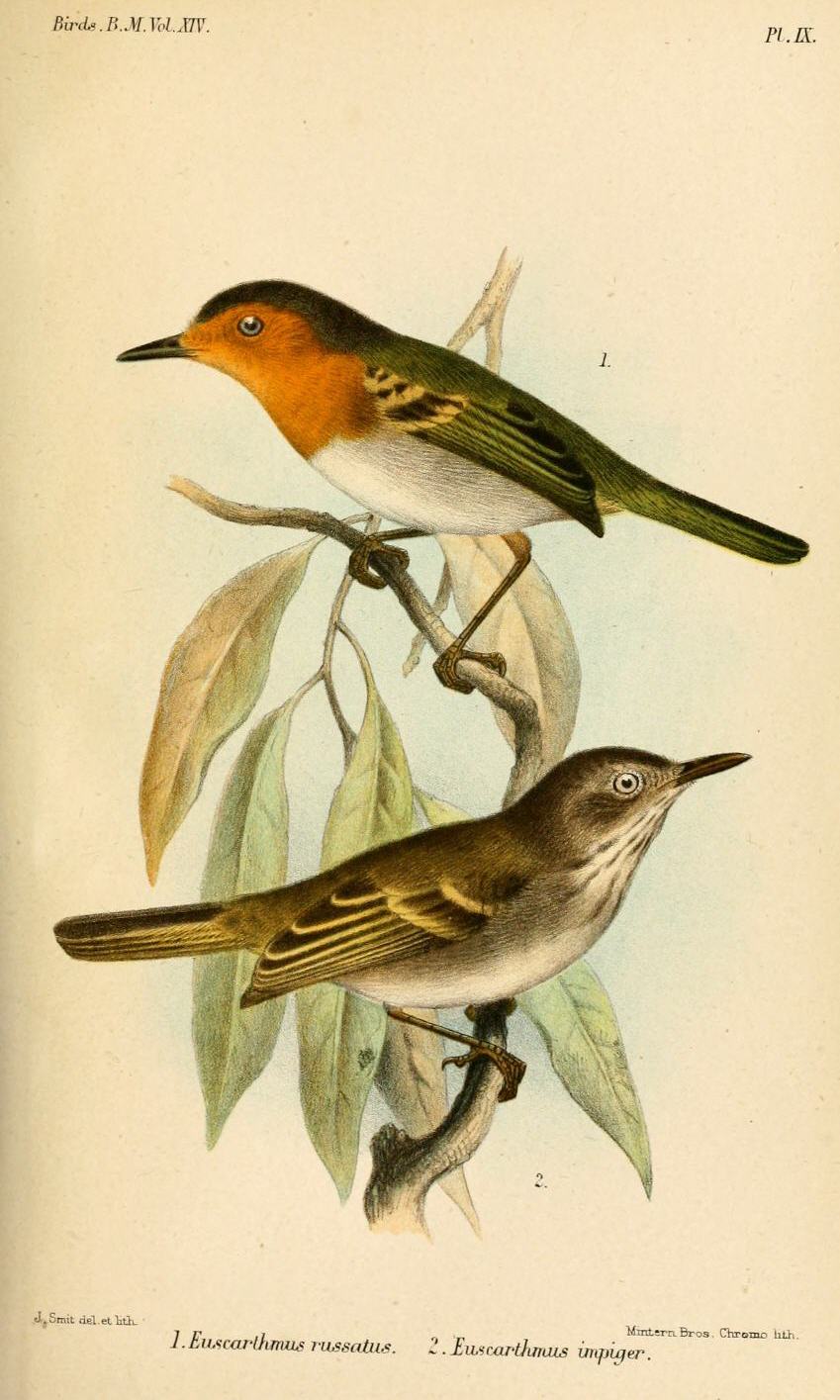
Wikimedia Commons
About the Ruddy Tody-Flycatcher
The Ruddy Tody-Flycatcher (Poecilotriccus russatus) inhabits the tropical forests of South America, particularly in regions like the Amazon Basin and the Atlantic Forest. This bird plays a crucial role in its ecosystem as both a predator of insects and a prey item for larger species. Its presence indicates a healthy, biodiverse environment. The Ruddy Tody-Flycatcher is a member of the Tyrannidae family, which is known for its diverse array of flycatchers. Its vibrant plumage not only adds to the visual tapestry of the forest but also assists in camouflage among the reddish-brown foliage, especially during the rainy season when the forest is lush. The Ruddy Tody-Flycatcher exhibits specific behavioral adaptations to its environment, including a seasonal shift in feeding habits to adjust to variations in insect availability. During the wet season, the abundance of insects allows the bird to exhibit more opportunistic feeding strategies, while in the dry season, it may rely more heavily on specific insect families that remain prevalent. This adaptability in feeding helps maintain ecological balance and supports the bird's role in controlling insect populations. The bird's presence is often noted by its distinctive vocalizations, which vary seasonally and play a role in both mating and territorial defense. These songs serve to establish dominance and attract mates, while also deterring potential competitors from encroaching on their territory. The Ruddy Tody-Flycatcher also participates in mixed-species foraging flocks, which enhances feeding efficiency and offers some protection from predators. This cooperative behavior underscores the interconnectedness of species within the tropical forest ecosystem, highlighting the Ruddy Tody-Flycatcher's ecological significance. The bird's adaptability to different forest types, including secondary growth and fragmented habitats, suggests a resilience that might buffer against some habitat loss, although large-scale deforestation remains a significant threat.
The Ruddy Tody-Flycatcher belongs to the family Tyrannidae, within the order Passeriformes. These birds typically live average 3-5 years with a maximum recorded lifespan of 7 years..
How to Identify a Ruddy Tody-Flycatcher
The Ruddy Tody-Flycatcher is a small bird, measuring approximately 10 centimeters in length. Its most striking feature is its rich ruddy-brown plumage, which covers the back, wings, and tail, providing excellent camouflage in its forest habitat. The underparts are paler, often with a slight buff tone that can vary among individuals. The face is adorned with a subtle yet distinctive eye-ring that adds to its characteristic appearance. Adult males and females are similar in plumage, but females may exhibit slightly duller coloration, making them less conspicuous during nesting. Juveniles resemble adults but often show a more muted color palette with less defined markings, aiding their concealment in dense foliage. In flight, the Ruddy Tody-Flycatcher displays rapid, fluttering wingbeats typical of small flycatchers, with a slightly undulating flight pattern. When perched, it often holds its body upright on slender branches, a posture that aids in spotting insects. This species might be confused with similar small flycatchers, such as the Ochre-bellied Flycatcher, but the Ruddy Tody-Flycatcher can be distinguished by its distinct coloration and smaller size.
Having trouble telling birds apart? Upload a photo to our bird identification tool for an instant species match.
Ruddy Tody-Flycatcher Habitat and Range
Preferred Habitat
The Ruddy Tody-Flycatcher primarily inhabits tropical and subtropical moist lowland forests. It shows a preference for dense understory vegetation, which provides ample foraging opportunities and cover from predators. This bird can be found at elevations ranging from sea level up to 1,000 meters. In areas like the Amazon Basin, it thrives in primary and secondary forests, often venturing into the edges of forest clearings where insect activity is high. Although primarily a forest dweller, the Ruddy Tody-Flycatcher can also be found in degraded forest areas and forest fragments, which indicates some adaptability to human-altered landscapes. However, it is less frequently observed in urban settings, preferring the relative seclusion and resources of natural habitats. During the breeding season, the bird may shift to slightly denser forest areas to find suitable nesting sites.
Geographic Range
The Ruddy Tody-Flycatcher is a resident bird of South America, with its range predominantly encompassing the northern and central parts of the continent. It is primarily found in countries such as Brazil, Venezuela, Colombia, and Ecuador. Within this range, it inhabits vast tracts of the Amazon rainforest and the Atlantic Forest, both of which provide the humid and densely vegetated environments it favors. Unlike many migratory species, the Ruddy Tody-Flycatcher does not undertake long-distance migrations, instead remaining within its established range throughout the year. However, it may exhibit minor altitudinal movements in response to seasonal changes in food availability or habitat conditions. Population densities tend to be highest in regions with extensive forest cover, such as the central Amazon, where the complex ecosystem supports a rich array of insect prey.
Want to know which birds visit your area? Browse our backyard birds by location guides for region-specific species lists.
What Does the Ruddy Tody-Flycatcher Eat?
The diet of the Ruddy Tody-Flycatcher consists predominantly of small insects and other arthropods. It forages actively in the understory, using a sit-and-wait strategy common among flycatchers. From its perch, it launches quick sallies to capture prey mid-air or glean insects from foliage. The bird's diet includes a variety of insect families, such as ants, beetles, and flies, which are abundant in its habitat. During the wet season, when insect populations peak, the Ruddy Tody-Flycatcher takes advantage of the increased availability, often seen feeding more vigorously and for longer periods. In the dry season, it may rely more on specific insect groups that remain active, such as ants and certain beetle larvae. This seasonal dietary flexibility ensures a stable food supply year-round. Observations indicate that the bird typically forages alone or in pairs, although it may join mixed-species flocks to exploit rich feeding grounds.
Ruddy Tody-Flycatcher Behavior and Social Structure
The Ruddy Tody-Flycatcher exhibits a variety of behaviors that reflect its adaptability and role within its environment. It is predominantly a solitary bird, though it forms pairs during the breeding season. Territorial behavior is pronounced, with both males and females defending their chosen area from intruders. Vocalizations play a key role in maintaining territory boundaries, with the bird using a series of sharp, repetitive calls to signal occupancy and ward off rivals. During courtship, males may perform subtle displays, including wing flicking and tail spreading, to attract a mate. Once paired, both partners participate in nest building and care for the young. The Ruddy Tody-Flycatcher is diurnal, with peak activity occurring during the early morning and late afternoon when insect activity is highest. It exhibits a particular alertness to predators, often giving alarm calls and seeking cover in dense vegetation when threatened. The bird's social interactions extend to foraging, where it may join mixed-species flocks, increasing feeding efficiency and providing additional vigilance against predators.
Ruddy Tody-Flycatcher Nesting and Reproduction
Nesting for the Ruddy Tody-Flycatcher typically occurs during the wet season, when food is abundant. The nest is an intricate structure often built in the fork of a low tree or shrub. Constructed from fine plant fibers, leaves, and moss, it provides camouflage and protection from the elements. Clutch size generally ranges from 2 to 3 eggs, which are incubated primarily by the female, although the male may assist. The incubation period lasts approximately 15 days, with both parents involved in feeding the chicks once they hatch. Fledging occurs about 18 days after hatching, with the young remaining dependent on parental care for several weeks thereafter. The Ruddy Tody-Flycatcher typically raises one brood per year, although in areas with prolonged wet seasons, a second brood may occasionally be attempted. Nest predation by snakes and small mammals poses a considerable threat, influencing nesting site selection and parental behavior.
Ruddy Tody-Flycatcher Sounds and Vocalizations
The Ruddy Tody-Flycatcher's primary song is a series of high-pitched, rapid notes delivered in a rhythmic pattern. This song serves as both a mating call and a territorial marker. The quality of the notes is sharp and clear, often repeated in quick succession, making it easily distinguishable from the calls of other forest birds. Call notes are shorter and more abrupt, used in various social interactions and during foraging. Alarm calls are distinct, characterized by a rapid series of sharp, loud notes that alert both conspecifics and other species to potential danger. The dawn chorus of the Ruddy Tody-Flycatcher is particularly vibrant, with males singing vigorously to establish territorial presence as the forest awakens.
Interesting Facts About the Ruddy Tody-Flycatcher
- 1The Ruddy Tody-Flycatcher measures just 10 centimeters, making it one of the smaller members of the Tyrannidae family.
- 2Despite its small size, the Ruddy Tody-Flycatcher is a proficient insect hunter, capable of catching prey mid-flight with remarkable agility.
- 3This species' distinctive ruddy coloration helps it blend into the reddish-brown leaf litter and understory of its forest habitat.
- 4The Ruddy Tody-Flycatcher is often found in mixed-species flocks, benefiting from the increased vigilance and foraging opportunities.
- 5Its vocalizations are a crucial part of its behavioral repertoire, used for mate attraction, territory defense, and predator alerts.
- 6The species' adaptability to secondary forests suggests resilience to some degree of habitat alteration, although large-scale deforestation remains a risk.
- 7It is primarily a resident species, but may exhibit minor altitudinal movements in response to seasonal changes in its environment.
Ruddy Tody-Flycatcher Conservation Status
The IUCN currently lists the Ruddy Tody-Flycatcher as a species of Least Concern, reflecting a stable population trend. However, habitat loss due to deforestation poses a significant threat to its long-term viability. The expansion of agriculture and logging in the Amazon and Atlantic Forest regions is particularly concerning. Conservation efforts focus on habitat preservation and sustainable land-use practices. Protected areas within the bird's range, such as national parks and reserves, provide critical refuge. Historical population trends suggest a gradual decline in some regions, correlating with increased habitat fragmentation. Continued monitoring and conservation initiatives are essential to ensure the species' future.


