
Rufous-backed Bunting
Emberiza jankowskii
Order: Passeriformes / Family: Emberizidae
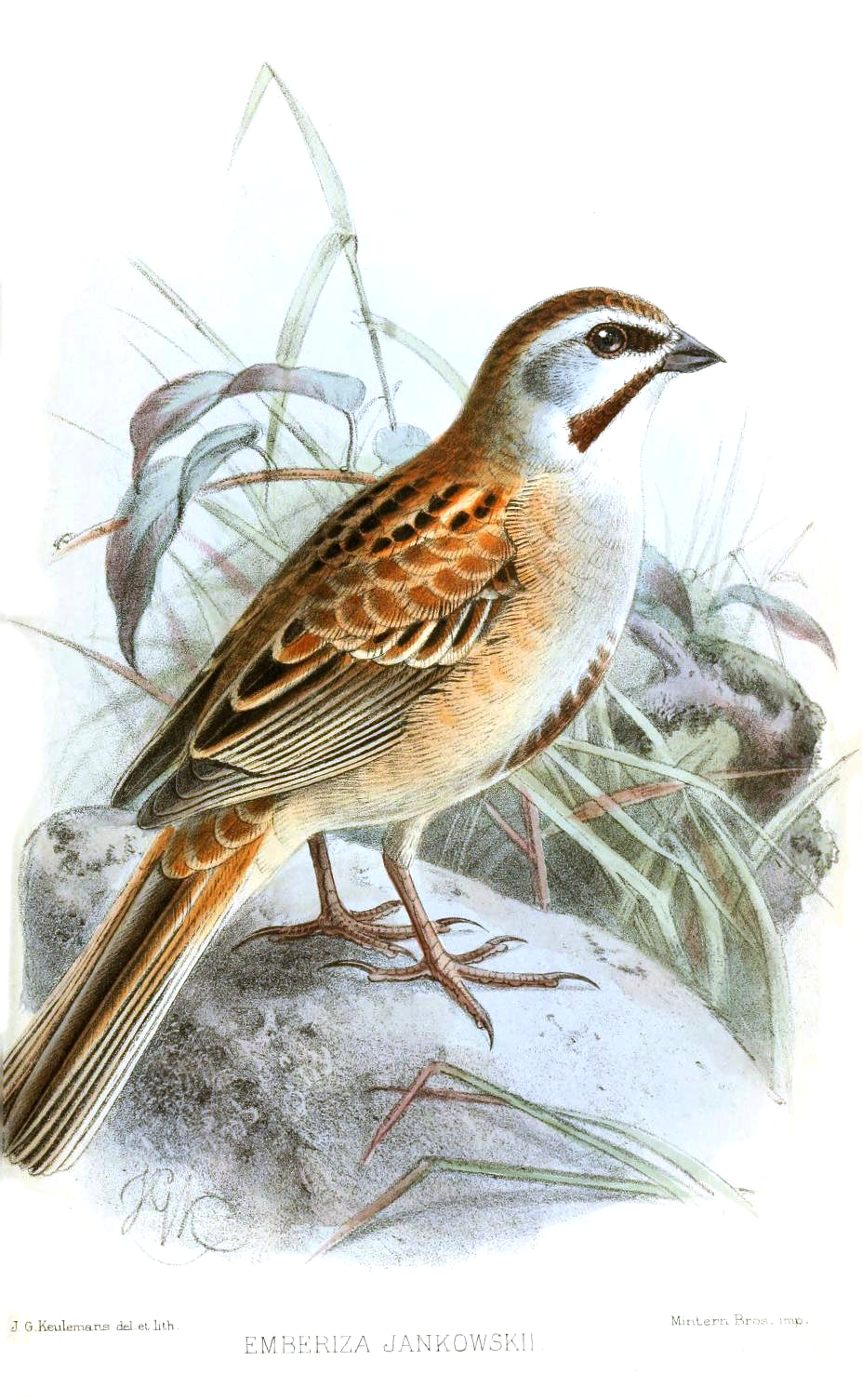
Wikimedia Commons
About the Rufous-backed Bunting
The Rufous-backed Bunting, scientifically known as Emberiza jankowskii, is a captivating bird species that holds a particular allure for bird enthusiasts and ornithologists alike. This species belongs to the Emberizidae family and is renowned for its distinctive rufous back, a feature that not only sets it apart visually but also contributes to its common name. These buntings are native to parts of northeastern Asia, primarily found across regions of China, North Korea, and parts of southeastern Russia. Their habitats are typically grasslands and open fields, where they play a crucial role in the ecological balance by participating in insect control and seed dispersal. Seasonal behaviors of the Rufous-backed Bunting are noteworthy. During the breeding season, which spans from late spring to early summer, these buntings are highly territorial. Males can be observed vigorously defending their chosen patches of ground, often engaging in elaborate displays and songs to both attract mates and ward off rivals. In winter, they migrate to more temperate areas, where resources are more abundant. This seasonal shift not only demonstrates their adaptability but also highlights their significance as indicators of habitat health. The ecological role of the Rufous-backed Bunting extends beyond mere insect control. They are an integral part of the food web, as prey for larger avian predators and mammals. As seed dispersers, they aid in maintaining plant diversity across their habitats. Their presence in an area often signals a healthy ecosystem, as they require a balance of food resources, suitable nesting sites, and safe migratory corridors. Conservationists have shown increasing interest in the Rufous-backed Bunting due to habitat loss from agricultural expansion and development. Protecting their natural habitats and ensuring the integrity of migratory paths are crucial steps for sustaining their populations. The Rufous-backed Bunting is not just a bird to observe; it is a species that embodies the interconnectedness of nature, serving as a reminder of the delicate balance required to maintain healthy ecosystems.
The Rufous-backed Bunting belongs to the family Emberizidae, within the order Passeriformes. These birds typically live typically 3-5 years, with some living up to 7 years..
How to Identify a Rufous-backed Bunting
Identifying the Rufous-backed Bunting involves observing several distinctive field marks. Adult buntings exhibit a vibrant rufous coloration along the back, which contrasts with their lighter underparts. This coloration is more pronounced in males, who also display a grayish head with subtle streaks. Females, while similar in size, have a more subdued color palette, lacking the striking rufous intensity of males. Juveniles resemble females but with even duller tones, aiding in their camouflage from predators. In flight, the Rufous-backed Bunting shows a distinctive silhouette with broad wings and a somewhat rounded tail. Their flight pattern is typically undulating, a characteristic common among buntings. When perched, they maintain an upright posture, often flicking their tails, which can aid in identification. Confusion with similar species is possible, especially with other buntings that share overlapping ranges. However, the unique combination of rufous back and grayish head is a reliable distinguishing feature. Observers should also note the bird's song and call patterns, which are distinct and can further aid in identification. Despite potential confusion with related species, the Rufous-backed Bunting's field marks are distinct enough to allow experienced birders to make confident identifications.
Having trouble telling birds apart? Upload a photo to our bird identification tool for an instant species match.
Rufous-backed Bunting Habitat and Range
Preferred Habitat
The Rufous-backed Bunting primarily inhabits temperate grasslands and open fields. These habitats provide the necessary resources for feeding, nesting, and shelter. They are often found at elevations ranging from lowlands to modest altitudes, typically no higher than 1,500 meters above sea level. Seasonal habitat shifts are evident, as these buntings move to areas with milder climates during the winter months. While they are predominantly rural birds, they occasionally venture into the outskirts of urban areas, especially when natural habitats are scarce. In such instances, they may be spotted in parks or large gardens that mimic their preferred environments. The presence of tall grasses and scattered shrubs is crucial for their nesting and foraging activities. The Rufous-backed Bunting's reliance on specific habitat types emphasizes the importance of preserving grassland ecosystems and managing agricultural practices to ensure sustainable populations.
Geographic Range
The breeding range of the Rufous-backed Bunting extends across northeastern China, southeastern Russia, and parts of North Korea. During the breeding season, these regions serve as crucial habitats for nesting and raising young. As winter approaches, the buns migrate southward to areas with more temperate climates. This migration leads them to southern China and occasionally to parts of Japan. Migration corridors are primarily located along river valleys and coastal plains, where food resources are more readily available. Population density hotspots include the grasslands of Inner Mongolia and the agricultural regions of Liaoning Province in China. These areas provide the ideal mix of food and nesting sites. Despite their relatively limited range, Rufous-backed Buntings are adept migrants, capable of traversing significant distances to reach favorable wintering grounds.
Want to know which birds visit your area? Browse our backyard birds by location guides for region-specific species lists.
What Does the Rufous-backed Bunting Eat?
The Rufous-backed Bunting's diet consists primarily of seeds and insects, making it an omnivorous species. During the spring and summer months, when insects are plentiful, their diet shifts to include a higher proportion of caterpillars, beetles, and other small arthropods. This dietary flexibility allows them to take advantage of the seasonal abundance of protein-rich food necessary for breeding and raising young. In the autumn and winter, their diet reverts to a focus on seeds, which they often forage from the ground or low-lying vegetation. They are adept at husking seeds with their strong, conical bills, a trait typical of buntings. Foraging techniques include ground feeding and occasional low flights to capture insects in mid-air. Feeding schedules are often dictated by the availability of food and the need to avoid predators, leading to increased activity during the early morning and late afternoon.
Rufous-backed Bunting Behavior and Social Structure
Rufous-backed Buntings exhibit fascinating social structures and behavioral patterns. During the breeding season, males establish and defend territories through song and display, often engaging in aerial chases with rivals. Territorial boundaries are marked by prominent perches from which they sing to deter intruders and attract mates. Courtship displays involve a series of flights and vocalizations designed to showcase vitality and fitness. Outside the breeding season, these buntings become more social, forming loose flocks that travel together in search of food. This flocking behavior provides safety in numbers and increases foraging efficiency. In response to predators, Rufous-backed Buntings rely on alarm calls and quick flights to dense cover. Daily activity patterns are typically bimodal, with peaks in activity during the cooler hours of morning and late afternoon when foraging is most productive.
Rufous-backed Bunting Nesting and Reproduction
The nesting habits of the Rufous-backed Bunting reflect their adaptability and resourcefulness. Nests are typically constructed on the ground, hidden within tall grasses or under shrubs to provide concealment from predators. The nest structure is a simple cup made from grasses, leaves, and occasionally animal hair, providing both insulation and camouflage. Rufous-backed Buntings usually lay a clutch of 3 to 5 eggs, which are incubated primarily by the female for about 12 to 14 days. During this period, the male plays a supportive role, providing food for the female and defending the territory from intruders. Once hatched, the chicks are altricial, requiring significant parental care and feeding. Fledging occurs approximately 10 to 12 days after hatching, though the young remain dependent on their parents for several weeks. Typically, this species raises one to two broods per year, depending on environmental conditions.
Rufous-backed Bunting Sounds and Vocalizations
The Rufous-backed Bunting's song is a series of clear, melodious notes delivered in a rhythmic pattern. The pitch is generally high, with a musical quality that resonates across open fields. These songs serve to establish territory and attract mates, particularly during the breeding season. Call notes are short and sharp, often used to maintain contact between individuals or alert others to potential threats. Alarm calls are distinct, characterized by a rapid twittering that warns nearby buntings of predators. During the dawn chorus, Rufous-backed Buntings contribute their voices to the symphony of avian songs, marking the start of a new day in their grassland habitats.
Interesting Facts About the Rufous-backed Bunting
- 1The Rufous-backed Bunting can cover over 1,000 kilometers during its migratory journey between breeding and wintering grounds.
- 2Despite their bright coloration, Rufous-backed Buntings are adept at camouflage, blending seamlessly into the grasses where they nest.
- 3Males of the species produce over 100 different song variations to attract mates and defend territory.
- 4Studies have shown that Rufous-backed Buntings can remember the locations of food caches for up to several weeks.
- 5The Rufous-backed Bunting contributes significantly to seed dispersal, influencing plant diversity in their habitats.
Rufous-backed Bunting Conservation Status
The Rufous-backed Bunting currently holds a conservation status of Near Threatened according to the IUCN Red List. This classification reflects a decreasing population trend, primarily due to habitat loss and fragmentation. Agricultural expansion and urban development continue to encroach on their natural grassland habitats, reducing available resources and nesting sites. Conservation efforts focus on habitat preservation and restoration, aiming to protect the grasslands that are vital to their survival. Initiatives include establishing protected areas and promoting sustainable agricultural practices. Historical population changes indicate a decline over recent decades, emphasizing the urgent need for continued conservation attention to ensure the species' long-term viability.


