
Rufous-headed Tanager
Hemithraupis ruficapilla
Order: Passeriformes / Family: Thraupidae
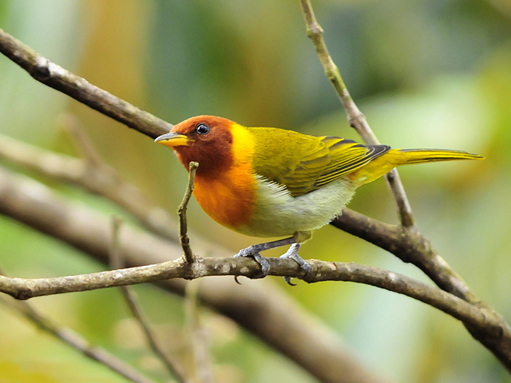
Wikimedia Commons
About the Rufous-headed Tanager
The Rufous-headed Tanager (Hemithraupis ruficapilla) inhabits the Atlantic Forest regions of southeastern Brazil, primarily in the states of São Paulo, Rio de Janeiro, and Minas Gerais. This small songbird is a member of the Thraupidae family and is notable for its vivid coloration and active foraging behavior. Rufous-headed Tanagers play a vital ecological role as seed dispersers and insect predators, contributing to the health and regeneration of their forest ecosystems. In these richly biodiverse regions, they share their habitat with a variety of other tanager species and tropical birds, creating a vibrant tapestry of avian life. During the breeding season, these birds establish territories in dense, humid forests where they raise their young. Their presence in the ecosystem indicates the health of their forest habitats, as they rely on a complex array of plant species for food and shelter. Seasonal behaviors of the Rufous-headed Tanager include increased vocal activity during the wet season, which coincides with the breeding period. This period of activity aligns with the abundance of food resources that support their energetic lifestyle. In terms of ecological significance, the Rufous-headed Tanager acts as both a predator and prey within its environment. It controls insect populations and aids in pollination and seed dispersal, while simultaneously serving as a food source for larger predators. Their interactions with other species highlight the interconnectedness of the Atlantic Forest ecosystem. As a result, their conservation status serves as a barometer for the environmental health of their region, emphasizing the importance of preserving their natural habitats against deforestation and other anthropogenic threats.
The Rufous-headed Tanager belongs to the family Thraupidae, within the order Passeriformes. These birds typically live average 6-8 years, with some individuals living longer in captivity..
How to Identify a Rufous-headed Tanager
The adult Rufous-headed Tanager is easily identified by its bright rufous-red head, which contrasts sharply with its olive-green upperparts and yellow underparts. This distinctive coloration makes it one of the more visually striking members of the Thraupidae family. Males and females share similar plumage, but females tend to have slightly duller head coloration. Juvenile birds are generally paler, with more muted head and body colors, lacking the full vibrancy of adults. In flight, the Rufous-headed Tanager exhibits a compact silhouette with quick, agile movements. When perching, it often adopts a slightly upright posture, which, combined with its coloration, aids in its identification. Confusion with similar species such as the Black-goggled Tanager can occur due to overlapping ranges, but the latter lacks the bright rufous head, helping in differentiation. The Rufous-headed Tanager’s unique coloration and behavior in the canopy level further aid birders in distinguishing it from other sympatric species.
Having trouble telling birds apart? Upload a photo to our bird identification tool for an instant species match.
Rufous-headed Tanager Habitat and Range
Preferred Habitat
Rufous-headed Tanagers predominantly inhabit the Atlantic Forest, favoring dense, humid forests with abundant vegetation. These birds thrive in lowland and montane forests, typically found at elevations ranging from 500 to 1,500 meters. They prefer mature forests with a high diversity of tree and plant species, which provide ample food and nesting sites. Seasonal habitat shifts are minimal, as they tend to remain within forested areas year-round. While not commonly found in urban environments, they may occasionally venture into forest edges or secondary growth areas, particularly where human activity has fragmented their habitat. However, their reliance on primary forest habitats underscores the importance of conserving these environments to ensure their continued survival.
Geographic Range
The Rufous-headed Tanager's range is largely confined to southeastern Brazil, with sightings primarily in the Atlantic Forest biome. This includes the states of São Paulo, Rio de Janeiro, Minas Gerais, and parts of Espírito Santo. Within this range, they are non-migratory, remaining in their established territories throughout the year. Population densities are highest in regions where forest cover remains intact, as these areas support the diverse plant and insect communities that the tanagers rely on. The lack of significant migration corridors indicates their strong dependence on localized habitats, making them particularly vulnerable to habitat destruction.
Want to know which birds visit your area? Browse our backyard birds by location guides for region-specific species lists.
What Does the Rufous-headed Tanager Eat?
The diet of the Rufous-headed Tanager consists primarily of fruits and insects, reflecting their role as both frugivores and insectivores. They consume a wide variety of fruits, with a preference for those produced by native forest trees and shrubs. Insects and other arthropods also make up a significant portion of their diet, providing essential protein and nutrients. Foraging often occurs in the mid to upper canopy, where they actively search for food by gleaning leaves and branches. Seasonal changes in food availability lead to slight dietary shifts, with a greater emphasis on insect consumption during the breeding season when energy demands are higher. The Rufous-headed Tanager's foraging behavior contributes to seed dispersal, aiding in the propagation of many forest plant species.
Rufous-headed Tanager Behavior and Social Structure
Rufous-headed Tanagers exhibit social behaviors typical of many tanager species, often seen foraging in small mixed-species flocks. These flocks provide safety in numbers and increase foraging efficiency, as each member alerts others to food sources and potential threats. Territorial during the breeding season, males engage in displays to defend their chosen areas from rivals. Courtship involves a combination of vocalizations and displays, with males showcasing their vibrant plumage. Their daily activity patterns peak during the early morning and late afternoon, coinciding with the highest availability of food resources. In response to predators, these tanagers rely on agility and alertness, often retreating to dense foliage for protection. The social structure of these birds changes with the seasons, reflecting the varying demands of breeding, foraging, and survival.
Rufous-headed Tanager Nesting and Reproduction
The Rufous-headed Tanager builds cup-shaped nests using materials such as twigs, leaves, and moss. These nests are typically constructed in the fork of a tree branch, positioned several meters above the ground to protect against predators. The female lays a clutch of two to three eggs, which she incubates for approximately 12 to 14 days. Both parents participate in feeding the nestlings, which fledge after about two to three weeks. The fledging period is critical, as young birds learn essential survival skills. Rufous-headed Tanagers generally raise one brood per year, although conditions such as food availability can influence reproductive success. Their nesting habits reflect a balanced approach to parental investment and offspring survival.
Rufous-headed Tanager Sounds and Vocalizations
The Rufous-headed Tanager's song is a series of rapid, melodious phrases, delivered at a moderate pitch. These vocalizations serve as both a territorial marker and a courtship tool. Call notes are sharp and distinctive, allowing individuals to communicate effectively within the dense forest environment. Alarm calls are harsher, often used to alert others of potential threats. During the dawn chorus, their songs blend with those of other forest birds, creating a rich auditory tapestry that signals the start of a new day in the forest. The song of the Rufous-headed Tanager, while distinctive, is not overly complex, yet it plays a crucial role in their social interactions.
Interesting Facts About the Rufous-headed Tanager
- 1The Rufous-headed Tanager is known to join mixed-species flocks, enhancing its foraging success and predator awareness.
- 2Despite their vibrant colors, Rufous-headed Tanagers can be surprisingly difficult to spot among the dense foliage of the Atlantic Forest.
- 3Their diet includes a wide range of fruits and insects, showcasing their adaptability to seasonal food availability.
- 4Rufous-headed Tanagers contribute to forest regeneration by dispersing seeds as they consume various fruits.
- 5This species' reliance on the Atlantic Forest makes it a key indicator of the health of this critical biome.
- 6Male Rufous-headed Tanagers use their bright plumage and song to establish territories and attract mates during the breeding season.
- 7The Rufous-headed Tanager's song is an essential part of the morning chorus, contributing to the acoustic landscape of their habitat.
Rufous-headed Tanager Conservation Status
The Rufous-headed Tanager is currently listed as Least Concern by the IUCN, with stable population trends. However, ongoing habitat loss due to deforestation and agricultural expansion poses a significant threat to their long-term survival. Conservation efforts focus on preserving the Atlantic Forest, a biodiversity hotspot critical for the tanager and numerous other species. Historical population changes reflect the impact of human activity on their habitats, highlighting the importance of sustainable land-use practices. Initiatives to restore and protect forest areas are crucial for maintaining the ecological balance and ensuring the survival of the Rufous-headed Tanager.


