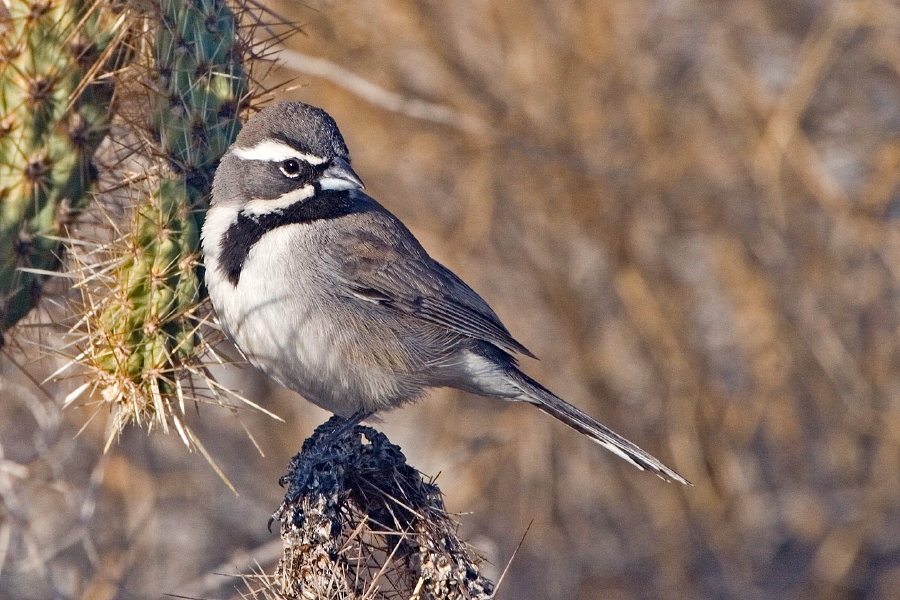
Sagebrush Sparrow
Artemisiospiza nevadensis
Order: Passeriformes / Family: Passerellidae

Wikimedia Commons
About the Sagebrush Sparrow
The Sagebrush Sparrow, scientifically known as Artemisiospiza nevadensis, is an emblematic species of the western United States' sagebrush country. This small, unassuming bird plays a significant ecological role in the arid and semi-arid environments it inhabits. Known for its preference for sagebrush-dominated landscapes, the Sagebrush Sparrow is primarily found in regions such as the Great Basin and the sagebrush steppes of Nevada, Utah, and Idaho. These regions offer the open, shrubby terrain that the sparrow requires for both feeding and breeding. During the breeding season, which spans from late spring to early summer, Sagebrush Sparrows exhibit a strong territorial behavior, with males singing conspicuously from elevated perches within their territory.
The Sagebrush Sparrow's ecological role is multifaceted. As a primary consumer, it feeds on a variety of insects and seeds, thereby influencing the population dynamics of its prey and contributing to the seed dispersal of native plants. Their presence indicates a healthy sagebrush ecosystem, which is vital for numerous other species including pronghorns and sage-grouse. The sparrow's population health can reflect broader environmental conditions, making it a useful species for ecological monitoring.
Seasonally, the Sagebrush Sparrow adapts its behavior to the challenging climates of its habitat. In winter, these sparrows migrate southward to milder climates in the southwestern United States and northern Mexico, where they continue to inhabit desert shrublands. During these colder months, the sparrow's diet shifts more heavily towards seeds, reflecting the seasonal availability of its food sources. Throughout their range, Sagebrush Sparrows maintain a relatively low profile, often remaining hidden within shrubbery and only revealing themselves through their distinctive song.
The Sagebrush Sparrow belongs to the family Passerellidae, within the order Passeriformes. These birds typically live average lifespan is around 5 years, with a maximum recorded at 9 years..
How to Identify a Sagebrush Sparrow
The Sagebrush Sparrow can be identified by its subtle yet distinct plumage. Adults typically exhibit a gray head with a contrasting white eye-ring and a pale supercilium. The back is brown, streaked with darker markings, while the underparts are mostly white with a hint of buff on the sides. The throat is white, bordered by a distinct dark malar stripe that adds to its characteristic appearance.
Juveniles resemble adults but tend to have more subdued coloration, lacking the well-defined markings seen in mature birds. There is little sexual dimorphism in this species, making male and female Sagebrush Sparrows similar in appearance. This can sometimes lead to confusion with other sympatric species such as the Brewer’s Sparrow and Vesper Sparrow. However, the Sagebrush Sparrow’s distinctive facial pattern and lack of wing bars help in making a positive identification.
In flight, the Sagebrush Sparrow presents a compact silhouette with relatively short, rounded wings and a slightly notched tail. When perched, it often adopts an upright posture, making use of elevated perches such as the tops of sagebrush or fence posts to survey its territory and broadcast its song.
Having trouble telling birds apart? Upload a photo to our bird identification tool for an instant species match.
Sagebrush Sparrow Habitat and Range
Preferred Habitat
The Sagebrush Sparrow primarily inhabits sagebrush-dominated landscapes, a defining feature of its range. These habitats, characterized by open, shrubby terrain, are found at elevations ranging from 1,200 to 2,000 meters above sea level. The bird's affinity for sagebrush is so pronounced that it rarely ventures into areas lacking this vegetation. During the breeding season, it selects sites with dense stands of sagebrush interspersed with open ground, which provides both cover and foraging opportunities.
In winter, the Sagebrush Sparrow's habitat preferences shift slightly as it migrates to lower elevations in the southwestern U.S. and northern Mexico. Here, it occupies desert shrublands with similar structural features to its breeding grounds. The bird generally avoids urban areas, maintaining a preference for rural settings where its specific habitat requirements are met.
Throughout the year, the Sagebrush Sparrow remains a quintessential species of the open western landscapes, relying on the sparse vegetation to provide the cover and food resources necessary for survival.
Geographic Range
The Sagebrush Sparrow's range is centered in the western United States, with its breeding territory primarily located in the Great Basin region. This includes parts of Nevada, Utah, Idaho, and eastern Oregon, where sagebrush habitats abound. The bird's breeding range extends northward into southeastern Oregon and southwestern Idaho, reflecting its reliance on sagebrush ecosystems.
During migration, the Sagebrush Sparrow travels through a corridor that includes portions of western Colorado, Arizona, and New Mexico. In winter, it can be found in the desert regions of southern Arizona, southern California, and northern Mexico. These wintering grounds provide milder climate conditions and sufficient food resources to sustain the sparrows until they return north in the spring.
Population density hotspots tend to occur in areas with extensive, undisturbed sagebrush stands, as these environments support higher numbers of breeding pairs. Conservation efforts in these areas focus on preserving and restoring sagebrush habitats to ensure the sparrow's long-term survival.
Want to know which birds visit your area? Browse our backyard birds by location guides for region-specific species lists.
What Does the Sagebrush Sparrow Eat?
The Sagebrush Sparrow's diet consists primarily of insects and seeds, with variation depending on the season. During the breeding season in spring and summer, the sparrow predominantly feeds on insects such as beetles, caterpillars, and grasshoppers. These provide the necessary protein for raising young and meeting the increased energy demands of the breeding period.
In the fall and winter months, as insect availability declines, the sparrow's diet shifts towards seeds. It forages on the ground, picking seeds from a variety of grasses and forbs, including sagebrush seeds. The sparrow employs a methodical foraging technique, hopping through vegetation and using its bill to flick through leaf litter and surface soil for hidden food items.
This dietary flexibility allows the Sagebrush Sparrow to thrive in its arid environment, where food resources can be sparse and highly seasonal. By adjusting its feeding habits to the availability of prey, the sparrow maintains its energy balance throughout the year.
Sagebrush Sparrow Behavior and Social Structure
The Sagebrush Sparrow exhibits a range of behaviors adapted to its open, arid environment. Socially, it is generally solitary or found in pairs during the breeding season. Males establish territories through vocal displays, perching prominently to deliver a series of clear, melodious songs that serve both to attract females and deter rival males.
Territoriality is a prominent feature of the Sagebrush Sparrow's behavior. Males aggressively defend their chosen territory, engaging in aerial chases and physical confrontations if necessary. Courtship involves males performing displays that include singing and fluttering flights to showcase their fitness to potential mates.
Outside the breeding season, the Sagebrush Sparrow becomes more gregarious, often forming loose flocks with conspecifics and other sparrow species. These flocks help with predator vigilance and increase foraging efficiency. The sparrow's response to predators involves a combination of cryptic behavior, relying on its drab plumage to blend into the sagebrush, and alarm calls to alert nearby birds.
Daily activity patterns of the Sagebrush Sparrow typically involve periods of active foraging during the cooler hours of the morning and late afternoon, with rest or less intensive activity during the heat of midday.
Sagebrush Sparrow Nesting and Reproduction
Sagebrush Sparrows construct well-hidden nests within the dense foliage of sagebrush or other shrubs. The nest, a cup-shaped structure, is typically made from coarse grasses, twigs, and bark strips, and lined with finer materials such as feathers and animal hair.
Nesting sites are selected for their concealment properties, providing protection from both predators and the elements. The female primarily undertakes nest construction, often choosing a location within a low shrub, no more than a meter above ground level.
Clutch size generally ranges from three to four eggs, which are pale blue or greenish-blue with speckling. The female incubates the eggs for about 10 to 12 days, during which the male provides food and protection. After hatching, both parents feed the nestlings, which fledge after approximately 10 days. The pair may raise one to two broods per year, depending on environmental conditions such as food availability.
Sagebrush Sparrow Sounds and Vocalizations
The primary song of the Sagebrush Sparrow is a pleasant, melodic series of notes that carries well across its open habitat. The song typically consists of several clear, sweet whistles followed by a series of trills. It serves to establish territory and attract a mate during the breeding season.
Call notes are softer, including a high-pitched tseet or a short chip sound, often used for communication between mates or as an alarm signal. When alarmed, the sparrow may issue a more rapid, harsher chatter to alert others of potential danger.
The Sagebrush Sparrow's dawn chorus is a notable behavior, with males singing vigorously at first light, taking advantage of the quiet morning to maximize the reach of their song across the landscape.
Interesting Facts About the Sagebrush Sparrow
- 1The Sagebrush Sparrow was once grouped with the Bell's Sparrow as a single species until they were split in 2013 due to genetic and vocal differences.
- 2Despite its name, the Sagebrush Sparrow is not exclusive to sagebrush; it also uses other shrublands during its winter migration.
- 3Sagebrush Sparrows are primarily ground foragers and rely on their cryptic plumage for protection while feeding.
- 4The bird’s song is often described as one of the sweetest among North American sparrows, making it a favorite among birdwatchers.
- 5Sagebrush Sparrows have a strong homing instinct; individuals often return to the same breeding territories each year.
- 6The sparrow's diet shifts significantly from insects in the summer to seeds in the winter, reflecting seasonal availability.
- 7Sagebrush Sparrows are known to be relatively sedentary compared to other sparrows, with less extensive migratory movements.
Sagebrush Sparrow Conservation Status
The Sagebrush Sparrow is currently listed as Least Concern by the IUCN, with stable population trends observed in much of its range. However, the primary threats to its habitat include agricultural development, invasive plant species, and habitat fragmentation, all of which can degrade the quality of the sagebrush ecosystems it relies on. Conservation efforts focus on sagebrush habitat preservation and restoration, with initiatives aimed at controlling invasive species and managing land use to maintain the integrity of these ecosystems. Historically, the species has faced challenges related to land conversion, but recent conservation awareness is helping to mitigate these impacts. The bird's future will depend on ongoing efforts to preserve its habitat, ensuring that the sagebrush landscapes remain viable for both the Sagebrush Sparrow and the myriad other species that depend on them.
Other Passerellidae Species


Birds Similar to the Sagebrush Sparrow
These species are often confused with the Sagebrush Sparrow due to similar appearance or overlapping range.