
Saker Falcon
Falco cherrug
Order: Falconiformes / Family: Falconidae
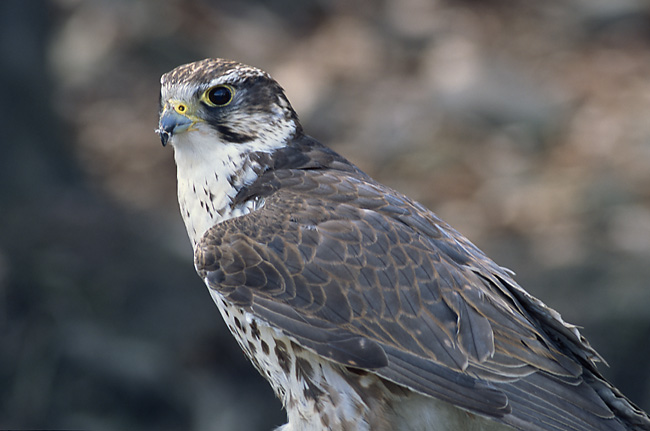
Wikimedia Commons
About the Saker Falcon
The Saker Falcon (Falco cherrug) stands as a formidable raptor within the family Falconidae. This species is renowned for its impressive hunting capabilities and serves as a key predator in its ecosystem. Found predominantly across Central Asia and Eastern Europe, the Saker Falcon thrives in open landscapes such as steppes and semi-deserts. Its ecological role as a top predator helps regulate populations of small mammals and birds, maintaining a balanced ecosystem. During winter, the Saker Falcon may migrate to more temperate regions, showcasing its adaptability to diverse climates. Its large size and strength enable it to capture prey mid-air, demonstrating exceptional aerial agility. Saker Falcons are significant in falconry, revered for their hunting prowess. Historically, they have been symbols of power and nobility, especially in Middle Eastern cultures. The bird's presence across vast territories highlights its ability to adapt to varying environments, from the Hungarian plains to the Mongolian steppes. As a species, the Saker Falcon faces threats from habitat loss, illegal trade, and pesticide exposure, making its conservation a priority. Its ability to hunt over long distances and its role in cultural traditions underscore its importance in both natural and human contexts. Seasonal behaviors of the Saker Falcon include defending territories fiercely during breeding, while displaying remarkable migratory patterns in colder months. These seasonal shifts ensure survival across a range of environments, enhancing its resilience. The Saker Falcon's adaptability and role in ecological balance make it an essential species within its habitat, necessitating ongoing conservation efforts to ensure its continued presence in the wild.
The Saker Falcon belongs to the family Falconidae, within the order Falconiformes. These birds typically live average 10-20 years, with a maximum recorded of 25 years..
How to Identify a Saker Falcon
Adult Saker Falcons exhibit a striking brown upperpart with a distinctive pale head and nape, often showing a contrasting eye stripe. Their underparts are whitish with brown streaks, while juveniles tend to have more uniform brown plumage with less streaking. Males and females are similar in appearance, though females are generally larger, a common trait among raptors. In flight, the Saker Falcon's broad wings and long tail create a robust silhouette, distinguishing it from other falcons like the Peregrine. When perched, the Saker Falcon displays a strong, upright posture, often seen surveying its surroundings from elevated positions. Their powerful build and size can lead to confusion with other large raptors, but the subtle plumage patterns and flight dynamics are key identifiers. Observers should note the Saker Falcon's hunting flight, characterized by swift, direct movements and impressive aerial maneuvers.
Having trouble telling birds apart? Upload a photo to our bird identification tool for an instant species match.
Saker Falcon Habitat and Range
Preferred Habitat
Saker Falcons prefer open environments, thriving in grasslands, steppes, and semi-deserts. They are typically found at elevations ranging from lowlands to high plateaus, adapting to areas with ample prey availability. While generally avoiding densely forested regions, they may venture into urban areas if prey is abundant. Seasonal habitat shifts occur as they migrate from breeding grounds in Central Asia to wintering areas in the Middle East and occasionally Southern Europe. This adaptability to diverse habitats is crucial for their survival and successful breeding.
Geographic Range
The Saker Falcon's breeding range spans from Eastern Europe to Central Asia, with significant populations in Hungary, Mongolia, and Kazakhstan. During winter, they may migrate to areas such as the Middle East, Northern Africa, and occasionally Southern Europe. Migration corridors include the expansive steppes of Russia and Central Asia, where they exploit the abundance of prey. Population densities vary, with hotspots in regions like the Carpathian Basin and Central Asian steppes. The species' extensive range reflects its adaptability to different climatic conditions and habitats.
Want to know which birds visit your area? Browse our backyard birds by location guides for region-specific species lists.
What Does the Saker Falcon Eat?
Primarily feeding on small to medium-sized mammals and birds, the Saker Falcon's diet includes rodents like voles and ground squirrels. In some regions, they target birds such as pigeons and partridges. Seasonal changes in prey availability lead to dietary shifts, with more birds consumed in winter when mammals are scarce. The Saker Falcon employs a dynamic hunting strategy, using its keen eyesight to spot prey from afar before executing swift aerial pursuits. Prey typically ranges from 50 to 300 grams in weight. This raptor hunts predominantly during daylight hours, with peak activity in the early morning and late afternoon.
Saker Falcon Behavior and Social Structure
Saker Falcons exhibit solitary behavior, especially during breeding when they fiercely defend their territory. Courtship involves aerial displays, with males presenting prey to females as part of the bonding process. While generally solitary, juvenile Saker Falcons may form loose flocks during migration. Their response to predators is aggressive, often engaging in aerial combat or chasing intruders away. Daily activity patterns revolve around hunting and territorial surveillance, with periods of rest during midday. As apex predators, they maintain a dominant presence in their habitat, often perching on high vantage points to survey their surroundings.
Saker Falcon Nesting and Reproduction
Saker Falcons typically nest in tree cavities, cliff ledges, or occasionally abandoned nests of other large birds. They use minimal nesting materials, often relying on the natural substrate provided by the chosen site. Clutch size ranges from 3 to 5 eggs, with an incubation period of approximately 32 to 36 days, primarily undertaken by the female. The male provides food during this period. Fledging occurs around 45 to 50 days after hatching, with both parents participating in feeding and protecting the young. Generally, the Saker Falcon raises one brood per year, although this may vary with environmental conditions.
Saker Falcon Sounds and Vocalizations
The Saker Falcon's primary vocalization is a harsh, repetitive 'kek-kek-kek' often used in territorial disputes or during courtship. Alarm calls are more intense, signaling potential threats with a sharper pitch. While not known for a melodious song, the Saker Falcon's calls are distinctive and serve crucial communication functions. During the dawn chorus, these falcons may vocalize more frequently, asserting their presence in the territory. Compared to other falcons, their calls are lower in pitch but carry significant intensity.
Interesting Facts About the Saker Falcon
- 1Saker Falcons can reach speeds of up to 200 km/h during a hunting dive, showcasing their impressive aerial capabilities.
- 2The Saker Falcon has long been a favorite in falconry, prized for its size and strength, with records dating back over 4,000 years.
- 3In Mongolia, the Saker Falcon plays a crucial role in controlling populations of agricultural pests, aiding local farming communities.
- 4The Saker Falcon's wingspan can exceed 125 cm, making it one of the larger falcon species and a formidable presence in the sky.
- 5Saker Falcons have been known to hunt cooperatively, with pairs sometimes working together to flush out and capture prey.
- 6The species is adaptable to diverse climates, from the cold steppes of Siberia to the arid deserts of the Middle East.
- 7Saker Falcons are capable of migrating over 1,000 kilometers in a single journey, demonstrating their endurance and navigational skills.
Saker Falcon Conservation Status
The Saker Falcon is currently listed as Endangered on the IUCN Red List, with populations experiencing a decline due to habitat loss and illegal trade. Conservation efforts focus on habitat protection and captive breeding programs, aiming to bolster wild populations. Historical changes have seen population decreases in parts of Europe and Asia, although some regions like Mongolia still maintain stable numbers. Ongoing threats include electrocution on power lines and pesticide exposure, necessitating comprehensive conservation strategies.


