San Andres Vireo
Vireo caribaeus
Order: Passeriformes / Family: Vireonidae

Wikimedia Commons
About the San Andres Vireo
The San Andres Vireo, Vireo caribaeus, is a small yet captivating songbird endemic to the San Andres island, a Colombian territory in the Caribbean Sea. This bird plays a crucial ecological role in its habitat, acting as both a predator of insects and a disperser of seeds. As a member of the Vireonidae family, the San Andres Vireo exhibits behaviors and characteristics that are quintessential to this group of birds. Occupying a niche as an insectivore, it helps control insect populations, which can benefit the overall health of the forest ecosystem it inhabits. The San Andres Vireo's restricted range makes it particularly significant to the biodiversity of San Andres island. This island's environment, characterized by subtropical forests and dense shrubbery, provides an ideal habitat for the vireo. The bird's survival is tightly linked to the preservation of these natural habitats. Its presence is an indicator of the ecological health of the island's forests. The San Andres Vireo exhibits a variety of seasonal behaviors, although it does not undertake long-distance migrations like some of its relatives. During the breeding season, which typically occurs in the spring months, the bird is most active and vocal. Its song is a distinctive part of the island's soundscape. Throughout the year, the vireo maintains a relatively sedentary lifestyle, residing in the same territories unless environmental conditions necessitate movement. The San Andres Vireo relies on the island's rich insect life as a primary food source. This reliance underscores the importance of conserving the island's natural environment to support the vireo's dietary needs. As a result, the San Andres Vireo is both a beneficiary of, and a contributor to, the ecological integrity of its habitat. Efforts to study and conserve this species provide insights into the challenges faced by island endemics in a rapidly changing world.
The San Andres Vireo belongs to the family Vireonidae, within the order Passeriformes. These birds typically live average 5 years with a maximum recorded of 8 years..
How to Identify a San Andres Vireo
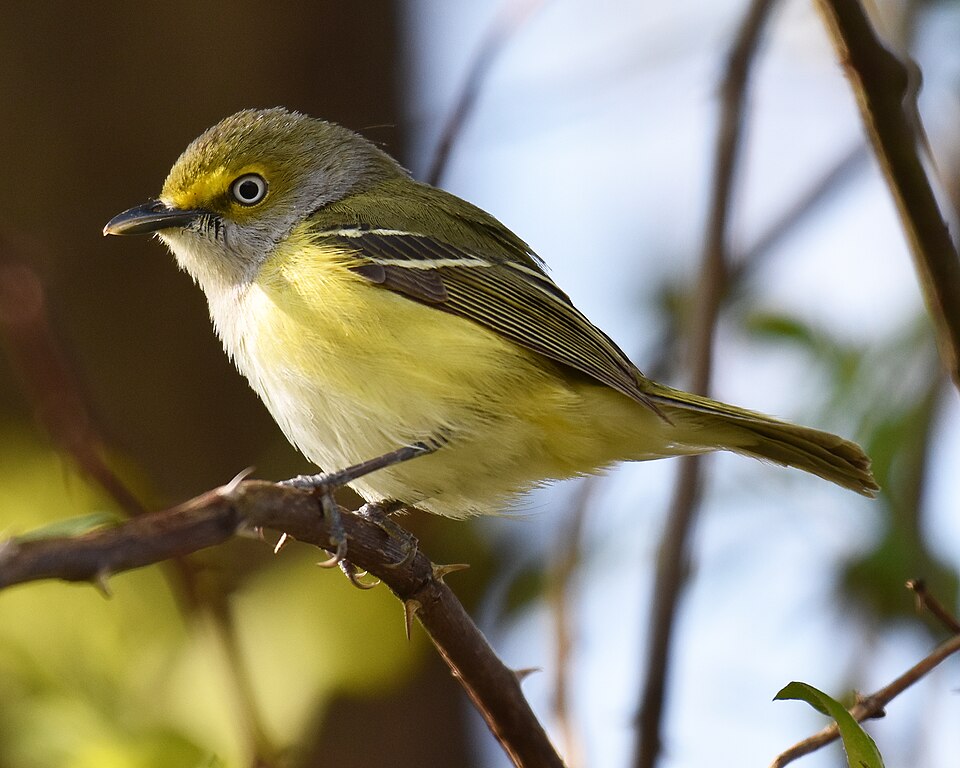
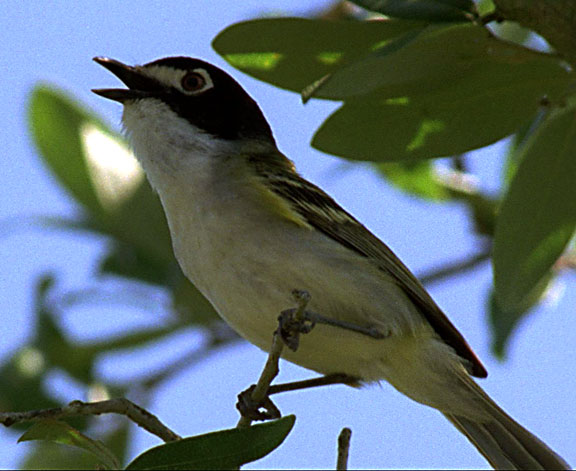
The San Andres Vireo is a small bird, measuring about 12 cm in length. Its plumage is predominantly olive-green, with a lighter underbelly that is often tinged with a subtle yellow hue. One of the key identifying features of the San Andres Vireo is its prominent white eye-ring, which contrasts with its darker head. The bird's wings and tail are darker, often appearing as a more muted brown in good light. Juvenile San Andres Vireos bear a close resemblance to adults but can be distinguished by their slightly duller coloring and less pronounced eye-ring. There is little sexual dimorphism in this species, with males and females appearing similar in size and coloration. Confusion with other species is minimal due to its distinct range and unique combination of features. However, novice birders might mistake it for other vireo species, though careful observation of its specific plumage details and vocalizations can aid in accurate identification. In flight, the San Andres Vireo displays a quick, darting motion, typical of small songbirds. When perched, it often adopts an upright posture, allowing for easy viewing of its eye-ring and underparts.
Having trouble telling birds apart? Upload a photo to our bird identification tool for an instant species match.
San Andres Vireo Habitat and Range
Preferred Habitat
The San Andres Vireo is primarily found in subtropical forests and dense shrubland on San Andres island. These habitats provide essential cover and abundant food resources. The bird prefers areas with a mix of mature trees and understory vegetation, which offer both nesting sites and foraging opportunities. The island's elevation ranges from sea level to a modest 85 meters, and the vireo is adaptable to these lowland conditions. Unlike many other bird species, the San Andres Vireo does not exhibit significant seasonal habitat shifts, largely due to its non-migratory nature. While the island has experienced some urban development, the vireo tends to avoid heavily urbanized areas, favoring the more pristine sections of the island's landscape.
Geographic Range
The San Andres Vireo's range is confined to San Andres island, located in the Caribbean Sea off the coast of Nicaragua, though it is politically part of Colombia. This restricted range makes the species particularly vulnerable to environmental changes and habitat loss. Unlike many other vireos that migrate seasonally, the San Andres Vireo is a year-round resident of this island. Within the island, the vireo can be found in suitable habitats across its 26 square kilometers. Due to the limited size of its range, the population density of this species is centered in the undisturbed forested areas that remain on the island. Efforts to document and protect these areas are crucial for the conservation of this unique species.
Want to know which birds visit your area? Browse our backyard birds by location guides for region-specific species lists.
What Does the San Andres Vireo Eat?
The San Andres Vireo primarily feeds on insects, which it forages for in the foliage of trees and shrubs. Its diet includes beetles, caterpillars, and various small arthropods, with occasional consumption of spiders. During the breeding season, the need for high-protein food sources increases, prompting the vireo to intensify its foraging efforts. The bird employs a methodical gleaning technique, carefully inspecting leaves and branches for prey. While insects form the core of its diet, the San Andres Vireo may also consume small quantities of fruit and seeds, particularly during periods when insect availability is reduced. This dietary flexibility helps the bird to cope with seasonal variations in food supply. The vireo typically feeds during daylight hours, with peak activity occurring in the early morning and late afternoon, times when insect activity is also heightened.
San Andres Vireo Behavior and Social Structure
The San Andres Vireo exhibits a solitary and territorial behavior, especially during the breeding season. Males establish and defend territories by singing from prominent perches, a behavior that serves both in attracting mates and deterring rivals. The vireo is known for its persistence in territorial disputes, often engaging in vocal duels with neighboring males. Courtship involves the male performing a series of displays, which may include wing-flicking and presenting food to the female. Outside the breeding season, the San Andres Vireo may exhibit less territorial aggression but generally remains solitary or in pairs. Its response to predators includes a range of alarm calls and rapid evasive flights. Daily activity patterns reveal a preference for morning and late afternoon foraging, with periods of rest during the hottest parts of the day. The bird's ability to remain relatively inconspicuous in dense vegetation aids in avoiding predation.
San Andres Vireo Nesting and Reproduction
The San Andres Vireo constructs cup-shaped nests made from fine grasses, leaves, and spider silk, often lining them with soft materials like feathers. These nests are typically placed in the fork of a tree branch, well-hidden among foliage to deter predators. The nesting season aligns with the island's spring, and a typical clutch consists of 2 to 3 eggs. Both parents share the incubation duties, which last approximately 12 to 14 days. After hatching, the fledgling period lasts about 10 to 12 days, during which both parents are involved in feeding and caring for the young. The San Andres Vireo may raise one to two broods per year, depending on environmental conditions and food availability. Nest success depends heavily on habitat quality and the absence of invasive predators.
San Andres Vireo Sounds and Vocalizations
The San Andres Vireo's song is a simple yet melodious series of notes, often described as a repeated 'chee-chee-chee' with a slightly rising inflection. This song serves both in territory establishment and mate attraction. Call notes include short, sharp 'chip' sounds used in communication between mates or as alarm calls. The vireo is most vocal during the early morning hours, participating in the dawn chorus that characterizes the island's soundscape. Unlike some other birds, the San Andres Vireo does not have a wide repertoire of sounds, but its distinctive song makes it easily recognizable to those familiar with the island's avifauna.
Interesting Facts About the San Andres Vireo
- 1The San Andres Vireo's entire range is limited to an island just 26 square kilometers in size, making it one of the most range-restricted birds in the world.
- 2Unlike many other vireos, the San Andres Vireo does not migrate, making it a permanent resident of its island home.
- 3The bird's diet is primarily insectivorous, but it can switch to eating small fruits and seeds when insects are scarce.
- 4Despite its small size, the San Andres Vireo is a fierce defender of its territory, often engaging in aggressive displays.
- 5The vireo's song is a distinctive part of San Andres island's acoustic environment, especially during the breeding season.
- 6The species plays a crucial ecological role by controlling insect populations and aiding in seed dispersal.
- 7The San Andres Vireo's conservation status highlights the challenges faced by island endemics in a rapidly changing world.
San Andres Vireo Conservation Status
The San Andres Vireo is currently listed as Vulnerable by the IUCN, with a small population that faces several threats. Habitat loss due to deforestation and urban development poses the most significant risk to the species. Invasive species, such as rats and cats, also threaten its population, preying on eggs and young birds. Conservation efforts focus on habitat preservation and restoration, as well as controlling invasive species. Historically, the vireo's population has fluctuated, but ongoing conservation measures aim to stabilize and potentially increase its numbers. Protecting the remaining forested areas on San Andres island is crucial for the long-term survival of this species.