
Savi's Warbler
Locustella luscinioides
Order: Passeriformes / Family: Locustellidae
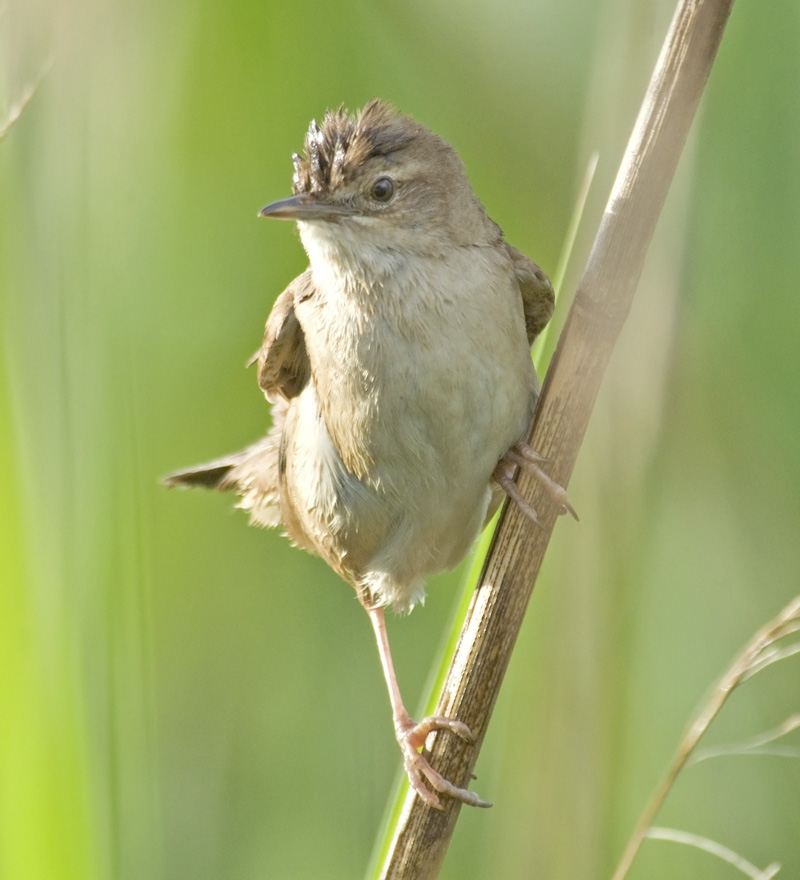
Wikimedia Commons
About the Savi's Warbler
Savi's Warbler, Locustella luscinioides, is a small passerine bird belonging to the family Locustellidae. Recognized for its distinctive reeling song, this species primarily inhabits reed beds and marshlands. Its ecological role is significant as it helps control insect populations, particularly in wetland areas. Savi's Warbler is especially prevalent in Europe and parts of Asia, where its presence marks the health of its wetland habitats.
This species is a migratory bird, breeding in Europe and western Asia and wintering in Africa. During the breeding season, it prefers dense reed beds, where it constructs its nest and raises its young. Its migration to Africa in the winter months demonstrates a remarkable adaptability to different environments. The Savi's Warbler's migration routes are well-established, with birds usually traveling through southern Europe and the Mediterranean region to reach their wintering grounds.
The ecological role of Savi's Warbler extends beyond pest control. Its presence in wetlands also supports the biodiversity of these ecosystems, as it serves as prey for various raptor species. The bird's reliance on healthy reed beds for breeding highlights the importance of conserving these habitats, which are under threat from human activities such as agriculture and urban development.
Savi's Warbler's population has remained relatively stable due to its adaptability and widespread range. However, habitat destruction continues to pose a threat to its breeding sites. Conservation efforts focused on preserving wetland habitats are crucial for ensuring the future of this species. By maintaining these environments, we not only protect Savi's Warbler but also countless other species that depend on these vital ecosystems.
The Savi's Warbler belongs to the family Locustellidae, within the order Passeriformes. These birds typically live average 4 years, with a maximum recorded of 7 years..
How to Identify a Savi's Warbler
Savi's Warbler is a small bird, measuring approximately 13-14 cm in length with a wingspan of 17-21 cm. The adult plumage is characterized by brown upperparts with a slight olive tinge, and a paler, buff-colored underside. The bird's bill is long and slender, adapted for foraging insects among reeds.
Juvenile Savi's Warblers resemble adults but have slightly fresher, more pronounced buff edges to their feathers. There is no significant sexual dimorphism, making males and females difficult to differentiate in the field. However, during the breeding season, males are more vocal, which can aid in identification.
Savi's Warbler can be confused with similar species like the Grasshopper Warbler, but it can be distinguished by its longer bill and more monotonous reeling song. In flight, Savi's Warbler appears slender with relatively short, rounded wings, and it often adopts a skulking posture when perched, keeping low in the reed beds to avoid detection.
Having trouble telling birds apart? Upload a photo to our bird identification tool for an instant species match.
Savi's Warbler Habitat and Range
Preferred Habitat
Savi's Warbler primarily inhabits dense reed beds, often found in wetlands and marshes. These environments provide ideal conditions for nesting and foraging. The bird shows a preference for areas dominated by common reed (Phragmites australis) and other tall grasses.
Typically, Savi's Warbler is found at low elevations, as it relies on wetland environments that are usually at or near sea level. During migration, it can occasionally be spotted in agricultural fields or other open areas, though it rarely ventures far from water.
While primarily a rural species, Savi's Warbler can also inhabit urban wetlands, provided there is sufficient reed cover. Seasonal movements see it occupy breeding habitats from April to August, before migrating to wintering grounds in Africa.
Geographic Range
Savi's Warbler breeds across a wide range in Europe and extends into western Asia. Key breeding locations include countries like Spain, France, Italy, and Hungary, extending eastward into Russia and Kazakhstan.
During the non-breeding season, Savi's Warbler migrates to sub-Saharan Africa, with significant populations wintering in West African countries like Senegal and Mali. Migration occurs along established corridors through southern Europe and the Mediterranean.
Population density varies, with hotspots in large wetland areas such as the Danube Delta and the Camargue region of France. Despite its broad range, habitat specificity means that Savi's Warbler is not evenly distributed and is most common where suitable reed beds exist.
Want to know which birds visit your area? Browse our backyard birds by location guides for region-specific species lists.
What Does the Savi's Warbler Eat?
Savi's Warbler primarily feeds on insects and other small invertebrates, which it finds in abundance within its wetland habitats. Its diet consists of beetles, flies, and caterpillars, as well as spiders and small crustaceans.
During the breeding season, the bird's diet shifts slightly to include more protein-rich prey to support the energy demands of raising young. It forages by picking insects off reeds and grasses and occasionally engages in brief flights to catch airborne insects.
The warbler typically feeds during the early morning and late afternoon, avoiding the heat of midday. Its foraging technique involves moving methodically through dense vegetation, using its slender bill to probe for hidden prey.
Savi's Warbler Behavior and Social Structure
Savi's Warbler is a solitary bird, often observed alone or in pairs, especially during the breeding season. Males establish and defend territories within reed beds, using their distinctive reeling song to ward off rivals and attract mates.
Courtship displays involve the male performing aerial flights and singing prominently from perches within his territory. Once paired, both male and female participate in nest building and rearing of the young.
The bird's daily activity peaks during dawn and dusk, coinciding with cooler temperatures and increased insect activity. Savi's Warbler remains elusive during the day, skulking low within the reeds to avoid predators such as marsh harriers and other birds of prey.
Savi's Warbler Nesting and Reproduction
Savi's Warbler builds a cup-shaped nest constructed from reeds, grasses, and other plant materials. The nest is typically located low within a dense reed bed, often only a few centimeters above water level to remain hidden from predators.
A typical clutch consists of 4-6 eggs, which are incubated by both parents for about 13-15 days. The eggs are pale with fine speckles, blending well with the surrounding vegetation.
After hatching, the chicks are fed by both parents and fledge roughly 12-14 days later. Savi's Warbler usually produces one brood per year, although in favorable conditions, a second brood may be attempted.
Savi's Warbler Sounds and Vocalizations
The primary song of Savi's Warbler is a continuous, mechanical reeling sound reminiscent of an old-fashioned sewing machine. This low-pitched, monotonous trill can last for minutes and is most commonly heard during the breeding season.
Call notes are softer and less distinctive, used primarily for communication between mates. Alarm calls are sharp and rapid, designed to alert other birds to potential threats.
During the dawn chorus, the reeling song of Savi's Warbler often stands out due to its unique quality and persistence, providing an auditory marker of its presence within a reed bed.
Interesting Facts About the Savi's Warbler
- 1Savi's Warbler's song can last up to five minutes without pause, a remarkable feat among songbirds.
- 2Named after Italian ornithologist Paolo Savi, the bird was first described in 1824.
- 3Unlike many warblers, Savi's Warbler often spends more time walking than flying, using its long legs to navigate through reeds.
- 4During migration, Savi's Warbler can travel over 3,000 kilometers between Europe and Africa.
- 5The reeling song of Savi's Warbler is one of the earliest indicators of spring in many European wetlands.
- 6Savi's Warbler has one of the longest breeding seasons of any European warbler, often starting as early as April.
- 7Despite its wide range, Savi's Warbler is notoriously difficult to spot due to its secretive nature.
Savi's Warbler Conservation Status
Savi's Warbler is currently classified as Least Concern by the IUCN, with a stable population trend. However, its reliance on wetland habitats makes it vulnerable to habitat loss due to drainage, pollution, and agricultural expansion. Conservation efforts focus on preserving and restoring wetland environments to ensure suitable breeding sites remain available. National parks and protected areas play a key role in safeguarding these habitats. Historically, population fluctuations have been linked to changes in water management practices. Continued monitoring and habitat conservation are essential to maintain the health of Savi's Warbler populations.


