
Slaty-capped Shrike-Vireo
Vireolanius leucotis
Order: Passeriformes / Family: Vireonidae

Wikimedia Commons
About the Slaty-capped Shrike-Vireo
The Slaty-capped Shrike-Vireo, known scientifically as Vireolanius leucotis, is a small songbird belonging to the family Vireonidae. This bird stands out due to its unique coloration and melodious song. Found predominantly in Central and South America, its range extends from southern Mexico through Panama and into the northern regions of South America, including Colombia and Venezuela. The Slaty-capped Shrike-Vireo thrives in humid tropical forests, particularly favoring the canopy and sub-canopy layers where it forages for insects and fruit. This bird's presence contributes significantly to the ecological balance within these ecosystems, playing a role in both seed dispersal and insect population control. Seasonally, the Slaty-capped Shrike-Vireo demonstrates some altitudinal movement, although it is not known for long migratory patterns. Typically, these birds remain within their established territories year-round, taking advantage of the dense forest cover and abundant food resources. The Slaty-capped Shrike-Vireo is an integral part of its habitat's biodiversity, and its vibrant presence is a marker of healthy forest ecosystems. Conservationists take interest in this species because it serves as an indicator of habitat integrity and the impacts of deforestation.
The Slaty-capped Shrike-Vireo belongs to the family Vireonidae, within the order Passeriformes. These birds typically live average 4 years with max recorded of 7 years..
How to Identify a Slaty-capped Shrike-Vireo
Identifying the Slaty-capped Shrike-Vireo involves observing several distinctive field marks. Adult birds showcase a slaty-gray crown which contrasts with their bright green back and wings. Their underparts are primarily white, with a hint of yellow on the flanks. Juvenile birds tend to have a slightly duller appearance, with less contrast between the gray and green. Both males and females display similar plumage, making gender differentiation challenging in the field. However, during the breeding season, males may exhibit more vibrant coloration. When perched, the Slaty-capped Shrike-Vireo maintains an upright posture, often holding its head high as it scans for prey. In flight, its broad wings and relatively short tail create a compact silhouette. This bird might be confused with other vireo species, but its unique gray cap and overall vibrant coloration set it apart. Observers should note these characteristics to distinguish it from similar species such as the Red-eyed Vireo or other vireos sharing its habitat.
Having trouble telling birds apart? Upload a photo to our bird identification tool for an instant species match.
Slaty-capped Shrike-Vireo Habitat and Range
Preferred Habitat
The Slaty-capped Shrike-Vireo primarily inhabits tropical and subtropical moist broadleaf forests. It thrives in lowland and montane forests, typically at elevations ranging from 500 meters to 2000 meters. In these habitats, it prefers the dense canopy and sub-canopy layers, where it finds ample food and cover. Seasonal habitat shifts are minimal, but during the breeding season, it may move slightly in elevation to optimize nesting conditions. Although the Slaty-capped Shrike-Vireo is not commonly found in urban environments, it sometimes ventures into forest edges and secondary growth, especially in areas adjacent to intact primary forests. The bird's reliance on undisturbed forest habitats makes it vulnerable to deforestation and habitat fragmentation.
Geographic Range
The range of the Slaty-capped Shrike-Vireo extends across a broad swath of Central and South America. It is a resident breeder from southern Mexico through Central America, including countries such as Guatemala, Honduras, Nicaragua, Costa Rica, and Panama. In South America, its presence is noted in the northern regions, particularly in Colombia and Venezuela. The bird does not migrate long distances, but some populations may move altitudinally in response to seasonal changes. The Slaty-capped Shrike-Vireo is relatively common within its range, especially in regions where primary forest habitat remains intact. Population density hotspots include the lowland rainforests of Costa Rica and the Andean foothills, where the bird benefits from the diversity and abundance of forest resources.
Want to know which birds visit your area? Browse our backyard birds by location guides for region-specific species lists.
What Does the Slaty-capped Shrike-Vireo Eat?
The diet of the Slaty-capped Shrike-Vireo consists mainly of insects and other small arthropods, supplemented by fruit. This bird employs a mixed foraging strategy, gleaning insects from leaves and branches and occasionally sallying out to catch flying prey. Seasonal diet changes occur as fruit availability fluctuates, with an increased emphasis on fruit consumption during the rainy season when insects may be less abundant. Prey size generally includes small beetles, caterpillars, and spiders, which it skillfully extracts from foliage. The Slaty-capped Shrike-Vireo forages primarily during the early morning and late afternoon, taking advantage of cooler temperatures and increased insect activity. Its agile movements and keen eyesight aid in locating and capturing prey within the dense canopy.
Slaty-capped Shrike-Vireo Behavior and Social Structure
The Slaty-capped Shrike-Vireo exhibits distinctive behaviors that reflect its adaptability and ecological interactions. It is generally solitary or found in pairs, especially during the breeding season. Territorial behavior becomes pronounced during this time, with males singing to establish and defend their territory. Courtship displays involve vocalizations and mutual preening. Outside the breeding season, the bird may occasionally join mixed-species foraging flocks, benefiting from the increased vigilance and cooperative foraging strategies. In response to predators, the Slaty-capped Shrike-Vireo relies on its cryptic plumage and quick movements to evade detection. It is most active during the cooler parts of the day, retreating to the dense foliage to rest during the midday heat.
Slaty-capped Shrike-Vireo Nesting and Reproduction
Nest construction for the Slaty-capped Shrike-Vireo involves selecting a secure location within the forest canopy. The nest is a cup-shaped structure, woven from fine plant fibers, moss, and spider silk, providing both camouflage and flexibility. Preferred nesting sites are typically situated on horizontal branches concealed by foliage. The typical clutch consists of 2-3 eggs, with both parents sharing incubation duties over a period of approximately 14 days. After hatching, the chicks remain in the nest for another two weeks, during which both parents participate in feeding and caring for the young. The species usually raises one brood per year, although, in regions with a longer breeding season, a second brood may be attempted.
Slaty-capped Shrike-Vireo Sounds and Vocalizations
The Slaty-capped Shrike-Vireo is known for its melodious song, characterized by a series of clear, whistled notes that rise and fall in pitch. The rhythm is consistent, and the song carries well through the dense forest canopy. Call notes are sharp and distinct, often used to maintain contact between mates or signal alarm. During the dawn chorus, the Slaty-capped Shrike-Vireo's song stands out due to its clarity and repetition. Compared to the more complex songs of some other forest songbirds, its vocalizations are simpler, yet effective at conveying territory occupancy and attracting mates.
Interesting Facts About the Slaty-capped Shrike-Vireo
- 1The Slaty-capped Shrike-Vireo's song can be heard up to 100 meters away in dense forest, making it easier to detect than to see.
- 2Despite being part of the Vireonidae family, the Slaty-capped Shrike-Vireo's behavior and habitat choice resemble those of larger shrikes.
- 3The bird's reliance on both insects and fruit allows it to adapt to seasonal changes in food availability, a key survival strategy.
- 4Its nest is often lined with spider silk, providing elasticity and strength, which helps protect the eggs and chicks.
- 5The Slaty-capped Shrike-Vireo exhibits mutual feeding during courtship, a behavior that strengthens pair bonds.
- 6In mixed-species flocks, this bird often acts as a sentinel, alerting other birds to potential threats.
- 7While primarily arboreal, this species occasionally descends to lower levels to forage, demonstrating its adaptability.
Slaty-capped Shrike-Vireo Conservation Status
Currently, the Slaty-capped Shrike-Vireo is listed as Least Concern by the IUCN, with populations considered stable across much of its range. However, deforestation and habitat fragmentation pose significant threats, particularly in regions where forest cover is rapidly declining. Conservation efforts focus on preserving large tracts of primary forest and promoting reforestation initiatives. Historically, the Slaty-capped Shrike-Vireo has managed to maintain stable population levels, but ongoing habitat loss could impact its long-term viability. Continued monitoring and habitat protection are essential to ensure this species remains a vibrant part of its forest ecosystem.
Other Vireonidae Species
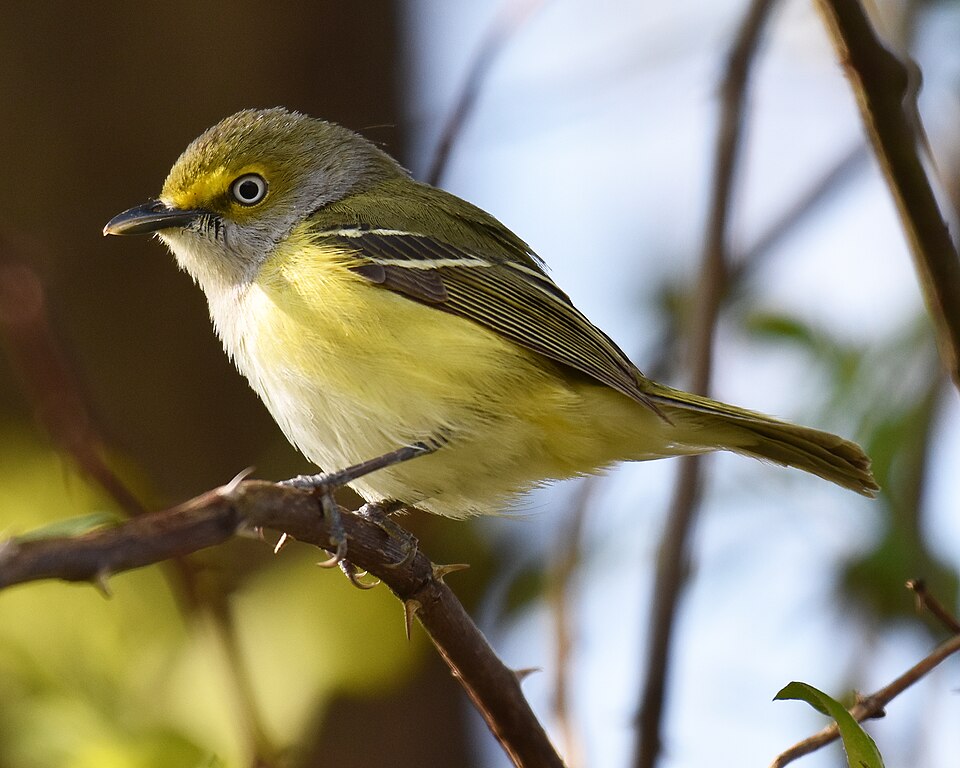

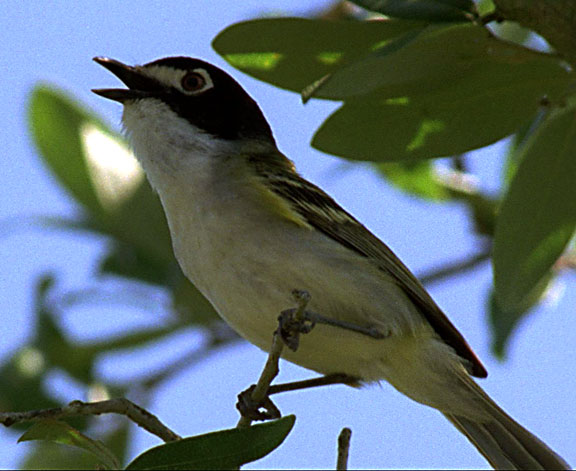

Birds Similar to the Slaty-capped Shrike-Vireo
These species are often confused with the Slaty-capped Shrike-Vireo due to similar appearance or overlapping range.

