
Snethlage's Tody-Tyrant
Hemitriccus minor
Order: Passeriformes / Family: Tyrannidae
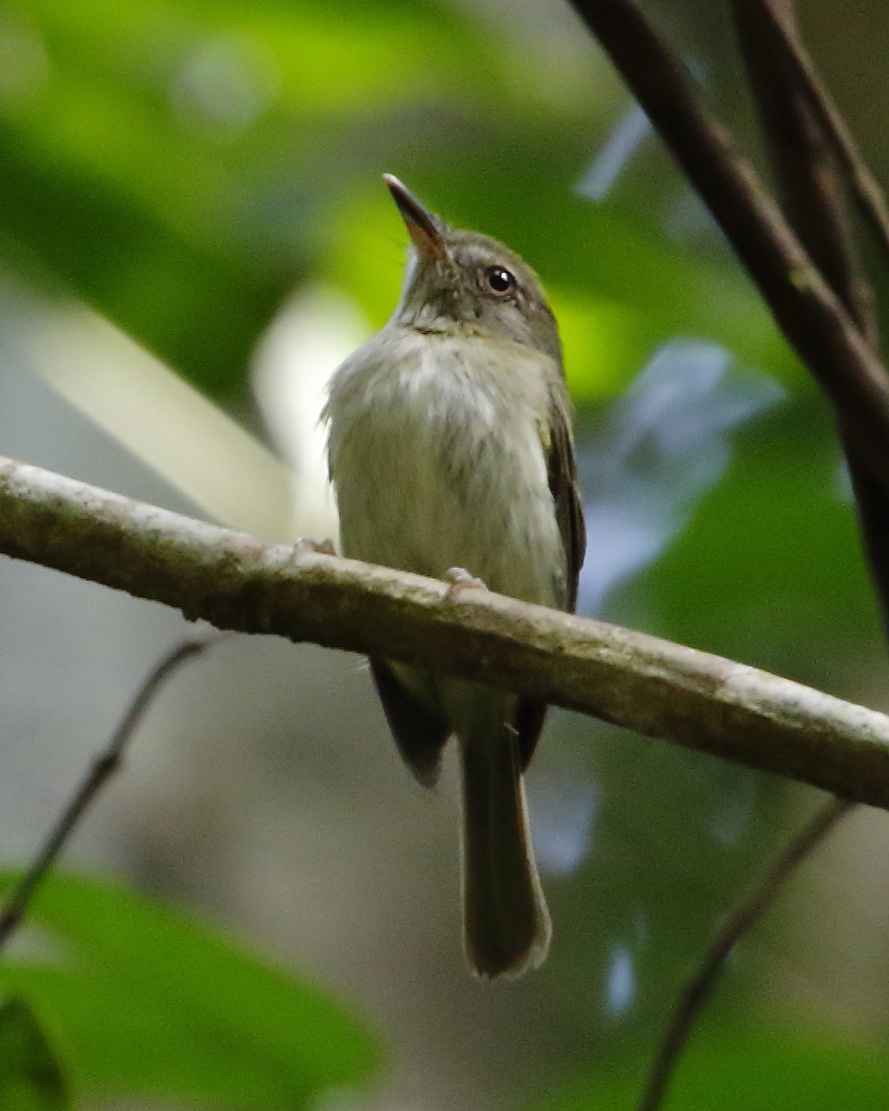
Wikimedia Commons
About the Snethlage's Tody-Tyrant
The Snethlage's Tody-Tyrant, scientifically known as Hemitriccus minor, is a diminutive bird species found primarily in the dense forests of the Amazon Basin. This bird plays a critical ecological role as an insectivore, controlling insect populations in its habitat. With its bright green plumage, it blends seamlessly into the lush canopy, making it a challenging species to observe in the wild. Hemitriccus minor is particularly significant within the avian community due to its specialized habitat preferences and feeding habits. Found predominantly in Brazil, the Snethlage's Tody-Tyrant inhabits the understory layer of tropical rainforests, where it forages for insects among the dense foliage. This bird is typically sighted in regions such as the Brazilian Amazon, including states like Acre, Amazonas, and Rondônia. Its presence in these regions underscores the importance of conserving large tracts of primary forest, as this species relies heavily on undisturbed habitats. The ecological role of the Snethlage's Tody-Tyrant extends beyond its feeding habits. It also serves as an indicator species for the health of its forest environment. The bird's preference for primary forest areas means that its population trends can provide insights into the impacts of deforestation and habitat fragmentation. As a non-migratory species, the Snethlage's Tody-Tyrant remains within its native range year-round, which makes it particularly vulnerable to habitat changes throughout the seasons. During the rainy season, when insect prey is abundant, the Snethlage's Tody-Tyrant is especially active, engaging in frequent foraging bouts. In contrast, the dry season presents challenges with reduced insect availability, which can impact feeding success and reproductive outcomes for this species. Despite these challenges, the Snethlage's Tody-Tyrant continues to thrive in well-preserved forest areas, illustrating the resilience and adaptability of this small but vibrant bird.
The Snethlage's Tody-Tyrant belongs to the family Tyrannidae, within the order Passeriformes. These birds typically live average 3-4 years with a maximum recorded of 6 years..
How to Identify a Snethlage's Tody-Tyrant
Identifying the Snethlage's Tody-Tyrant involves observing its small size, typically around 9 cm in length, and its vivid green plumage that offers excellent camouflage against the backdrop of leafy forests. The bird's underparts are a lighter shade of green, providing subtle contrast that can aid in identification. Unlike many bird species, there is minimal sexual dimorphism in the Snethlage's Tody-Tyrant, meaning males and females appear very similar. Juveniles tend to exhibit slightly duller plumage compared to adults, lacking the subtle sheen observed in mature individuals. The bird's beak is short and slightly hooked, a characteristic feature of the Tody-Tyrant group. Observers may note the bird's rounded wings and relatively short tail, which contribute to its distinctive silhouette when perched or in flight. Confusion with similar species can occur, particularly with other members of the Hemitriccus genus. However, the Snethlage's Tody-Tyrant can be distinguished by its preference for lower canopy levels and its distinctive vocalizations, which set it apart from closely related species. Its perching posture is often upright, with a tendency to remain still for extended periods as it scans for insects. This behavior, combined with its specific plumage coloration, aids experienced birders in accurate identification.
Having trouble telling birds apart? Upload a photo to our bird identification tool for an instant species match.
Snethlage's Tody-Tyrant Habitat and Range
Preferred Habitat
The Snethlage's Tody-Tyrant is a forest specialist, predominantly inhabiting the dense and humid lowland rainforests of the Amazon Basin. This bird favors the understory of primary forests, where the thick canopy overhead provides ample shelter and feeding opportunities. In terms of elevation, the Snethlage's Tody-Tyrant typically resides at low altitudes, rarely venturing above 500 meters. Habitats where this species is most commonly found include the terra firme forests, which are characterized by well-drained, non-flooded forest areas. Unlike some other tyrant flycatchers, the Snethlage's Tody-Tyrant does not readily adapt to secondary forests or fragmented landscapes, preferring instead the continuity and stability of untouched forest regions. Seasonal habitat shifts are minimal due to its resident status, with the bird remaining in its preferred environment throughout the year. Urban presence is virtually nonexistent, as the Snethlage's Tody-Tyrant does not adapt well to human-altered landscapes, reflecting its reliance on intact forest habitats for survival.
Geographic Range
The range of the Snethlage's Tody-Tyrant is primarily concentrated within the Amazon Basin, with its presence documented in several Brazilian states such as Acre, Amazonas, and Rondônia. This bird does not undertake long-distance migrations, instead remaining within the tropical forest regions it inhabits year-round. As a result, its distribution is closely tied to the availability of suitable, undisturbed forest habitats. While the Snethlage's Tody-Tyrant can be found in parts of Peru and Bolivia, its population density is greatest in Brazil, particularly in areas where primary rainforest remains untouched by deforestation. Unlike migratory species, the Snethlage's Tody-Tyrant does not utilize specific corridors for seasonal movement, instead maintaining a consistent presence within its established range. Population density hotspots include well-conserved forest reserves and national parks, where protective measures help ensure the continued viability of its habitat. The lack of significant range expansion or contraction emphasizes the importance of localized conservation efforts to maintain population stability.
Want to know which birds visit your area? Browse our backyard birds by location guides for region-specific species lists.
What Does the Snethlage's Tody-Tyrant Eat?
The diet of the Snethlage's Tody-Tyrant consists primarily of small insects, which it expertly gleans from the foliage and branches within its forest habitat. Common prey items include flies, beetles, and other arthropods, which the bird captures through a combination of short sallies and careful gleaning. Seasonal variations in diet are closely linked to the availability of insect prey, with the rainy season offering an abundance of insects, thereby increasing the bird's feeding frequency. During drier periods, the Snethlage's Tody-Tyrant may spend more time foraging to meet its dietary needs, as insect populations decrease. The bird employs a sit-and-wait foraging strategy, often perching quietly before executing quick, precise movements to capture prey. This technique allows the Snethlage's Tody-Tyrant to conserve energy while maximizing its feeding efficiency. Prey size is generally small, reflecting the bird's diminutive stature, yet its dietary choices reflect a level of adaptability to the fluctuating availability of food sources within its environment.
Snethlage's Tody-Tyrant Behavior and Social Structure
The Snethlage's Tody-Tyrant exhibits a solitary lifestyle, with individuals typically encountered alone or in pairs, particularly during the breeding season. Territorial behavior is evident, as these birds actively defend their feeding and nesting areas from intruders. Vocalizations play a crucial role in territory defense, with the Snethlage's Tody-Tyrant utilizing a series of distinctive calls to assert its presence. Courtship displays are subtle, often involving mutual preening and synchronized movements between partners. While flocking is not a common behavior, the Snethlage's Tody-Tyrant may occasionally join mixed-species foraging flocks, taking advantage of the increased vigilance and foraging success provided by such groups. The bird's response to predators includes remaining motionless or employing rapid escape flights to nearby cover. Daily activity patterns are diurnal, with peak activity occurring during the cooler morning and late afternoon hours. During these times, the Snethlage's Tody-Tyrant engages in foraging and territorial maintenance, retreating to denser cover during the hottest parts of the day.
Snethlage's Tody-Tyrant Nesting and Reproduction
Nesting habits of the Snethlage's Tody-Tyrant involve constructing small, cup-shaped nests, typically located within dense foliage or suspended from low tree branches. The choice of nesting site minimizes exposure to predators and harsh weather conditions. Nest materials primarily consist of plant fibers, moss, and spider webs, which provide both camouflage and structural integrity. Clutch size is generally two eggs, with both parents sharing in the incubation duties. Incubation lasts approximately 16 days, after which the altricial young hatch and remain in the nest for an additional two to three weeks. Parental roles are cooperative, with both male and female involved in feeding and caring for the nestlings. The Snethlage's Tody-Tyrant typically produces one brood per year, although favorable conditions may occasionally lead to a second. Post-fledging care extends for several weeks, as the young learn essential survival skills from their parents before achieving full independence.
Snethlage's Tody-Tyrant Sounds and Vocalizations
The vocal repertoire of the Snethlage's Tody-Tyrant includes a primary song composed of a series of high-pitched, rapid notes that rise and fall in pitch. This song serves as a key element in territorial displays and mate attraction. In addition to its song, the bird emits a variety of call notes, including sharp 'chip' sounds used for communication between mates and alarm calls in response to potential threats. During the early morning hours, the Snethlage's Tody-Tyrant participates in the dawn chorus, contributing its distinctive voice to the symphony of sounds within the forest. The tonal quality of its calls can be likened to the high-pitched squeaks of tree frogs, providing an auditory signature that aids in identification amidst the dense foliage.
Interesting Facts About the Snethlage's Tody-Tyrant
- 1The Snethlage's Tody-Tyrant, despite its vibrant appearance, is known for its elusive nature, making it a challenging species for birders to spot.
- 2Named after Emilie Snethlage, a pioneering female ornithologist, this bird honors her contributions to the study of South American avifauna.
- 3The Snethlage's Tody-Tyrant's preference for primary forests makes it a strong indicator of ecosystem health and biodiversity.
- 4This species exhibits remarkable camouflage, using its green plumage to blend in with the dense Amazonian canopy.
- 5Unlike many birds, the Snethlage's Tody-Tyrant shows little sexual dimorphism, with males and females appearing almost identical.
Snethlage's Tody-Tyrant Conservation Status
The Snethlage's Tody-Tyrant is currently classified as Least Concern by the IUCN, although its population trend shows signs of gradual decline due primarily to habitat loss. Deforestation for agriculture and logging poses significant threats to its habitat, particularly in regions where primary forests are being converted to other land uses. Conservation efforts include the establishment of protected areas within its range, which help preserve critical habitat and mitigate habitat fragmentation. Historically, the population of the Snethlage's Tody-Tyrant has remained relatively stable in areas with intact forest cover, but ongoing deforestation underscores the need for continued conservation initiatives to ensure the long-term survival of this species.


