
Solitary Eagle
Harpyhaliaetus solitarius
Order: Accipitriformes / Family: Accipitridae
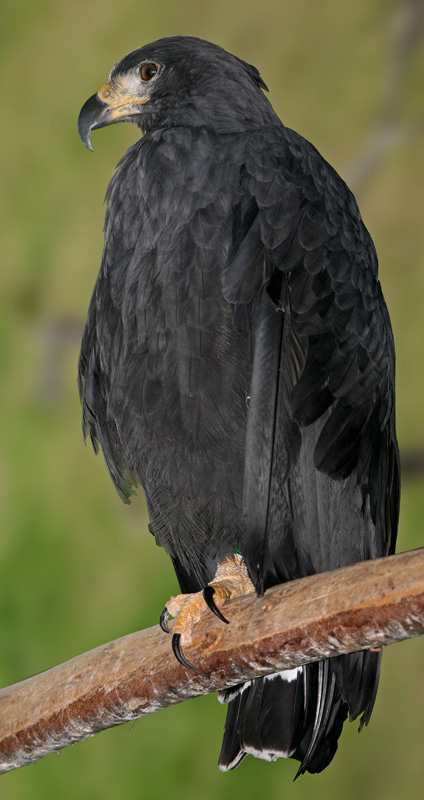
Wikimedia Commons
About the Solitary Eagle
The Solitary Eagle (Harpyhaliaetus solitarius) is a large raptor belonging to the family Accipitridae, found primarily in the mountainous regions of Central and South America. Its presence is most notable in countries such as Mexico, Guatemala, Honduras, and extending down through the Andean regions of Colombia, Ecuador, Peru, and Bolivia. This eagle is elusive, often residing in the dense cloud forests and high-altitude woodlands, where its dark plumage offers camouflage against the verdant canopy. Despite its common name, the Solitary Eagle is not always alone, though it is infrequently observed in pairs or family units. The bird plays a significant ecological role as a top predator, maintaining the balance of prey species within its environment. Its diet primarily consists of medium-sized mammals, birds, and reptiles, which it hunts with remarkable stealth and power. Unlike many other raptors, the Solitary Eagle does not migrate long distances, preferring to stay within its established territory throughout the year. During the breeding season, which varies depending on the geographic location, these eagles engage in complex aerial displays and vocalizations to attract mates. In terms of conservation, the Solitary Eagle is classified as Near Threatened by the IUCN, with habitat destruction being the primary threat to its population. Efforts to conserve its natural habitat are crucial to ensure the survival of this magnificent raptor. Understanding the ecological importance of Harpyhaliaetus solitarius helps to appreciate the interconnectedness of forest ecosystems and the species that inhabit them. With continued research and conservation efforts, there is hope for the Solitary Eagle to thrive in its natural environment, maintaining its critical role in the biodiversity of the regions it inhabits.
The Solitary Eagle belongs to the family Accipitridae, within the order Accipitriformes. These birds typically live average 20-25 years, with a maximum recorded of 30 years..
How to Identify a Solitary Eagle
Identifying the Solitary Eagle involves observing its overall dark gray to black plumage, which is uniform across both sexes, though females are generally larger. This bird's massive size, with a wingspan reaching up to 6 feet, distinguishes it from many other raptors. Juveniles exhibit a lighter, more mottled appearance with brownish tones that gradually darken as they mature. The Solitary Eagle's robust build and broad wings set it apart from similar species like the Black Hawk-Eagle, which features a more slender profile and distinctive barred plumage. When perched, the eagle's posture is upright, and its head appears large relative to its body. In flight, the Solitary Eagle displays broad, rounded wings and a short tail, giving it a compact silhouette compared to the longer-tailed hawks. Its flight is typically slow and deliberate, characterized by deep, powerful wing beats. The eagle's head is often held slightly forward, enhancing its streamlined appearance while soaring above the forest canopy in search of prey.
Having trouble telling birds apart? Upload a photo to our bird identification tool for an instant species match.
Solitary Eagle Habitat and Range
Preferred Habitat
The Solitary Eagle inhabits a range of high-altitude environments, with a preference for cloud forests and montane woodlands. It typically resides at elevations between 1,000 and 3,000 meters, though it can occasionally be found at lower altitudes in undisturbed forest areas. This eagle avoids open landscapes, favoring dense canopy cover where it can hunt and nest with relative seclusion. Seasonal habitat shifts are minimal, as the eagle tends to remain within its established territory year-round, only moving altitudinally in response to food availability or breeding needs. Urban presence is rare, given its preference for remote wilderness areas away from human disturbance.
Geographic Range
The Solitary Eagle's range extends from southern Mexico through Central America and into the northern Andes of South America. Notable countries within its range include Guatemala, Honduras, Costa Rica, Panama, Colombia, Ecuador, and Peru. While the eagle is not migratory, it maintains a relatively broad geographic distribution within these countries, albeit with low population densities. Hotspots for observation are primarily within protected national parks and reserves, where its habitat remains intact. The eagle's range does not extend into urban or heavily populated areas, remaining confined to mountainous and forested regions.
Want to know which birds visit your area? Browse our backyard birds by location guides for region-specific species lists.
What Does the Solitary Eagle Eat?
The diet of the Solitary Eagle primarily consists of medium-sized mammals, such as armadillos and opossums, as well as large birds and reptiles, including snakes and lizards. Seasonal variations in prey availability can influence its diet, with more reliance on avian prey during the dry season when mammals are less active. The eagle employs a sit-and-wait hunting technique, using its excellent vision to spot prey from a perch before launching a swift, surprise attack. Its powerful talons and beak enable it to subdue prey effectively, and it is known to consume its food on elevated perches to avoid ground-based competitors. Feeding typically occurs during the early morning and late afternoon, aligning with peak prey activity periods.
Solitary Eagle Behavior and Social Structure
The Solitary Eagle exhibits solitary behavior, as its name suggests, but may also be observed in pairs or small family groups, particularly during the breeding season. Territorial behavior is pronounced, with individuals or pairs maintaining large territories that they defend vigorously against intruders. Courtship displays involve aerial acrobatics and vocal exchanges, strengthening pair bonds and establishing breeding readiness. These eagles are diurnal, engaging in hunting and territorial patrols during daylight hours while roosting in high trees at night. Their response to potential threats is cautious but assertive, often involving vocalizations and display flights to ward off other raptors. Flocking is uncommon outside of family units, reflecting their generally solitary nature.
Solitary Eagle Nesting and Reproduction
Nesting for the Solitary Eagle typically occurs in tall trees within dense forests, providing protection from predators and a vantage point for monitoring the surrounding area. Nests are large structures, constructed from sticks and lined with softer materials such as leaves and moss. A breeding pair will usually produce one to two eggs per clutch, with both parents sharing incubation duties over approximately 40 to 45 days. After hatching, the eaglets remain in the nest for up to three months, during which both parents provide food and protection. Parental investment is high, with eagles typically raising a single brood per year, ensuring adequate resources and care for the developing young.
Solitary Eagle Sounds and Vocalizations
The primary vocalization of the Solitary Eagle is a loud, piercing scream that is often heard echoing through the forest canopy. This call, characterized by a series of high-pitched notes, serves as both a territorial declaration and a communication tool between mates. Alarm calls are sharper and more urgent, designed to alert family members to potential threats. The eagle's vocalizations are less frequent outside of the breeding season, with dawn and dusk being the most active periods for vocal displays. Compared to other raptors, its calls are less melodious and more functional, emphasizing the bird's preference for solitary and undisturbed habitats.
Interesting Facts About the Solitary Eagle
- 1The Solitary Eagle is one of the few eagles that can be found in cloud forests, thriving at elevations higher than many of its relatives.
- 2Despite its name, the Solitary Eagle is sometimes seen in pairs, especially during the breeding season, challenging its solitary reputation.
- 3The wingspan of the Solitary Eagle can reach up to 6 feet, making it one of the larger raptors in its range.
- 4Juvenile Solitary Eagles undergo significant plumage changes as they mature, transitioning from mottled brown to a darker adult coloration.
- 5The Solitary Eagle maintains a year-round territory, showing little inclination for long-distance migration, unlike many other raptors.
- 6Its powerful talons and beak allow the Solitary Eagle to tackle prey as large as armadillos, showcasing its hunting prowess.
- 7The Solitary Eagle's vocalizations are often described as haunting, echoing through the dense forest as a territorial marker.
Solitary Eagle Conservation Status
The Solitary Eagle is classified as Near Threatened by the IUCN, with populations believed to be declining due to habitat loss and fragmentation. Deforestation for agriculture and urban development poses the greatest threats to its survival by reducing the availability of suitable nesting and hunting grounds. Conservation efforts focus on habitat preservation and restoration, particularly in the eagle's core range areas. Historical population data are sparse, but current trends indicate a need for increased protection measures. Raising awareness and conducting further research into the eagle's ecological role and requirements are vital for its long-term conservation.
Other Accipitridae Species


Birds Similar to the Solitary Eagle
These species are often confused with the Solitary Eagle due to similar appearance or overlapping range.

