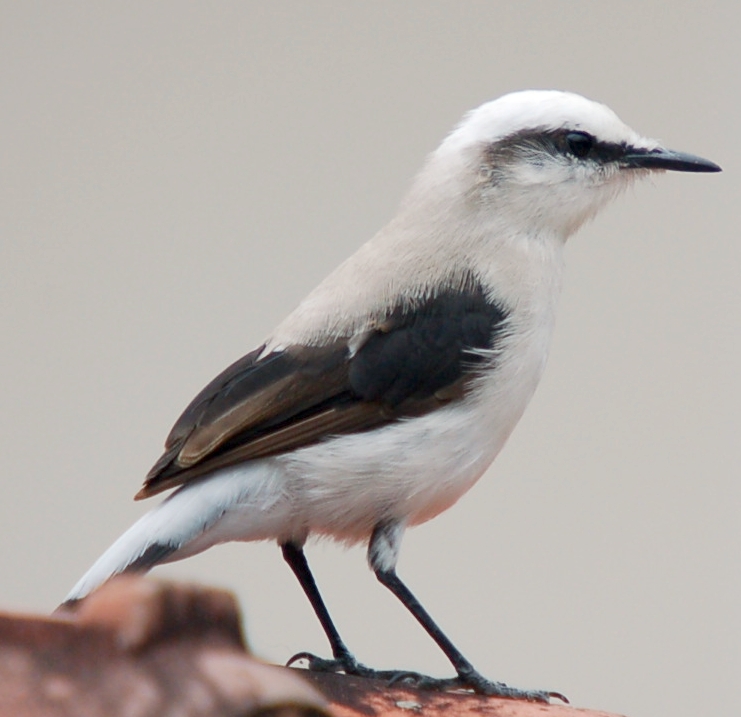
Spectacled Tyrant
Hymenops perspicillatus
Order: Passeriformes / Family: Tyrannidae

Wikimedia Commons
About the Spectacled Tyrant
The Spectacled Tyrant (Hymenops perspicillatus) is a visually striking bird that inhabits the southern regions of South America. Known for its distinctive white spectacles against a backdrop of black plumage, this bird is a member of the Tyrannidae family, which is renowned for its diversity and adaptability. The Spectacled Tyrant thrives in open habitats, such as grasslands and marshy areas, where its unique foraging and territorial behaviors can be observed. This bird plays an integral role in the ecosystem by controlling insect populations, thus contributing to the ecological balance within its habitat.
Predominantly found in countries like Argentina, Uruguay, southern Brazil, and Paraguay, the Spectacled Tyrant is a familiar sight in these regions. Its presence marks a healthy ecosystem, as it indicates the availability of its primary food sources and suitable breeding conditions. Seasonally, the Spectacled Tyrant exhibits a degree of altitudinal migration, moving to lower elevations during the colder months to access food and maintain its active lifestyle. This adaptability reflects its evolutionary success across various landscapes.
The ecological significance of the Spectacled Tyrant cannot be overstated. As an insectivore, it feeds largely on insects and small invertebrates, playing a crucial role in pest control. This feeding habit not only benefits local agriculture by reducing crop-damaging insect populations but also maintains the health of native plant species by preventing insect overpopulation. Moreover, the Spectacled Tyrant's foraging activities help in seed dispersal, thereby facilitating plant propagation and contributing to habitat regeneration.
During the breeding season, typically in spring and early summer, the Spectacled Tyrant engages in elaborate courtship displays. These performances, characterized by aerial acrobatics and vocalizations, are vital for mate selection and territory establishment. Such behaviors underscore the bird's role as both a predator and a participant in the intricate web of ecological interactions. Through its presence and activities, the Spectacled Tyrant exemplifies the interconnectedness of species within its environment.
The Spectacled Tyrant belongs to the family Tyrannidae, within the order Passeriformes. These birds typically live average 5 years with a maximum recorded of 8 years..
How to Identify a Spectacled Tyrant
The Spectacled Tyrant is a medium-sized bird, easily identifiable by its striking black plumage and contrasting white patches around the eyes, giving it the appearance of wearing spectacles. This distinctive feature is present in both adult males and females, although males typically exhibit a deeper, more uniform black coloration. Females, while also black, have a slightly browner hue, especially on the wings and tail, which can aid in differentiation during field observations.
Juvenile Spectacled Tyrants resemble adults but have a more subdued coloration. Their plumage tends to be browner overall, with less pronounced spectacles, providing some camouflage during their vulnerable early life stages. As they mature, their distinctive black and white pattern becomes more defined.
In flight, the Spectacled Tyrant reveals its agility and grace. It has a relatively short tail and broad wings, which allow for quick, darting maneuvers as it hunts for insects mid-air. When perched, the bird often adopts an upright posture, a common trait within the Tyrannidae family, allowing it to scan for prey effectively. Compared to other similar species, such as the White Monjita or the Austral Negrito, the Spectacled Tyrant's unique facial markings and darker plumage make it unmistakable.
Having trouble telling birds apart? Upload a photo to our bird identification tool for an instant species match.
Spectacled Tyrant Habitat and Range
Preferred Habitat
The Spectacled Tyrant primarily inhabits open grasslands, marshes, and wetland areas across its range. These environments provide ample foraging opportunities and nesting sites. It typically occupies lowland areas but can be found at elevations up to 1,500 meters, especially during breeding seasons when it might venture to slightly higher altitudes.
Seasonal habitat shifts occur, with the Spectacled Tyrant moving towards wetter areas during dry periods to ensure a steady food supply. In urban areas, it adapts well to parks and gardens, where it can often be seen perched prominently on fences or shrubs, scanning for insects.
The bird's presence in both rural and urban landscapes highlights its adaptability. However, it shows a preference for natural habitats with open spaces that support its foraging style. Unlike many other birds, the Spectacled Tyrant does not rely heavily on forested areas, although it may occasionally be seen at the edges of woodlands where clearings provide suitable conditions.
Geographic Range
The Spectacled Tyrant's range encompasses a broad swath of southern South America. It is primarily found in Argentina, where it is a common resident throughout the Pampas region and into the country's northern areas. Uruguay also hosts a significant population, with the bird frequently observed in its expansive grasslands and wetland reserves.
In Paraguay and southern Brazil, the Spectacled Tyrant's presence is more localized, often restricted to specific habitats that meet its ecological needs. During the non-breeding season, individuals may disperse widely, with some moving to lower altitudes or further north to escape harsher weather conditions.
Migration corridors are not as pronounced in this species as in some other passerines, but seasonal movements do occur in response to environmental changes. Throughout its range, population densities can vary, with certain regions, such as the Pampas, serving as hotspots due to the abundance of suitable habitats and food resources.
Want to know which birds visit your area? Browse our backyard birds by location guides for region-specific species lists.
What Does the Spectacled Tyrant Eat?
The diet of the Spectacled Tyrant is primarily insectivorous, consisting mainly of insects and small invertebrates. Its favored prey includes beetles, flies, and grasshoppers, which it captures through agile flight maneuvers. During the breeding season, its diet expands to accommodate the increased nutritional demands of rearing young.
Seasonally, the Spectacled Tyrant may also consume small quantities of seeds and berries, particularly when insect availability decreases. This dietary flexibility allows it to maintain energy balance and sustain itself during periods of scarcity.
The bird employs a sit-and-wait foraging strategy, often perching conspicuously on fence posts or tall grasses. From these vantage points, it can quickly swoop down to capture prey mid-flight or pluck it from the ground. This method of hunting is characteristic of many tyrant flycatchers, showcasing their opportunistic feeding habits.
Spectacled Tyrant Behavior and Social Structure
The Spectacled Tyrant is known for its bold and active behavior, especially during the breeding season when males perform elaborate courtship displays. These displays involve aerial maneuvers and distinctive vocalizations designed to attract females and establish territory boundaries. Males often engage in aggressive territorial disputes, using their striking plumage to intimidate rivals.
Socially, the Spectacled Tyrant is not a strongly flocking species. It is typically observed alone or in pairs, particularly during the breeding season. Outside of this period, loose associations may form, especially in areas with abundant food resources.
The bird exhibits a diurnal activity pattern, foraging actively during daylight hours. It remains alert to potential predators, employing alarm calls and evasive flight when threatened. Its keen eyesight and quick reflexes enable it to detect and avoid dangers effectively, ensuring its survival in diverse environments.
Spectacled Tyrant Nesting and Reproduction
The Spectacled Tyrant constructs an open cup nest, typically situated in tall grasses or low shrubs within its habitat. Nests are made from fine grasses, stems, and other plant materials, providing a secure and camouflaged site for egg laying.
The typical clutch size ranges from two to three eggs. Incubation, primarily undertaken by the female, lasts approximately 14 to 16 days. During this period, the male actively defends the nesting territory and assists in feeding the incubating female.
Once hatched, the young fledge in about two to three weeks. Both parents participate in feeding and caring for the chicks, ensuring their rapid growth and development. The Spectacled Tyrant typically raises one brood per year, although in favorable conditions, a second brood may occur.
Spectacled Tyrant Sounds and Vocalizations
The primary song of the Spectacled Tyrant is a series of short, sharp notes delivered in rapid succession. These calls serve as both territorial and mate-attraction signals during the breeding season. The song has a clear, piercing quality that carries well across open landscapes.
In addition to its song, the bird produces various call notes, including alarm calls that alert others to the presence of predators. These calls are generally harsher and more abrupt than its regular song, reflecting the urgency of the situation.
During the dawn chorus, the Spectacled Tyrant's song is especially prominent, contributing to the vibrant acoustic environment of its habitat. Its vocalizations, though not as melodious as some other passerines, are distinctive and easily recognizable to seasoned birders.
Interesting Facts About the Spectacled Tyrant
- 1The Spectacled Tyrant's scientific name, Hymenops perspicillatus, reflects its notable eye markings. 'Perspicillatus' means 'spectacled' in Latin.
- 2Despite its striking appearance, the Spectacled Tyrant is often overlooked in its native range due to its preference for less densely populated areas.
- 3The Spectacled Tyrant is one of the few tyrant flycatchers that exhibit sexual dimorphism, with males and females differing slightly in plumage hue.
- 4This bird can be quite territorial, often engaging in aerial duels with rivals to defend its space during the breeding season.
- 5The Spectacled Tyrant's diet is nearly 90% insect-based, showcasing its role as a key insectivore in its ecosystem.
- 6During courtship, males perform aerial displays that can include flying in loops and dives, accompanied by their unique vocalizations.
- 7While primarily insectivorous, the Spectacled Tyrant has been observed eating small fruits during certain times of the year, demonstrating dietary flexibility.
Spectacled Tyrant Conservation Status
The Spectacled Tyrant is currently listed as Least Concern by the IUCN, with stable population trends across its range. Its adaptability to different environments and diverse diet contribute to its resilience against habitat changes. Primary threats include habitat loss due to agricultural expansion and wetland drainage. Conservation efforts focus on preserving critical habitats and promoting sustainable land-use practices in regions where the bird is prevalent. Historically, the Spectacled Tyrant has maintained a stable population, benefiting from its ability to thrive in both natural and modified landscapes. Continued monitoring and habitat protection are crucial to ensuring its long-term survival.
Other Tyrannidae Species


Birds Similar to the Spectacled Tyrant
These species are often confused with the Spectacled Tyrant due to similar appearance or overlapping range.