
Stout-billed Cuckooshrike
Coracina caeruleogrisea
Order: Passeriformes / Family: Campephagidae
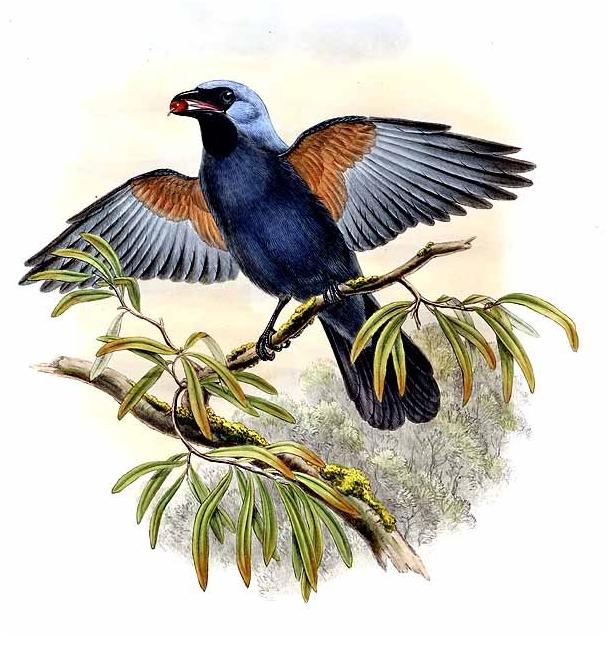
Wikimedia Commons
About the Stout-billed Cuckooshrike
The Stout-billed Cuckooshrike, scientifically known as Coracina caeruleogrisea, is a fascinating bird species belonging to the family Campephagidae. This bird is renowned for its robust, stout bill and its striking slate-gray plumage, which makes it a distinctive presence in its native habitats. Found primarily in the tropical forests of New Guinea, this bird plays a vital role in the ecosystem by participating in the complex food web and fulfilling its niche as both a predator and prey. The Stout-billed Cuckooshrike is an integral part of the avian biodiversity of the region. Its presence is a key indicator of the health of the forest ecosystems it inhabits. During the breeding season, this species migrates to higher altitudes to take advantage of cooler temperatures and abundant food resources. In non-breeding seasons, they are known to descend to lower elevations, often venturing into more open forested areas. These seasonal movements are crucial for their survival and reproduction, ensuring they have access to the necessary resources throughout the year. Known for its adaptability, the Stout-billed Cuckooshrike can occupy various forest types, ranging from lowland rainforests to montane forests. This adaptability highlights the species' resilience to environmental changes, although habitat destruction continues to pose a threat. With its wide distribution across New Guinea, the Stout-billed Cuckooshrike is a testament to the rich avian diversity found in this part of the world. It underscores the importance of conservation efforts in these biodiverse regions.
The Stout-billed Cuckooshrike belongs to the family Campephagidae, within the order Passeriformes. These birds typically live 8-12 years, with some individuals living up to 14 years..
How to Identify a Stout-billed Cuckooshrike
The Stout-billed Cuckooshrike is a medium-sized bird characterized by its stout bill, which is particularly robust compared to other members of the Campephagidae family. Adults display a uniform slate-gray plumage across their bodies, with a slight bluish tint that can be more pronounced in certain lighting conditions. Juveniles, in contrast, exhibit a duller gray coloration with subtle streaking on their underparts, which they lose as they mature. There is little sexual dimorphism in this species, meaning males and females are visually similar, both sharing the same striking gray plumage. This can make field identification challenging without behavioral cues or vocalizations. The flight silhouette of the Stout-billed Cuckooshrike is characterized by broad wings and a relatively short, slightly rounded tail, which distinguishes it from similar species such as the Black-faced Cuckooshrike. When perched, they exhibit a confident posture with a slight upward tilt of the head, often seen scanning their surroundings for food. Confusion with other cuckooshrikes can occur, but the stout bill is a reliable field mark to differentiate this species from others.
Having trouble telling birds apart? Upload a photo to our bird identification tool for an instant species match.
Stout-billed Cuckooshrike Habitat and Range
Preferred Habitat
The Stout-billed Cuckooshrike is predominantly found in the dense tropical forests of New Guinea. These forests provide the ideal conditions for foraging and breeding, with abundant food supply and ample nesting sites. The species thrives in a range of forest habitats, including lowland rainforests, montane forests, and occasionally in secondary growth areas where forest regrowth is occurring. It is typically found at elevations ranging from sea level to 2700 meters, with a preference for mid-elevation forests during the breeding season. Seasonal habitat shifts are observed, with these birds moving to lower elevations during the non-breeding season. Unlike some other species in the Campephagidae family, the Stout-billed Cuckooshrike is less commonly found in urban areas, tending to avoid heavily populated regions in favor of more secluded forest environments. Its presence is a hallmark of pristine forest areas, underscoring the species' reliance on unspoiled natural habitats.
Geographic Range
The range of the Stout-billed Cuckooshrike is largely confined to the island of New Guinea, encompassing both Papua New Guinea and the Indonesian provinces of Papua and West Papua. This distribution reflects their adaptability to the diverse forest ecosystems present on the island. The species is a resident bird, meaning it does not undertake long-distance migrations, although it does exhibit altitudinal movements in response to seasonal changes in food availability and climate conditions. These altitudinal migrations allow the Stout-billed Cuckooshrike to exploit different ecological niches and resources throughout the year, moving from lowland forests to higher montane areas as needed. Despite its relatively restricted range, the species is considered widespread within New Guinea, with certain areas serving as population density hotspots. The Arfak Mountains, for instance, provide an important habitat for this bird, supporting a rich avian community.
Want to know which birds visit your area? Browse our backyard birds by location guides for region-specific species lists.
What Does the Stout-billed Cuckooshrike Eat?
The diet of the Stout-billed Cuckooshrike is primarily insectivorous, consisting largely of insects and other arthropods. This bird is an adept forager, employing a variety of techniques to capture prey, including sallying from perches to snatch insects mid-air, as well as gleaning from leaves and branches. The stout bill is particularly well-suited for cracking open hard-shelled insects, allowing the bird to exploit a wide range of invertebrate prey. During the breeding season, the demand for protein-rich food increases, leading to more frequent foraging. In addition to insects, the Stout-billed Cuckooshrike may also consume small fruits and berries, especially during lean periods when insect prey is less abundant. This dietary flexibility helps the species to thrive in different habitats and seasons, ensuring a stable food supply throughout the year.
Stout-billed Cuckooshrike Behavior and Social Structure
The Stout-billed Cuckooshrike exhibits a complex social structure, often seen in small family groups outside the breeding season. These groups are typically composed of a breeding pair and their recent offspring. During the breeding season, however, pairs become more territorial and can be observed defending their chosen nesting sites aggressively against intruders. Courtship displays among Stout-billed Cuckooshrikes include a combination of vocalizations and visual displays, such as wing fluttering and bill snapping. These behaviors play a crucial role in pair bonding and successful mating. The species is diurnal, with peak activity periods occurring in the early morning and late afternoon. Flocking behavior is less common compared to some other cuckooshrike species, with individuals often preferring to forage alone or in pairs. Their response to predators includes mobbing behavior, where several individuals may work together to drive away potential threats.
Stout-billed Cuckooshrike Nesting and Reproduction
Stout-billed Cuckooshrikes construct cup-shaped nests, skillfully built using twigs, grass, and other plant materials, often lined with softer materials such as feathers or moss. These nests are typically placed high in the fork of a tree, providing protection from ground predators and a strategic vantage point over the surrounding area. A typical clutch consists of two to three eggs, with both parents sharing incubation duties over a period of approximately two weeks. After hatching, both parents also partake in feeding and caring for the young, ensuring a high level of parental investment. Fledging occurs about three weeks after hatching, with young birds remaining in the vicinity of the nest for several more weeks as they develop their foraging skills. The Stout-billed Cuckooshrike typically raises one brood per year, although in optimal conditions, a second brood may be attempted.
Stout-billed Cuckooshrike Sounds and Vocalizations
The primary song of the Stout-billed Cuckooshrike is a series of melodious whistles, with a rhythmic and repetitive quality. These whistles vary in pitch and can last several seconds, serving both to attract mates and establish territory. Call notes are short and sharp, often used as contact calls between members of a group or pair. Alarm calls are more abrupt, consisting of harsh, chattering sounds that serve to alert others of nearby threats. During the dawn chorus, the Stout-billed Cuckooshrike's song blends with those of other forest birds, contributing to a rich tapestry of sound in its habitat. The bird's vocal repertoire is diverse, playing a crucial role in communication and social interaction.
Interesting Facts About the Stout-billed Cuckooshrike
- 1The Stout-billed Cuckooshrike's scientific name, Coracina caeruleogrisea, reflects its blue-gray coloration.
- 2This species is part of the Campephagidae family, which includes over 80 species of cuckooshrikes worldwide.
- 3Despite its name, the Stout-billed Cuckooshrike does not exhibit the brood parasitism behavior typical of true cuckoos.
- 4The species can be primarily found at elevations between 0 and 2700 meters, showcasing its adaptability.
- 5Juvenile Stout-billed Cuckooshrikes can be identified by their streaked underparts, which they lose as they mature.
- 6The robust bill of the Stout-billed Cuckooshrike is particularly adept at cracking open hard-shelled insects.
- 7Stout-billed Cuckooshrikes typically form small family groups, especially outside the breeding season.
Stout-billed Cuckooshrike Conservation Status
The Stout-billed Cuckooshrike is currently classified as Least Concern by the IUCN. Despite its stable population trend, the species faces ongoing threats from habitat destruction due to logging and agricultural expansion. Conservation efforts are essential in preserving the primary forest habitats crucial for its survival. Historical population changes have been minimal, largely due to the bird's adaptability and the relative isolation of its New Guinea habitats. However, continued deforestation poses a significant risk, underscoring the need for sustainable land management practices. Community-based conservation initiatives aim to raise awareness and protect key habitats, ensuring the Stout-billed Cuckooshrike remains a resilient component of New Guinea's biodiversity.


